

Why regular fire extinguisher servicing and fire safety inspection matter in Singapore
Fire incidents in commercial and residential settings are often survivable when the right equipment is inspected, maintained and accessible.
Well-maintained extinguishers work when needed. Poorly serviced units can fail because of pressure loss, corrosion, blocked nozzles, or expired components. Beyond equipment performance, regular inspections demonstrate due diligence to regulators, insurers and occupants.
What is the difference between routine inspection and professional servicing?
-
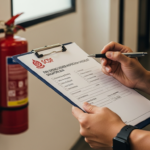
Routine fire safety inspection: These are frequent, often monthly, visual checks performed by building staff or the appointed fire safety manager. They confirm accessibility, visible condition, that tamper seals and pressure gauges are correct, and that extinguishers aren’t obstructed or clearly damaged.
-
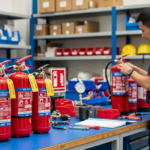
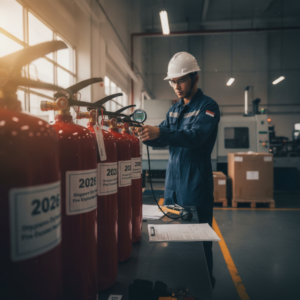
Professional fire extinguisher servicing: This involves licensed technicians performing detailed checks, maintenance and repairs.
Combining both—daily/weekly visual checks, monthly inspections by responsible personnel, and annual professional servicing—creates a defensive maintenance rhythm for fire safety.
guidance and useful checklists
Using an authoritative checklist also simplifies handovers between shifts or contractors and supports clear record-keeping for audits and insurance.
Typical frequency and timelines to follow
While specific intervals depend on the extinguisher type, manufacturer recommendations and site risk, the following framework is widely used across Singapore:
- Daily/weekly: Visual checks by on-site staff (accessibility, obvious damage).
- Monthly: Formal visual inspection and basic functional checks recorded in logbooks.
- Annually: Full professional servicing by a licensed servicing company.
What a full fire extinguisher servicing covers
A professional service visit typically includes:
- Identification and record check: Confirm model, capacity, installation location and service history.
- External inspection: Look for corrosion, dents, leaking, damaged labels or hoses.
- Pressure and gauge checks: Verify gauge readings and internal pressure integrity.
- Internal component checks: For certain units, opening and inspecting internals, replacing seals or extinguishing agent where needed.
- Recharge or replacement of agent: If partially discharged or expired.
- Functional testing: Ensuring discharge mechanisms and nozzles operate correctly.
- Tagging and documentation: Service tag affixed, service report provided for site records.
For specifics about when replacement is better than repair and how to manage end-of-life extinguishers in Singapore, see this practical replacement guidance: https://nationalcitycorporation.sg/fire-extinguisher-replacement-singapore-fire-safety-co-2026/.
Common defects found during inspections
Frequent issues identified during fire safety inspection and servicing include:
- Low or zero pressure (gauge indicates discharge)
- Tampered or missing safety pins and seals
- Corroded cylinders or valves
- Blocked or cracked hoses/nozzles
- Expired or decomposed extinguishing agents (particularly for older dry powder units)
- Incorrect placement—hidden, obstructed or not mounted correctly
Promptly addressing these faults prevents failures and ensures extinguishers remain effective during an emergency.
Types of extinguishers and maintenance nuances
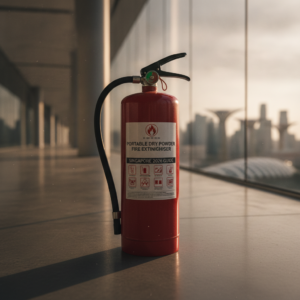
Different extinguisher agents have varied servicing needs. For example, dry powder extinguishers are popular in many Singapore applications due to their versatility, but they require attention to powder consolidation and sealing. To better understand dry powder realities, maintenance tips and what compliance looks like, review this focused guide: https://nationalcitycorporation.sg/must-know-dry-powder-fire-extinguisher-facts-singapore-2026/.
Documentation and record-keeping best practices
Thorough documentation is as important as the service itself. Records provide legal evidence of compliance and help identify lifecycle trends across a portfolio of assets.
Good documentation practices:
- Maintain dated service reports for each extinguisher (serial number, location, work performed).
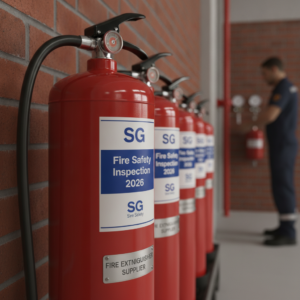
- Keep visible service tags on each unit showing the last service date and next due date.
- Log monthly and annual inspection results in a centralised digital register.
- Retain reports for the manufacturer’s recommended period or insurer requirements.
Adopting digital records and QR-tagged extinguishers streamlines audits and reduces the risk of lost paperwork.
Choosing a reliable servicing contractor in Singapore
Selecting the right fire extinguisher servicing company is critical. Look for contractors who:
- Are licensed or accredited to work on portable extinguishers
- Provide clear itemised service reports and tagging
- Offer warranty on labour and parts
- Have transparent pricing and fixed periodic maintenance plans
Request references and check recent work examples. A quality vendor helps you plan replacements and manages end-of-life recycling or disposal properly.
Costs and budgeting
Costs vary by extinguisher type, size and whether parts or recharges are needed. Budgeting tips:
- Treat servicing as an operational cost, not an ad-hoc expense. Predictable annual servicing avoids expensive emergency replacements.
- Bundle servicing across multiple units or sites for volume discounts.
- Set aside capital for replacements when units reach manufacturer end-of-life or fail hydrostatic tests.
A good servicing partner will help forecast costs and replacement timelines so building owners avoid surprises.
Current trends improving inspection and servicing efficiency
Singapore facility managers are increasingly adopting digital tools for fire safety inspection and fire extinguisher servicing:
- QR codes on each extinguisher linking to digital service histories.
- IoT-enabled sensors that monitor pressure and location, alerting teams to possible tampering or loss.
- Centralised asset management platforms that sync service schedules and compliance documents across sites.
These trends cut administrative time, improve audit readiness and can reduce the likelihood of missed inspections.
Practical checklist to prepare for a servicing visit
Before the technician arrives, do the following to speed the process and cut costs:
- Ensure extinguishers are accessible and unobstructed.
- Have the current logbook or digital records ready.
- Identify units with known issues so technicians can prioritise them.
- Allocate a staff member to accompany the contractor if necessary.
Final thoughts: reducing risk with proactive maintenance
Fire extinguisher servicing and scheduled fire safety inspection are foundational elements of building safety in Singapore. Proactive maintenance reduces equipment failure, keeps occupants safe and demonstrates clear regulatory compliance. By combining routine visual checks, annual professional servicing, disciplined record-keeping and modern digital tools, organisations can ensure their portable fire extinguishers are reliable when every second counts.
- Replacement guidance: https://nationalcitycorporation.sg/fire-extinguisher-replacement-singapore-fire-safety-co-2026/
- Dry powder facts: https://nationalcitycorporation.sg/must-know-dry-powder-fire-extinguisher-facts-singapore-2026/
Adopting these practices will help you stay compliant, reduce downtime and ensure that your fire protection infrastructure performs reliably when needed.

No comment yet, add your voice below!