

Why fire safety matters for every home and business in Singapore
Singapore’s dense urban environment and strict safety culture mean fire prevention and readiness are not optional.
This guide explains what to look for in a portable fire extinguisher in 2026, how to stay compliant, and the practical checks you should be doing regularly. It also highlights current trends such as digital tagging and smart maintenance that are changing how organisations manage fire safety.
fire safety: basic obligations and practical compliance
For most businesses and multi-occupancy premises, that means:
- Having the correct number and types of portable fire extinguishers for the hazards present.
- Installing extinguishers in accessible locations with clear signage and unobstructed access.
- Ensuring regular inspection, servicing and record-keeping by authorised personnel.
For building managers and safety officers, understanding the difference between guidance and statutory directions is important.
Choosing the right portable fire extinguisher for Singapore risks
Selecting the correct extinguisher depends on the likely fuel types and the environment:
- Class A (water, foam): solids like paper, timber and textiles — suitable for general office and storage areas.
- Class B (foam, dry chemical, CO2): flammable liquids like petrol, solvents and paints.
- Class C (dry chemical, CO2): fires involving gases — typically specialised settings with gas cylinders.
- Class K / wet chemical: cooking oil and fats — essential for commercial kitchens.
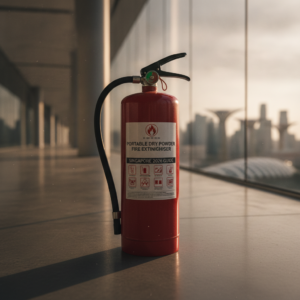
- Multi-class dry powder (ABC): versatile for mixed risks, often used in industrial or vehicle-related settings.
In Singapore many premises use dry powder portable fire extinguishers for their broad applicability. If you’re considering this option, read the detailed dry powder guide for Singapore to understand performance, limitations and safe use: https://nationalcitycorporation.sg/singapore-dry-powder-fire-extinguisher-guide-2026/.
For practical facts about dry powder units and what to expect in 2026, review these must-know dry powder fire extinguisher facts: https://nationalcitycorporation.sg/must-know-dry-powder-fire-extinguisher-facts-singapore-2026/.
Choosing the right size also matters. Small 1–2 kg units can tackle small fires or provide an immediate response while larger 4–6 kg or wheeled units are needed for higher-risk locations.
Placement, mounting and signage best practices
A portable fire extinguisher only protects if it can be reached quickly. Key placement principles:
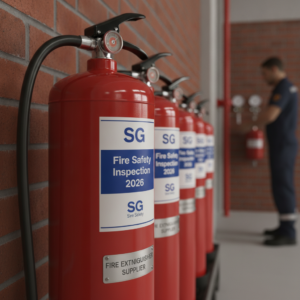
- Mount extinguishers on walls with the operating instructions facing out and at an accessible height.
- Position extinguishers along escape routes, near likely sources of fire (kitchens, machine rooms) and at exits of rooms with higher fire load.
- Do not block access with storage, furniture or plants; keep a 750 mm clearance in front where possible.
- Use durable signage and ensure the unit is visible from an approach. Consider reflective signs for stairwells and corridors.
If you need a reliable supplier or professional servicing to install units correctly, check experienced providers: https://nationalcitycorporation.sg/trusted-singapore-fire-extinguisher-supplier-servicing-2026/.
Portable fire extinguisher inspection, servicing and disposal
A sensible program includes:
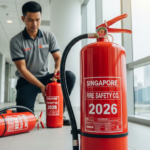
- Monthly visual checks by the responsible person to confirm pressure gauge status (if fitted), seals, pin and tamper indicators and general condition.
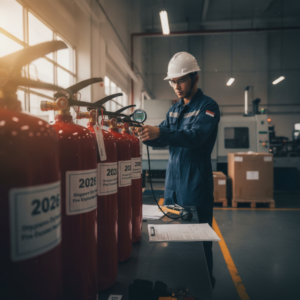
- Annual servicing and maintenance by trained technicians who test components, replace parts and update service tags and records.
- Replacement or disposal when the unit is discharged, damaged, or beyond its serviceable life. Disposal should follow environmental guidance for the extinguishing agent used.
Keeping accurate records and service tags, including serial numbers and dates, is critical for audits and insurance. For step-by-step guidance on maintenance and safe disposal practices, see: https://nationalcitycorporation.sg/singapore-fire-extinguisher-maintenance-and-disposal-2026-2/.
How to use a portable fire extinguisher safely (the PASS technique)
Knowing how to operate a portable fire extinguisher reduces risk and avoids escalating a dangerous situation. Follow these steps:
- Pull: Pull the safety pin to unlock the operating lever.
- Aim: Aim the nozzle or hose at the base of the fire, not at the flames.
- Squeeze: Squeeze the lever to discharge the agent.
- Sweep: Sweep the jet from side to side across the base of the fire until it is extinguished.
Always position yourself with an escape route behind you and never attempt to fight large or rapidly spreading fires.
Training, drills and workplace readiness
Regular staff training ensures people know when and how to use a portable fire extinguisher and when to evacuate. Good practices include:
- Annual refresher training for staff, with hands-on practice using inert or training units.
- Scenario-based drills that include discovering a small fire, extinguishing attempts, and evacuation procedures.
- Clear assignment of roles: fire warden, evacuation supervisor, first aider.
Training can be blended — theory online combined with practical sessions — which is increasingly common in 2026. Organisations that maintain training records and competency assessments are better prepared for inspections and real incidents.
2026 trends shaping fire safety and portable fire extinguisher management
Several practical trends are influencing fire safety programs in Singapore:
- Digital tagging and QR codes: Service tags now often include QR codes linking to an online service history, which speeds audits and ensures accurate records.
- IoT-enabled monitoring: Some large facilities are trialling sensors that detect if an extinguisher has been moved or if pressure levels fall outside normal ranges.
- Eco-friendly agents: Manufacturers continue to innovate lower-GWP (global warming potential) agents and more recyclable cylinder materials.
- Centralised maintenance portals: Cloud-based maintenance management systems let property managers schedule and track servicing across multiple sites.
If you plan to modernise your maintenance programme, consider suppliers who support digital records and smart servicing workflows: https://nationalcitycorporation.sg/trusted-singapore-fire-extinguisher-supplier-servicing-2026/.
Quick fire safety checklist for portable fire extinguishers
- Identify hazards and select the correct extinguisher type for each area.
- Ensure adequate coverage and correct mounting height for all units.
- Perform monthly visual checks and maintain a logbook or digital record.
- Have units serviced annually by authorised technicians and keep service tags current.
- Train staff annually and run evacuation drills at least twice a year for high-risk sites.
- Follow safe disposal and replacement practices when units are discharged or expired: https://nationalcitycorporation.sg/singapore-fire-extinguisher-maintenance-and-disposal-2026-2/.
For more technical advice on dry powder options and their pros and cons, read this practical resource: https://nationalcitycorporation.sg/must-know-dry-powder-fire-extinguisher-facts-singapore-2026/.
Final practical tips for Singapore property owners and safety managers
Pair the right extinguishers with clear evacuation routes, fire alarm systems, and an active maintenance and training programme. For detailed product and servicing options that align with 2026 expectations and digital recordkeeping, consult specialist suppliers and service partners: https://nationalcitycorporation.sg/singapore-dry-powder-fire-extinguisher-guide-2026/.

No comment yet, add your voice below!