

Introduction
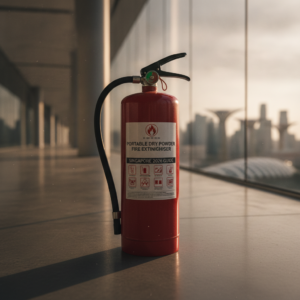
In Singapore’s dense urban environment—where residential flats, commercial premises and light-industrial sites sit side-by-side—having the right portable fire extinguisher is essential. Dry powder fire extinguishers remain one of the most versatile and widely used choices for general-purpose protection, especially where Class A (solid combustibles), Class B (flammable liquids) and Class C (flammable gases) risks exist.
Why choose a dry powder portable fire extinguisher in Singapore?
A dry powder fire extinguisher (often sold as an ABC powder extinguisher) uses a fine chemical powder to interrupt the chemical reaction of a fire. The main advantages for Singapore environments are:
- Broad coverage: Effective on Class A (wood, paper), B (liquids) and C (gases) fires—useful in mixed-risk locations.
- Portability: Available in compact sizes suitable for cars, homes and small commercial units.
However, dry powder is not a one-size-fits-all solution. The powder creates dust that can reduce visibility and requires thorough cleanup after discharge, so it’s less ideal for server rooms or clean environments where clean-agent or CO2 extinguishers may be preferred.
Types and common sizes — choose the right capacity
Dry powder extinguishers come in a range of sizes and discharge capacities. Typical consumer and commercial sizes in Singapore include:
- 1 kg: Lightweight and portable — popular for cars and motorbikes.
- 2 kg: Common for small homes and compact spaces.
- 4 kg: Good for larger homes and small shops.
- 6 kg and 9 kg: Standard for commercial premises, workshops and multi-room areas where longer discharge time is needed.
When selecting a size, consider the fire risk, the accessibility of the extinguisher, and who will use it. A larger extinguisher delivers more agent but is heavier to operate; a smaller extinguisher is easier to carry but may not control larger fires.
For purchasing options and local retailers in Singapore, see: where to buy dry powder fire extinguisher.
Key features to look for when buying
Whether you buy online or from a local supplier, check these essential features:
- Always ask for documentation.
- Pressure gauge: A clear, easy-to-read gauge makes routine checks simpler.
- Refillable vs disposable: Refillable (rechargeable) units are more sustainable; disposable units are often cheaper initially but replaceable only once.
- Mounting bracket and signage: Wall brackets and clear labelling improve accessibility and compliance.
- Discharge horn/nozzle design: Good ergonomics reduce user fatigue during discharge.
- Powder quality and anti-caking treatment: Look for anti-caking additives and manufacturer instructions to avoid clogging.
Compare certified options and read product datasheets carefully.
Maintenance and servicing best practices
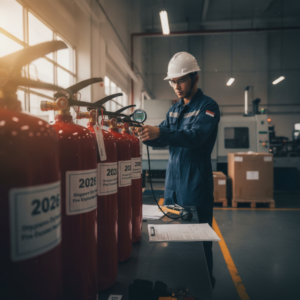
Correct maintenance keeps a portable dry powder fire extinguisher ready when you need it. Best practices for Singapore owners:
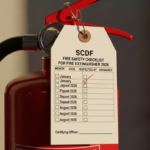
- Visual checks: Monthly visual inspections—check the pressure gauge, hose/nozzle, tamper seal and body for corrosion or damage.
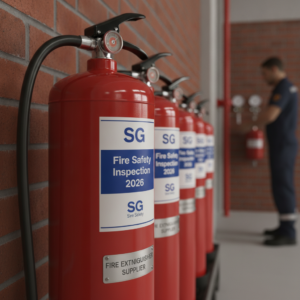
- Annual servicing: Have a certified technician perform full servicing annually. This includes internal inspection, refilling or replacement of agent if required, and pressure checks.
- Post-discharge procedure: Any discharged unit should be fully serviced and recharged by a licensed technician—do not attempt to reuse without servicing.
- Keep digital records: Many service contractors now provide electronic service tags and QR codes to view maintenance history instantly.
Learn more about professional servicing and inspection standards: fire extinguisher servicing and safety inspection.
Installation and placement tips for Singapore properties
Placement and mounting affect response time during a fire. Follow these practical rules:
- Visibility and access: Mount extinguishers where they are clearly visible and easy to reach—not blocked by furniture or storage.
- Height: Place extinguishers so the carrying handle is about 1.2 m from the ground for easy access (adjust for local occupants as needed).
- Spread: In homes and small offices, position extinguishers near likely hazard zones—kitchens, workshops and car parks—but avoid placing them directly within reach of a developing fire.
- Kitchen fires: For deep-fat fryer or cooking oil fires, wet chemical extinguishers are specifically designed for these hazards; dry powder often does not extinguish re-ignition from deep-fat fryers.
Using a dry powder extinguisher safely
If you must use an extinguisher, follow the PASS technique:
- Pull the pin.
- Aim the nozzle at the base of the fire.
- Squeeze the lever in controlled bursts.
- Sweep the nozzle side to side across the fire base until extinguished.
Always ensure you have a clear exit route, avoid inhaling powder, and only attempt to fight small, contained fires. For electrical fires, verify manufacturer guidance—dry powder extinguishers are commonly rated for electrical hazards, but certain environments may require different agents.
Clean-up and after-use considerations
Dry powder is effective but messy. Cleanup steps after discharge:
- Ventilate the area to remove dust and fumes.
- Avoid spreading powder — use gentle methods (vacuum with HEPA filter where possible) and consult a professional cleaning service for sensitive equipment.
- Have electronic devices checked by technicians before reuse if powder has entered vents or delicate components.
- Replace or fully service discharged extinguishers immediately.
2026 trends: smart extinguishers and regulatory shifts
By 2026, Singapore’s fire-safety ecosystem is seeing rapid adoption of digital solutions and tighter compliance expectations:
- IoT-enabled monitoring: Smart sensors and pressure monitors can report status in real time to maintenance platforms, reducing the risk of overlooked units.
- Eco and low-dust formulations: Suppliers are innovating powders with improved flowability and reduced environmental impact.
Buying checklist — questions to ask your supplier
When purchasing a portable dry powder fire extinguisher in Singapore, ask the supplier:
- Is it rechargeable and what is the recommended service interval?
- What anti-caking or flow agents are used in the powder?
- Do you provide annual servicing and emergency replacement?
- Is installation and staff familiarisation included?
A reliable supplier will provide documentation, installation, routine servicing and clear after-sales support. For local purchasing guidance, visit: where to buy dry powder fire extinguisher.
Final notes — matching extinguisher choice to risk
A portable dry powder fire extinguisher is a powerful, versatile tool for many Singapore settings. It works well where mixed fire risks exist and where portability and cost-effectiveness are priorities. But it’s important to match the extinguisher type to the hazard: wet chemical for deep-fat fryer risks, CO2 or clean agents for sensitive electronics, and dry powder for general-purpose coverage.
Selecting the right portable fire extinguisher and keeping it well maintained ensures you have reliable first-response protection for common fire scenarios in Singapore.

No comment yet, add your voice below!