

Introduction
Singapore’s fire safety landscape continues to evolve in 2026, driven by stricter regulations, smarter technology and growing emphasis on safe, environmentally responsible disposal. Whether you manage a commercial facility, a residential block or run a small business, understanding how a Singapore fire protection system works and how to handle fire extinguisher disposal is essential. This article breaks down the rules, best practices and practical steps to keep people, property and the environment safe.
Why modern fire protection matters in Singapore
A robust Singapore fire protection system is more than just alarms and extinguishers. Today it integrates detection, suppression, communication and maintenance, often tied together with building management systems and IoT sensors. Trends for 2026 include:
- Greater use of smart detectors and remote monitoring to catch faults early and reduce false alarms.
- Predictive maintenance using data from sensors and service records to plan servicing before failures occur.
- Emphasis on compliance with SCDF guidance and local regulations for all building types.
Upgrading to an integrated approach reduces response times and helps protect occupants and assets more effectively.
Legal and regulatory checklist (what building owners must know)
Singapore’s SCDF issues guidance and requirements for fire safety of portable extinguishers, servicing and inspections. Owners and facilities managers should follow a clear checklist:
- Ensure portable extinguishers are the right type and capacity for identified risks.
- Keep records of servicing and safety inspections; most systems require periodic checks by qualified technicians.
- Replace or professionally dispose of extinguishers that are expired, discharged or damaged.
- Follow SCDF recommendations and checklists to remain compliant.
For a concise, practical SCDF fire safety checklist specifically for extinguishers, see this SCDF checklist resource: SCDF fire safety checklist for fire extinguisher 2026.
Portable extinguishers: types, selection and maintenance
Selecting the correct extinguisher is the first step toward an effective Singapore fire protection system. Common types include:
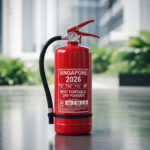
- Dry powder (ABC) — versatile for many risks; widely used in industrial and commercial settings.
- CO2 — ideal for electrical fires and sensitive equipment but has limited reach.
- Foam — effective for liquid fuel fires.
- Water-based — for Class A fires (combustibles) only.
For guidance on choosing reliable units, see a buyer-focused review of the best portable dry powder extinguishers.
Routine maintenance is mandatory to ensure readiness. SCDF guidance on servicing and safety inspection outlines required intervals and actions; follow it closely to avoid fines or gaps in protection: fire extinguisher servicing and safety inspection 2026.
How to use a portable extinguisher safely
Knowing how to operate an extinguisher is as important as having one. The PASS technique is a simple, universal method: Pull, Aim, Squeeze, Sweep. SCDF also issues practical guidance on portable extinguisher use — review their instructions and train occupants regularly: SCDF fire safety guide for portable fire extinguisher use.
Regular hands-on training and fire drills reinforce confidence and quick action during a real event.
Fire extinguisher disposal: environmental and safety considerations
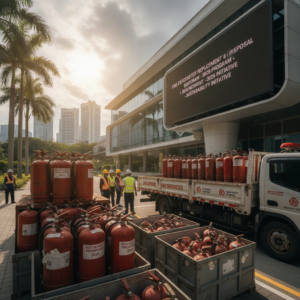
Fire extinguisher disposal is a specialist task. An extinguisher contains pressurized contents and sometimes chemicals that must not be released to the environment or landfill untreated. Key points for safe fire extinguisher disposal in Singapore:
- Never puncture, burn or release contents yourself. Doing so risks injury and environmental contamination.
- Dry powder and CO2 extinguishers require depressurisation by trained technicians before empty unit recycling.
- Halon-containing units (rare, legacy systems) are ozone-depleting and need licensed specialist handling; they cannot be vented.
- Metal cylinders are often recyclable once emptied and de-valved, but only after proper procedures.
Contract licensed service providers who follow SCDF and environmental agency guidance for disposal.
Practical disposal steps for businesses and homeowners
- Identify the type, age and condition of the extinguisher. Labels and service tags help.
- Log the extinguisher in an asset register with its last service date.
- Contact a licensed fire protection company to assess whether it can be serviced, recharged or must be disposed of.
- If disposal is required, ensure the provider issues a disposal certificate and details on how the contents and cylinder were treated.
- Replace with the correct new or refurbished unit and update records.
Using a reputable provider avoids compliance issues and reduces environmental impact.
Servicing, inspection and recordkeeping — stay compliant
SCDF updates in 2026 emphasize traceability and accountability for fire safety systems. Regular servicing and a clear records trail are non-negotiable parts of a contemporary Singapore fire protection system. Typical expectations include:
- Monthly visual checks by on-site staff for obvious damage or missing tags.
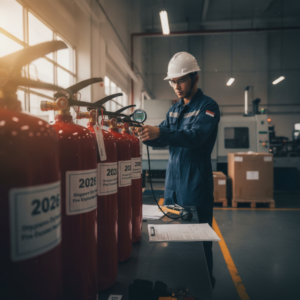
- Annual servicing and functional checks by accredited technicians.
- Hydrostatic testing and certification at intervals dictated by type and age of cylinder.
Refer to specialised guidance to align procedures with SCDF expectations: SCDF fire extinguisher servicing and safety inspection 2026.
Costs and procurement considerations
Budgeting for a compliant fire protection program should consider:
- Purchase or replacement cost of extinguishers suited to each hazard.
- Annual servicing and inspection fees.
- Disposal and recycling costs for units that reach end-of-life.
- Potential upgrades to integrated detection or analytics systems to reduce long-term servicing costs.
Get multiple quotes and verify contractors’ accreditation and insurance. Consider total lifecycle costs rather than lowest initial price.
Choosing a service provider: what to check
When appointing contractors for installation, inspection or disposal, verify:
- SCDF-recognised or relevant accreditation and licences.
- Transparent pricing and clear scope of work.
- Evidence of proper disposal procedures and certificates.
- References and case studies in Singapore settings.
Recent SCDF updates for 2026 highlight the importance of using certified providers; review official updates and guidance to ensure compliance: SCDF fire safety 2026 updates.
Common mistakes to avoid
- Letting service certificates lapse or losing service records.
- Attempting DIY depressurisation or disposal.
- Using incorrect types of extinguishers for specific risks.
- Ignoring signs of corrosion, damage or leakage.
Avoid these pitfalls by instituting a clear maintenance and disposal policy for your premises.
Case study: small office upgrade to a modern protection system
A 20-person office in Singapore moved from a patchwork of old extinguishers to an integrated Singapore fire protection system with smart monitoring in 2026. Actions taken:
- Risk survey to identify extinguisher types and placement.
- Replaced expired units and arranged safe disposal through a licensed contractor.
- Installed tamper-monitoring sensors on extinguisher cabinets linked to the building management dashboard.
- Set a digital calendar for monthly checks and annual servicing.
Result: faster response to faults, better compliance records and fewer false maintenance calls.
Environmentally responsible disposal and circular options
Sustainable disposal is increasingly important. Where possible, providers separate materials for recycling: steel cylinders reclaimed, plastic components sorted, and chemical residues handled by hazardous waste specialists. Ask providers about their recycling chain and certificates to ensure environmental standards are met.
Summary: practical next steps for Singapore property managers
- Review all extinguishers on site and check last service dates.
- Follow SCDF checklists and guidance to maintain a compliant Singapore fire protection system.
- Never attempt DIY extinguisher disposal — use licensed specialists and obtain disposal documentation.
- Consider smart monitoring and predictive maintenance to reduce risk and cost long-term.
- Replace legacy or halon systems through approved contractors to avoid environmental penalties.
For practical resources on extinguisher selection and usage, consult the SCDF guides and product advice: best portable dry powder extinguishers, SCDF fire safety checklist for fire extinguisher 2026, and the SCDF portable extinguisher use guide.
Implementing and documenting these steps will strengthen your fire safety posture and ensure responsible fire extinguisher disposal in Singapore.
Closing note
Maintaining an effective Singapore fire protection system and following correct fire extinguisher disposal procedures protects people, property and the environment. Prioritise accredited service providers, keep clear records and consider modern monitoring tools to meet 2026 compliance expectations and beyond.


No comment yet, add your voice below!