

Introduction
Whether you’re responsible for a small shop, an office tower or an industrial site, choosing the right fire extinguisher supplier is one of the most practical steps you can take to protect lives and assets.
Why fire safety matters in 2026
For property owners and managers in Singapore, non-compliance can lead to fines, insurance complications and—worse—preventable injuries. Beyond legal obligations, a robust fire strategy signals duty of care to employees and customers and reduces downtime after an incident.
- Legal compliance and insurance requirements.
- Faster fire response and reduced damage.
- Lower long-term operational and replacement costs.
- Demonstrable duty of care to staff and visitors.
Understand extinguisher types and classifications
Selecting the wrong extinguishers for the hazards on site undermines everything else. Typical extinguisher types used in Singapore:
- Water and water mist: Effective on Class A fires.
- Foam: Good for Class A and B; creates a blanket over flammable liquids.
- CO2: Suitable for electrical fires (Class E) and small liquid fires; leaves no residue.
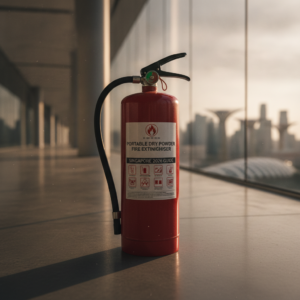
- Dry powder (ABC): Multipurpose, covers A, B and C; common in industrial settings.
- Wet chemical: Designed for cooking oil and fat fires (Class F).
A qualified supplier will match extinguisher types and capacities to your specific risks and layout.
Choosing a certified fire extinguisher supplier: checklist
Selecting a fire extinguisher supplier is about more than price. Prioritise certification, service scope and local experience.
Checklist when evaluating suppliers:
- TUV SUD PSB approved status and certifications.
- Service range: supply, installation, periodic maintenance, hydrostatic testing and disposal.
- Transparent pricing and itemised quotes (unit, labour, service interval).
- Local experience across similar property types.
- Availability of emergency support and fast response times.
- Written service records and digital inventory options.
- Training offerings for staff on correct use and monthly checks.
For a vetted option on approved vendors, consult an up-to-date directory of TUV SUD PSB approved fire extinguisher suppliers.
[TUV SUD PSB approved fire extinguisher supplier]
Maintenance, inspections and regulatory requirements
Routine maintenance keeps extinguishers ready and ensures legal compliance.
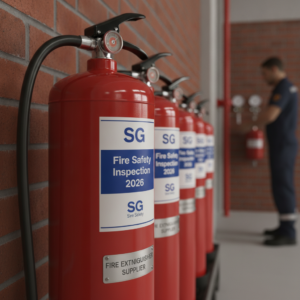
- Monthly visual checks by on-site staff (pressure gauge, tamper seal, obvious damage).
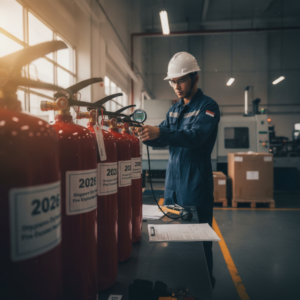
- Annual professional servicing by a certified technician.
- Five-year or longer hydrostatic testing intervals depending on extinguisher type and manufacturer instructions.
- Immediate replacement or repair if the extinguisher fails inspection, is discharged, or shows corrosion/damage.
A professional supplier will maintain digital logs and provide service certificates.
Replacement, disposal and environmental responsibilities
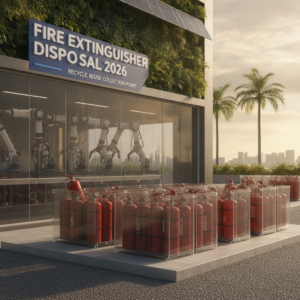
Fire extinguishers have finite lifespans. Understanding replacement triggers—expired cylinders, failed hydrotests, corrosion, or failed discharge tests—prevents unsafe equipment from remaining in service. Disposal of certain extinguishers, especially dry powder types, requires care to avoid contamination and environmental harm.
Key disposal and replacement tips:
- Decommissioning must be documented by a certified supplier.
- Dry powder extinguishers may require neutralisation or specialist disposal; don’t dump contents into drains.
- Recycle metal components where possible and use licensed waste handlers.
- Retain service records for audits and insurance claims.
For detailed disposal steps tailored to local regulations and best practice, review resources on dry powder fire extinguisher disposal.
[dry powder fire extinguisher disposal tips]
Training and human factors: putting tools into the right hands
An extinguisher is only useful if people know how to use it safely.
Essential training elements:
- PASS technique (Pull, Aim, Squeeze, Sweep) refresher drills.
- Scenario-based training covering likely fire sources in your premises.
- Evacuation procedures and alarm response coordination.
Many suppliers include training packages when you procure units—prefer vendors that provide on-site, certificate-based training for employees.
Technological trends shaping supplier selection in 2026
Digital transformation affects even traditional fire-safety services. Expect features that improve compliance and operational visibility:
- QR-code tagging and mobile inspection apps for instant service history checks.
- Cloud-based maintenance logs and automated service reminders.
- Smart sensors on cabinets and integrated building management systems for real-time alerts.
- Predictive maintenance analytics that flag units near the end of service life.
When choosing a supplier, consider their digital capabilities: a supplier that uses inspection apps and issues digital compliance certificates reduces administrative overhead and audit risk.
Cost vs value: procurement tips for Singapore buyers
Buying extinguishers is not just a CAPEX decision. Consider total cost of ownership (TCO): supply cost, installation, recurring servicing, testing and end-of-life disposal. Cheap units with poor service can end up costing more through fines, downtime and replacement.
Procurement tips:
- Request itemised quotes that separate supply, installation and ongoing service fees.
- Ask about bundled service contracts (often more predictable and cost-effective).
- Verify warranty coverage and service response time SLAs.
- Confirm that spare parts and refills are readily available locally.
Integrating extinguisher strategy into your overall fire plan
Effective fire safety is holistic. Extinguishers are one layer within detection, suppression, alarm and evacuation systems. Coordinate with your fire alarm and suppression providers to ensure:
- Alarm, detection and extinguisher servicing schedules are synchronised to avoid compliance gaps.
- Emergency response plans are practiced with combined teams.
For cross-system coordination, suppliers that work with alarm and suppression contractors help streamline maintenance and audits.
Practical timeline and action plan for 2026 compliance
- Immediate (0–1 month): Conduct a documented site risk assessment and inventory all extinguishers.
- Short term (1–3 months): Engage a TUV SUD PSB approved supplier for a servicing audit and replace any units that fail inspection.
- Medium (3–6 months): Implement a digital record-keeping system and schedule annual services.
- Ongoing: Train staff quarterly, perform monthly visual checks, and review your supplier contract yearly.
Final checklist: choosing the right fire extinguisher supplier in Singapore
- Confirm TUV SUD PSB approval and local licensing.
- Review service offerings: supply, maintenance, hydrotesting and disposal.
- Evaluate digital tools for inspection tracking and certificates.
- Compare total cost of ownership, not just unit price.
- Ensure training and rapid response support are included.
[TUV SUD PSB approved fire extinguisher supplier]
Conclusion
By using a structured checklist, prioritising approved suppliers and embracing digital inspection tools, Singapore organisations can achieve robust protection, regulatory compliance and lower lifecycle costs.
[dry powder fire extinguisher disposal tips]



No comment yet, add your voice below!