

Why fire safety matters in Singapore today
Singapore’s dense urban environment and high-rise buildings make fire safety a top priority for businesses, landlords and homeowners alike. Choosing the right fire extinguisher supplier and keeping up with regular fire safety inspection cycles are two of the simplest, most effective steps to reduce risk, protect lives and avoid regulatory penalties.
This guide explains what to look for in a reputable supplier, what a thorough fire safety inspection covers in 2026, and the latest trends — from digital service tags to sustainable disposal — that are shaping compliant programs across the island.
What a good fire extinguisher supplier provides
A professional fire extinguisher supplier does more than sell equipment. Look for suppliers who offer:
- Certified technicians for installation, servicing and testing
- Clear documentation and stamped service reports for compliance
- A full range of extinguisher types (dry powder, CO2, water, foam, wet chemical)
- Scheduled maintenance programs and reminder systems
- Safe disposal and replacement services for expired units
A reliable supplier will also provide tailored advice for different risks — kitchens, electrical rooms, workshops, laboratories and public spaces each require specific extinguisher choices and placement.
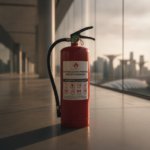
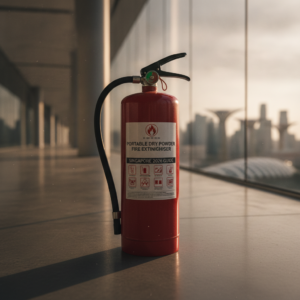
For a detailed walk-through on dry powder options and suitability, see the portable dry powder guide and how it fits into site risk plans.
Understanding fire safety inspection: scope and frequency
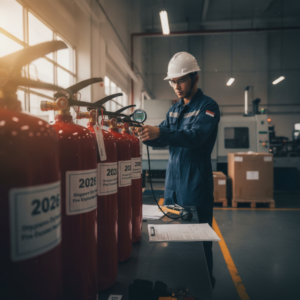
A professional fire safety inspection is more than a visual check. Inspections ensure equipment is present, accessible, functional and documented. Typical inspection elements include:
- Accessibility and signage: Extinguishers must be visible and unobstructed
- Physical condition: No severe corrosion, dents or damage to hoses/nozzles
- Pressure and gauges: Readings within the operable range or status tags updated
- Seals and tamper indicators: Intact safety seals and valid inspection tags
- Mounting: Correct brackets, correct heights, and secure installation
- Weight checks: For some cylinder types, to confirm correct charge
- Service records: Date of last service, next due date and technician details
- Hydrostatic and internal checks: As required by manufacturer or regulatory guidance
In Singapore, best practice is a monthly visual check by the premises owner or appointed staff, plus an annual professional fire safety inspection and servicing by a qualified supplier. Certain tests and internal inspections occur on multi-year cycles depending on extinguisher type — your supplier will advise based on the specific models in use.
For specifics on dry powder extinguisher inspection cycles and testing standards, consult the dedicated dry powder inspections resource to align maintenance with local guidance.
Choosing the right extinguisher types for common Singapore risks
Different hazards need different extinguishing agents. Common pairings include:
- Electrical fires: CO2 or clean agent extinguishers
- Flammable liquids (petrol, oils): Foam or dry powder
- Cooking oil and grease fires (F&B kitchens): Wet chemical extinguishers
- General office and common areas: ABC dry powder for mixed-risk coverage
A reputable supplier will perform a site survey to map hazards and recommend both extinguisher types and optimal placement to meet occupancy and regulatory requirements.
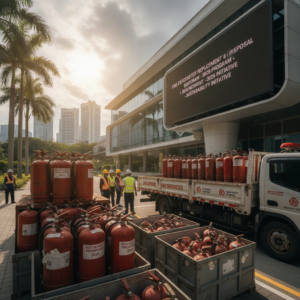
If it’s time to replace or responsibly dispose of old cylinders, look for suppliers that document disposal and offer replacement guidance compliant with Singapore regulations; see the replacement and disposal information for practical steps.
What to expect during professional servicing and testing
Servicing goes beyond inspection: it includes maintenance tasks such as internal checks, refilling, replacing outdated parts (hoses, seals, gauges), and conducting hydrostatic tests when necessary. Key service milestones:
- Annual maintenance: Basic servicing and tag update by an authorized technician
- Internal inspection/refill: Often recommended every 5–6 years depending on agent and manufacturer
- Hydrostatic testing: Per manufacturer and regulatory schedules to ensure cylinder integrity
Demand clear service labels and digitally accessible records. Many leading suppliers now attach QR-coded tags so building managers can view service history instantly during audits.
Digital trends: smart inspection tags and compliance software
2026 sees growing adoption of IoT-enabled asset management in fire safety. Innovations include:
- QR-code and NFC tags for instant service history and technician details
- Cloud-based compliance platforms that consolidate inspection reports, reminders and regulatory correspondence
- Mobile inspection apps with photo evidence and electronic signatures
These tools reduce human error, speed audit preparation and create an audit trail accepted by insurers and authorities. When selecting a supplier, ask about their digital record-keeping and whether they can integrate with your building management systems.
Explore top supplier and servicing solutions to compare features like digital tagging and scheduled maintenance plans.
Legal and insurance considerations in Singapore
While specific regulatory requirements can vary by building type and usage, common obligations include:
- Ensuring fire extinguishers are of the correct type and quantity for the risk
- Keeping up-to-date service records and inspection tags
- Making sure fire safety equipment is accessible and maintained
Insurance policies may require proof of regular servicing and professional inspections. Suppliers who provide stamped reports and digital records make it easier to demonstrate compliance to insurers and regulators.
Sustainability and safe disposal of extinguishers
End-of-life management for extinguishers is increasingly important. Suppliers should manage:
- Safe removal of extinguishing agents with minimal environmental impact
- Responsible recycling or disposal of metal cylinders and components
- Replacement programs that prioritise lower-impact agents where suitable
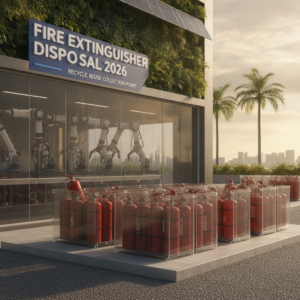
Proper disposal documentation protects owners from liability. Learn more about replacement and disposal best practices when updating older fleets.
Cost considerations and budgeting for 2026
Budgeting for fire safety should account for:
- Initial purchase and installation costs for new extinguishers
- Annual servicing and inspection fees
- Multi-year testing and potential hydrostatic test costs
- Digital tagging and compliance subscriptions (if used)
Investing in quality equipment and certified servicing can reduce long-term risk and may lower insurance premiums. Compare supplier service packages and look for transparent pricing that includes documentation and follow-up reminders.
How to audit your current fire extinguisher program
Perform a short internal audit every 6–12 months. A useful checklist:
- Are all extinguishers present where floor plans indicate?
- Are units unobstructed and clearly signposted?
- Do service tags show a professional inspection within the last year?
- Are there digital records accessible for audits and insurance?
- Have any expired or damaged units been removed and disposed of properly?
If gaps appear, book a professional fire safety inspection and servicing immediately to restore compliance. For practical advice and scheduling, review supplier options and servicing packages from trusted vendors.
Final steps: making the right supplier choice for your property
Selecting the right fire extinguisher supplier is a mix of technical capability, clear documentation and modern record-keeping. Prioritise suppliers who offer certified servicing, transparent reporting and digital options to streamline compliance. Regular fire safety inspection, combined with smart asset management and responsible disposal, protects occupants and reduces legal and financial exposure.
Schedule certified inspections, update digital records and replace expired units promptly to keep your premises safe and compliant in 2026. For more in-depth guides on extinguisher types, inspections and vendor choices, consult the linked resources throughout this article to help build a compliant, future-ready fire safety program.
Links to helpful resources referenced:
- Portable dry powder guide
- Singapore dry powder inspections
- Singapore fire extinguisher replacement and disposal
- Top fire extinguisher supplier and servicing

No comment yet, add your voice below!