

Why disposal matters for dry powder fire extinguishers in Singapore
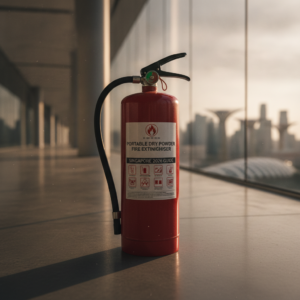
Dry powder fire extinguishers are common in homes, vehicles and businesses because they work on class A, B and C fires. But at end-of-life they present practical, legal and environmental questions: the cylinder is pressurised, the powder can irritate and corrode surfaces, and Singapore-specific rules require proper servicing, disposal and record-keeping.
It covers when to dispose versus refill, safe handling, regulatory touchpoints and environmentally preferable options.
What is inside a dry powder fire extinguisher?
Dry powder extinguishers typically contain monoammonium phosphate or sodium bicarbonate-based powders mixed with additives to prevent caking. The cylinder is pressurised with nitrogen or another inert gas. When discharged or left past its service life, the pressurised cylinder and remaining powder must be handled safely. Always consult the Safety Data Sheet (SDS) for the exact chemical composition before considering disposal.
When to dispose vs when to service or refill
- Signs you may need disposal: visible corrosion of the cylinder, a failed hydrostatic or pressure test, damaged valve assembly, or a cylinder beyond its certified service life.
- Signs you can service/refill: a recently discharged unit with intact cylinder and valve, and no failed tests. Refilling by a TUV SUD PSB approved or licensed supplier is commonly safer and cheaper than full replacement.
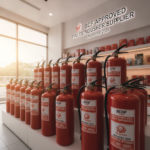
If you want guidance on authorised suppliers and approved services, consult a TUV SUD PSB approved fire extinguisher supplier to confirm whether refilling or replacement is appropriate.
(Anchor: [TUV SUD PSB approved fire extinguisher supplier])(https://nationalcitycorporation.sg/TUV SUD PSB approved-fire-extinguisher-supplier-singapore-2026/)
Singapore regulations and responsible authorities
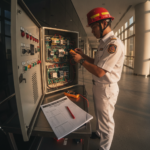
- Annual inspections and periodic tests are standard for commercial and certain residential buildings.
- NEA and environmental agencies: manage waste disposal protocols and hazardous waste transport licensing. Dry powder is usually non-flammable but can be classed as chemical waste that must be handled per NEA guidance.
Always maintain disposal and service records to show compliance during property audits or inspections.
Step-by-step: safe disposal process for homeowners (practical checklist)
- Confirm the condition. Check the pressure gauge, external damage, rust and expiry/service dates. If the gauge reads ‘OK’ and the cylinder looks intact, a service may be enough.
- Do not attempt to puncture or burn the cylinder. Never release powder into drains or stormwater.
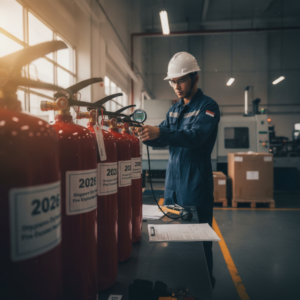
- Contact an authorised service provider for assessment. They will advise on refill, hydrostatic testing, or decommissioning.
- If decommissioning is required, the technician will safely depressurise the cylinder, remove the valve assembly and extract or neutralise remaining powder in a controlled manner.
- Arrange for collection by a licensed hazardous or chemical waste contractor if required. The contractor will transport the powder and metal cylinder to approved facilities for treatment, recycling or disposal.
- Obtain and keep documentation: service reports, disposal certificates and receipts.
For more detailed maintenance and servicing advice, professional guides outline industry best-practices and compliance steps.
What businesses need to know (compliance, auditing, record-keeping)
Companies and building managers must treat extinguisher disposal as part of their fire safety management system. Requirements typically include:
- Hydrostatic testing for cylinders at prescribed intervals; cylinders failing tests must be taken out of service and disposed of appropriately.
- Keeping disposal and service records for audits and tenant safety verification.
Using certified suppliers for purchase, servicing or disposal reduces compliance risk. If you need help selecting a vendor, consult a reputable supplier directory for 2026 industry leaders.
(Anchor: [buy fire extinguishers])(https://nationalcitycorporation.sg/buy-fire-extinguishers-singapore-2026-top-supplier-guide/)
Environmental concerns and recycling options
- Powder contents: Dry chemical powders can be irritating to skin, eyes and airways. They shouldn’t be washed into drains or disposed of in open bins without guidance.
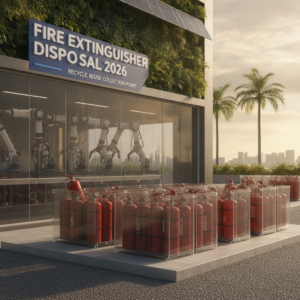
- Cylinder recycling: Steel and aluminium cylinders are recyclable once they are fully depressurised and the valve removed. Many licensed contractors will separate the metal for scrap recycling after safe decommissioning.
- Waste treatment: Depending on powder chemistry and contamination, treatment may range from controlled landfill to specialised neutralisation. Licensed waste handlers will advise and manage this.
Increasingly in 2026, suppliers are offering eco-focused take-back services and cylinder refurbishment programs—reducing landfill waste and providing certified recycling streams.
(Anchor: [extinguisher choices for Singapore])(https://nationalcitycorporation.sg/fire-extinguisher-choices-for-singapore-fire-protection-2026/)
Cost considerations: refill vs replacement vs disposal
- Refill/service: Typically the most cost-effective when the cylinder is in good condition. Includes replacement seals, pressure recharge and testing.
- Replacement: Needed for failed hydrostatic tests, severe corrosion or if the cylinder is beyond its service lifetime. New units include manufacturer warranty and are recommended for critical installations.
- Disposal fees: Expect charges for technician decommissioning and licensed hazardous waste collection. Prices vary depending on the contractor and whether recycling is included.
Factor in compliance risk, downtime and future maintenance costs when choosing between refill and replacement.
What NOT to do (common mistakes)
- Don’t open or puncture a pressurised cylinder yourself. This is dangerous and illegal in many jurisdictions.
- Don’t dump powder into public drains or general waste without guidance from authorities or a licensed contractor.
- Don’t discard service records—these are needed for compliance checks.
New trends in 2026: digital tagging, circular services and greener powders
- Digital QR tags: Many suppliers now include QR-coded service histories on extinguishers so owners and inspectors can instantly verify compliance and disposal history.
- Circular programs: More suppliers offer buy-back or refurbishment programs to return cylinders to service or recycle materials responsibly.
- Greener formulations: R&D has increased focus on lower-toxicity powders and better containment technologies. While still effective against multiple fire classes, some modern formulations reduce post-discharge cleanup and environmental impact.
If your building is upgrading, consider units that support digital maintenance logs and manufacturer take-back programs for easier end-of-life management.
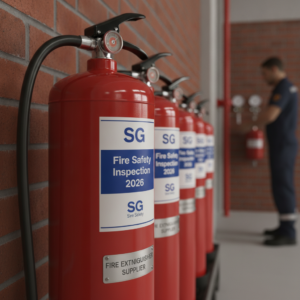
(Anchor: [fire safety inspection and servicing])(https://nationalcitycorporation.sg/singapore-fire-safety-inspection-and-extinguisher-servicing/)
Quick-reference disposal checklist for Singapore residents
- Check expiry and pressure gauge.
- Do not tamper with cylinder valve or try to empty powder yourself.
- Contact a TUV SUD PSB approved supplier or licensed service company for assessment.
- If unit must be disposed, request a disposal certificate and retain all records.
- Choose a contractor who recycles metal cylinders and provides an environmentally responsible treatment pathway.
Final practical tips
- Keep an up-to-date inventory of extinguishers on your property and log service dates and serial numbers.
- For small, recently discharged home units, some suppliers offer exchange programs where you return the old unit and receive a serviced or new replacement at a reduced cost.
- For commercial properties, include extinguisher end-of-life planning in your annual safety budget to avoid last-minute costs and compliance gaps.
Safe disposal of a dry powder fire extinguisher protects people, property and the environment while keeping you compliant with Singapore’s fire safety expectations. Prioritise TUV SUD PSB approved service providers, keep documentation and choose recycling or certified disposal whenever possible to close the loop responsibly.

No comment yet, add your voice below!