

Introduction
Dry powder fire extinguishers remain a common sight across Singapore workplaces because of their versatility and effectiveness against Class A, B and electrical fires. As we move through 2025, keeping these extinguishers reliable requires a mix of solid fundamentals — frequent visual checks, scheduled professional servicing and correct storage — plus new trends such as digital tracking and IoT-enabled monitoring. This article lays out practical, workplace-focused advice for facilities managers, safety officers and HR teams in Singapore to ensure dry powder extinguishers are ready when needed and compliant with local expectations.
Why dry powder extinguishers are widely used in workplaces
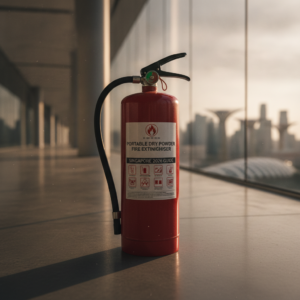
Dry powder (often labelled ABC powder) is popular in mixed-hazard environments because it can suppress fires involving ordinary combustibles, flammable liquids and energized electrical equipment. Key advantages for Singapore workplaces include: portability, broad-spectrum extinguishing capability and relatively low cost per unit. However, powder is abrasive and can damage sensitive electronics; it also creates a messy residue that requires cleanup. That trade-off makes correct siting, selection and maintenance essential.
Basic daily and monthly checks staff can and should do
Regular, simple checks by on-site staff reduce the risk of an extinguisher failing at a critical moment. Make these part of routine safety rounds:
- Confirm extinguishers are in their designated locations, wall-mounted or on brackets, and not obstructed.
- Check the pressure gauge (where fitted) is in the green or indicated safe zone.
- Ensure tamper seals and safety pins are intact and not bent or missing.
- Inspect housings for dents, corrosion or visible damage to hoses/nozzles.
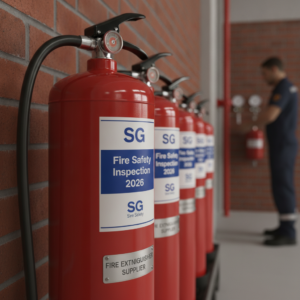
- Verify the inspection tag/label is present and shows recent dates or a QR code for records.
- Weigh the unit occasionally (or spot-check) to detect possible leakage or lost charge.
- Note cleanliness and accessibility: no boxes, furniture or stored materials should block access.
Document these checks in a simple log — a paper tag plus a digital record (spreadsheet or app) is best practice.
What professional servicing involves and recommended frequency
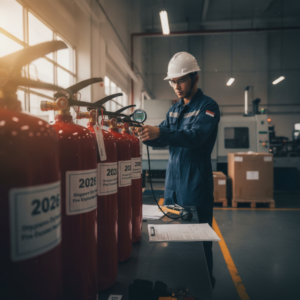
Professional servicing should be carried out by accredited technicians and scheduled in line with manufacturer guidance and local regulatory requirements. Typical stages performed by a certified service provider include:
- Full visual and mechanical inspection, including internal condition and cylinder integrity.
- Verification of pressure and valve function; replacement or recharge where necessary.
- Checking and, if necessary, replacing hoses, nozzles, seals and pressure gauges.
- Weighing and replenishing powder where levels have dropped or the powder has compacted.
- Hydrostatic or internal examinations where required by the manufacturer or regulation.
- Re-tagging and providing a dated service record or digital certificate.
Frequency: monthly/quarterly visual checks can be done in-house; annual professional servicing is a common baseline. Internal examinations, recharging or powder replacement often occur on multi-year cycles (commonly around five years), but intervals vary by manufacturer, cylinder type and workplace risk profile.
Common problems with dry powder extinguishers and how to spot them early
- Caking or compaction: Powder can settle and clump, making discharge unreliable. Signs are unusually heavy feel for the cylinder size, or poor powder flow during a maintenance discharge test.
- Corrosion: Exterior rust or pitting near the cylinder base may signal internal corrosion. Any visible corrosion demands immediate professional assessment.
- Leaking valves or lost pressure: A gauge out of range or a consistently light cylinder indicates leakage or loss of charge.
- Damaged hose/nozzle: Cracks, brittleness or blocked nozzles reduce performance and require replacement.
- Expired seals and missing labels: Missing inspection tags or removed tamper seals make compliance audits harder and suggest lax maintenance.
Spotting these early lets you schedule corrective action before a failure occurs.
Placement, hazard assessment and extinguisher selection
A tidy, risk-based strategy helps you choose where and which extinguisher to deploy:
- Conduct a fire risk assessment tailored to your premises: kitchens, chemical stores, workshops and electrical rooms have different needs.
- Use dry powder where flammable liquids and electrical hazards predominate, but avoid them as the primary choice in server rooms, labs with sensitive instruments, or food preparation areas — consider CO2 or clean-agent alternatives for those spaces.
- Keep travel distances short and extinguishers visible. Mounting height and signage should follow local guidance and make units easy to access.
- Size matters: an under-capacity extinguisher might not control a growing fire; an oversized cylinder can be difficult to handle. Match extinguisher size to likely fire load and the ability of staff to use it safely.
New 2025 trends: digital records, QR tags and remote monitoring
Digital transformation of fire safety is accelerating in Singapore workplaces. Practical trends to adopt in 2025 include:
- QR-code service tags: Quick access to maintenance history, certification and usage guides when scanned with a smartphone.
- Cloud-based compliance logs: Centralised records simplify audits and ensure no service interval is missed.
- IoT sensors and pressure monitors: These can alert facilities teams to pressure loss or tamper events in real time, reducing the chance a faulty extinguisher goes unnoticed for months.
- Predictive maintenance: Service providers increasingly use data analytics to optimise replacement schedules rather than relying solely on fixed intervals.
These tools improve reliability and reduce administrative overhead, but they complement rather than replace hands-on inspections and professional servicing.
Post-use cleanup, disposal and environmental considerations
Dry powder leaves a corrosive and abrasive residue that can be costly to clean, especially around electronics. After any discharge:
- Isolate and power down sensitive equipment where possible before cleaning.
- Use appropriate PPE and vacuum-type cleaners with HEPA filters where recommended — sweeping or compressed-air methods can spread powder.
- Arrange professional decontamination for critical areas to prevent long-term damage.
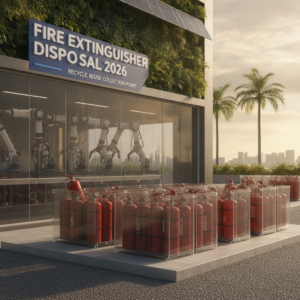
For end-of-life cylinders, follow hazardous-waste and metal-recycling routes. Many service companies will take back used cylinders for safe disposal or refurbishing — reuse of the steel body after proper testing reduces landfill.
Choosing a service provider and staying compliant in Singapore
Work only with service providers who are accredited or registered to perform fire safety maintenance. When selecting a contractor:
- Check for company certification, technician credentials and references from similar workplaces.
- Ask for clear scope-of-work documents, itemised service reports and a digital backup of maintenance records.
- Confirm they provide compliant tagging and evidence needed for audits.
- Compare service contracts for responsiveness (emergency callout times), replacement part availability and warranty on work.
Maintaining clear records and using accredited contractors will put your workplace in a strong position during inspections and insurance reviews.
Practical checklist for facilities managers (quick reference)
- Monthly: Visual checks, gauge readings, mountings, and obstruction removal.
- Annually: Full professional service by an accredited technician; verify tags and digital records.
- Every few years: Internal inspection, recharge, powder replacement or hydrostatic testing as per manufacturer and regulatory guidance.
- After any discharge: Professional cleaning, recharge and record the event.
- Continuous: Keep digital maintenance logs, use QR tags, and consider IoT monitoring for critical areas.
Conclusion
Keeping dry powder extinguishers reliable in 2025 combines tried-and-true servicing fundamentals with emerging digital tools. For Singapore workplaces, the priorities are simple: perform regular visual checks, engage accredited technicians for scheduled servicing, choose the right extinguisher for each hazard, and adopt digital records or sensor tools to reduce human error. These steps protect people, reduce downtime after incidents and help maintain compliance with local fire-safety expectations. Take action now to review your extinguisher inventory, confirm service schedules and close any maintenance gaps so devices will operate when they are most needed.


No comment yet, add your voice below!