

Introduction
In Singapore, building owners and facilities managers face increasing expectations for fire safety. Regular fire alarm maintenance and fire extinguisher servicing are no longer optional; they are essential for legal compliance, occupant safety and business continuity. This guide explains what to expect in 2026: statutory requirements, practical maintenance schedules, modern trends such as IoT-enabled monitoring, and vendor selection tips tailored to Singapore conditions.
Why fire alarm maintenance matters in Singapore
Fire alarm maintenance keeps detection and alert systems reliable when they matter most. In Singapore’s dense urban environment, a small fault can escalate quickly. Benefits of a robust maintenance programme include:
- Faster detection and evacuation during incidents
- Reduced false alarms that disrupt operations
- Lower long-term repair costs through early fault identification
Legal and regulatory context: what Singapore owners must know
Regulations require regular inspections and records for life-safety systems. Building owners should maintain documentation proving routine testing, repairs and replacement.
Keep digital logs of maintenance actions, detector calibrations, panel firmware updates and false alarm investigations. Auditors and fire authorities increasingly expect searchable electronic records rather than paper-only logs.
Core elements of a fire alarm maintenance programme
A thorough maintenance plan should include:
- Scheduled testing (weekly, monthly, quarterly, and annual checks depending on the component)
- Functional testing of detectors, manual call points and alarm panels
- Battery and backup power checks
- Speaker, strobe and evacuation warning checks
- Software and firmware updates for networked systems
- Rapid response for fault repairs and parts replacement
Typical schedule highlights:
- Weekly: control panel visual checks, fault indicators
- Monthly: manual call point tests and system status check
- Quarterly: detector functional tests and alarm circuit tests
- Annual: full system inspection, battery load testing, and end-of-life assessments
Document each activity, the technician’s details, test results and remedial actions.
Trends in 2026: digitalisation and predictive maintenance
Singapore’s built environment is adopting smarter fire protection. Notable trends include:
- IoT-enabled detectors that send real-time alerts to facility management platforms
- Predictive maintenance using trend analysis to flag parts near failure
- Remote health monitoring and cloud-based compliance dashboards
- Integration with building management systems (BMS) for coordinated HVAC and access control actions during incidents
These advances reduce downtime, improve response times and make compliance reporting easier. When selecting a provider, ask about compatibility with your building’s BMS and the availability of secure cloud logs.
What to expect from professional fire alarm maintenance services
A competent contractor will:
- Provide a clear scope and routine schedule
- Supply test reports and compliance certificates
- Offer rapid breakdown or fault response
- Retain spare parts inventory for your system model
Insist on written service agreements that define response times, escalation procedures and record-keeping responsibilities.
Fire extinguisher servicing: basics and schedules
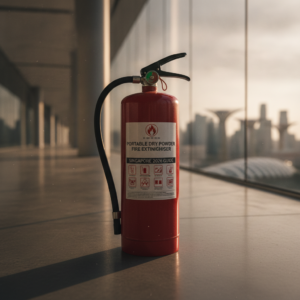
Portable fire extinguishers are frontline tools in small fires. Fire extinguisher servicing ensures they operate effectively and are safe to use. Key servicing points include:
- Monthly visual checks by on-site staff (pressure gauge, pin and tamper seal intact)
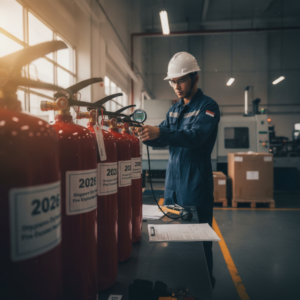
- Annual professional servicing for refilling, pressure checks, and component inspection
- Hydrostatic testing or replacement schedules depending on the extinguisher type
Different extinguisher agents (water, foam, CO2, dry powder) have different maintenance and life-cycle rules. For example, dry powder agents typically require specialised attention—see guidance on maintaining a dry powder fire extinguisher.
Detailed extinguisher service checklist
Professional service will usually cover:
- External inspection for corrosion, dents and nozzle blockage
- Weight verification and pressure gauge reading
- Disassembly for internal assessment where required
- Replacement of defective hoses, seals or valves
- Recharging or refilling after discharge
- Re-tagging with the service date and next due date
Ensure your servicing partner provides tamper-proof tags and electronically archived service records.
Replacement and disposal: when to replace extinguishers
Extinguishers reach end-of-life for several reasons: failed hydrostatic tests, severe corrosion, compromised seals, or outdated agent types. For guidance on authorised replacement locations and procedures in Singapore, consult resources such as the local replacement guide on where to replace portable fire extinguishers.
Disposing of extinguishers must be handled safely to avoid accidental discharge or environmental harm—see recommendations on safe extinguisher disposal.
Common servicing questions answered
- How often should extinguishers be hydrostatically tested? Hydrostatic testing intervals vary by agent and manufacturer, but many steel-bodied extinguishers need testing every 5–12 years. Always follow the product label and local guidance.
- Are rechargeable extinguishers cost-effective? For high-use environments, rechargeable models are economical long-term. For small offices with low fire risk, disposable units may be acceptable if local codes allow.
Choosing the right service provider in Singapore
Evaluate vendors on these criteria:
- Technician certifications and in-house training programmes
- Transparent pricing and detailed service reports
- Ability to maintain records digitally and integrate with FM systems
- Clear SLA for emergency response
For integrated site-wide inspections that include both detection systems and portable appliance handling, consider providers offering comprehensive fire protection system inspection packages.
Cost expectations and budgeting tips
Costs vary by building size, system complexity and extinguisher count. Budget items include routine inspections, annual servicing, parts replacement, and major overhauls. To control costs:
- Consolidate vendors for better pricing on combined services
- Invest in predictive monitoring to avoid emergency replacements
- Train on-site staff to perform monthly visual checks and basic maintenance
- Schedule major works during low-occupancy periods to reduce business disruption
Practical checklist for building managers (ready to implement)
- Maintain an up-to-date inventory of all detectors, panels and extinguishers with locations and service dates
- Schedule monthly visual checks by trained staff; record in a digital log
- Book certified technicians for quarterly and annual inspections at least 60 days in advance
- Keep spare extinguishers and critical parts on site where space permits
- Run evacuation drills that test alarm audibility and evacuation routes
- Verify that your insurer’s conditions are met by all maintenance activities
If you need a simple printable checklist, many local providers include one as part of their service package.
Real-world benefits and outcomes
Well-maintained fire safety systems significantly reduce the risk of property loss, business interruption and occupant injury. In Singapore, proper maintenance also lowers the likelihood of fines and enforcement actions from authorities. Investment in modern monitoring and professional servicing pays off through reduced false alarms, faster incident management and demonstrable compliance.
Summary
Fire alarm maintenance and fire extinguisher servicing are foundational to fire safety in Singapore. In 2026, the focus is on reliable scheduled maintenance, digital records, and smarter systems that enable predictive upkeep. Follow the recommended inspection schedules, choose qualified service providers, and keep complete records to ensure compliance and occupant safety. For practical guidance and inspection packages that cover both alarm systems and extinguishers, review specialist resources like integrated fire protection system inspection services and specific extinguisher guidance including replacement and disposal procedures.
Maintaining these systems is an ongoing responsibility that protects people, preserves property and supports business resilience.

No comment yet, add your voice below!