

Introduction
Singapore’s fire safety landscape continues evolving into 2026. For property owners, facility managers and fire safety officers, understanding SCDF fire extinguisher requirements and a thorough fire safety inspection regime is essential to protect lives, meet regulatory obligations and reduce insurance risk. This article explains what to expect from inspections, how to maintain extinguishers to SCDF standards, emerging trends, and practical steps to stay compliant.
Why fire safety inspection matters in Singapore
A formal fire safety inspection is more than a box-ticking exercise. The Singapore Civil Defence Force (SCDF) requires regular checks to confirm that firefighting equipment is functional, accessible and compliant with prevailing codes. A robust fire safety inspection program reduces response time in an emergency, lowers asset damage, and supports business continuity. Non-compliance can result in fines, enforcement actions or even temporary closure of premises.
Key stakeholders who must pay attention include building owners, appointed fire safety managers, facility managers and occupiers of commercial or industrial premises. Regular inspections also reassure tenants and insurers that the property is managed responsibly.
Understanding SCDF fire extinguisher requirements
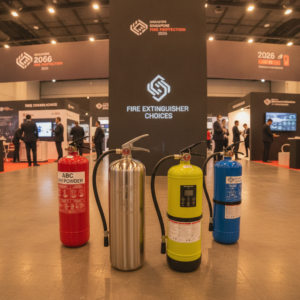
SCDF classifies fire risks and prescribes appropriate types of portable fire extinguishers (e.g., water, foam, CO2, dry powder, and clean agents) based on hazard profiles. Each extinguisher must be properly labeled with type, rating, and instructions, and be located where it can be reached quickly.
Important points:
- Extinguisher type must match the likely fire class (A, B, C, electrical hazards, etc.).
- SCDF requires clearly visible signage and unobstructed access routes.
- Extinguishers must be installed at specified mounting heights and spacing so they can be accessed within recommended travel distances.
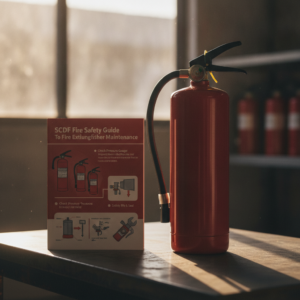
For a practical maintenance checklist tailored to SCDF expectations, consult this SCDF fire extinguisher maintenance checklist.
What happens during a fire safety inspection
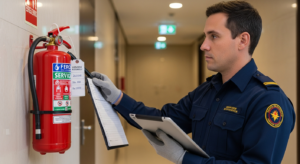
A competent fire safety inspection reviews equipment condition, records and compliance with legislative requirements. Typical inspection items include:
- Visual checks of all portable fire extinguishers for pressure gauge status, physical damage, corrosion, and intact seals.
- Verification of correct type and size for the assessed fire hazards.
- Inspection of hose reels, wet/dry risers, hydrants, and fire doors where applicable.
- Accessibility and signage checks to ensure units are unobstructed and marked.
- Review of maintenance logs, certification, and evidence of monthly and annual servicing.
If you are preparing specifically for a formal assessment, this page on fire safety inspection outlines expected procedures and service providers.
Routine maintenance: practical checklist and frequency
Maintaining extinguishers keeps them reliable when needed. Key routine actions include:
- Monthly visual inspections by on-site staff: check pressure, tamper seal, obvious damage, and mounting.
- Annual professional servicing by an authorised technician to perform pressure tests, replace parts, and recharge as needed.
- Hydrostatic testing at intervals prescribed by the extinguisher type and manufacturer.
- Immediate replacement after discharge or if the unit fails an inspection.
For an itemised guide you can apply on site, see the SCDF fire extinguisher maintenance checklist.
Certification, documentation and SCDF compliance
Documentation is critical. SCDF inspectors and insurer auditors will expect clear records showing that scheduled maintenance and servicing were performed by competent technicians. Typical documents to keep:
- Monthly inspection logs signed by responsible personnel.
- Annual service certificates from licensed fire safety companies.
- Certificates of hydrostatic testing and replacement receipts.
- A site inventory mapping extinguisher locations and types.
When arranging or verifying documentation, follow current certification standards and the guidance in this SCDF fire extinguisher certification and compliance resource.
When to replace a fire extinguisher
Extinguishers have a service life. Replacement is required if:
- The unit fails hydrostatic or pressure tests.
- Corrosion, severe physical damage, or leakage compromises integrity.
- The extinguisher has been discharged and cannot be re-certified.
- The extinguisher uses an agent that is obsolete or no longer meets environmental or safety standards.
A practical replacement guide helps identify when to swap units to ensure continuous protection—refer to the fire extinguisher replacement guide for Singapore 2026.
Common mistakes that cause failed inspections
Avoid these frequent pitfalls that lead to warning notices or penalties:
- Missing or incomplete maintenance records.
- Extinguishers installed in inaccessible locations or blocked by storage.
- Incorrect extinguisher types for specific hazards (e.g., using water near electrical equipment).
- Delayed hydrostatic testing or ignoring manufacturer service intervals.
- Relying on visual checks alone without scheduled professional servicing.
Addressing these issues proactively makes inspections faster and less disruptive.
Training and occupant preparedness
Even perfectly maintained extinguishers are ineffective without trained users. Invest in:
- Regular fire extinguisher training for staff—how to select the right unit, operate using the P.A.S.S. technique (Pull, Aim, Squeeze, Sweep), and evaluate when to evacuate.
- Evacuation drills that include extinguisher use scenarios for small, controlled fires.
- Clear signage and simple instructions near units to support untrained occupants during an emergency.
Portable fire extinguisher maintenance tips can be paired with training programs to maximise readiness.
Emerging trends in 2026: digitisation and smart maintenance
In 2026, fire safety inspection and extinguisher maintenance in Singapore are increasingly shaped by digital tools and sustainability considerations:
- Digital inspection checklists and cloud-based records reduce paperwork and simplify audit readiness. Mobile apps can timestamp and geo-tag monthly checks, improving accountability.
- IoT sensors for critical assets enable remote monitoring of pressure or tamper events, triggering automated service alerts.
- Eco-friendly extinguishing agents and more stringent recycling for replaced units align with sustainability goals.
- Consolidation of compliance data for multi-site operators allows centralised risk management and predictive maintenance scheduling.
Adopting these trends helps organisations pass inspections and lower long-term maintenance costs.
Choosing a competent fire safety partner
Select a service provider with proven SCDF-aligned credentials and clear processes for inspections, maintenance and certification. Ask for:
- Evidence of licensing, insurance and SCDF familiarity.
- Transparent service schedules and digital record delivery.
- Clear turnaround times for replacements and repairs.
- References or case studies for similar premises.
A trusted provider ensures your extinguishers are both SCDF-compliant and ready to perform when needed. For details on service providers and inspection services, check this link on fire safety inspection.
Preparing for an SCDF inspection: a quick pre-check list
Before an SCDF or internal inspection, run a short audit:
- Confirm all monthly logs are up-to-date and signed.
- Walk the premises to ensure no extinguishers are blocked or missing.
- Verify labels are present and readable; replace faded signage.
- Check that all service certificates and replacement receipts are filed and accessible.
- Train front-line staff on basic extinguisher operation and reporting procedures.
Completing this pre-check reduces the chance of non-compliance findings.
Conclusion
Staying on top of SCDF fire extinguisher maintenance and a disciplined fire safety inspection program protects people, property and reputation. Combine regular physical checks, professional servicing, accurate documentation and staff training to meet SCDF expectations. Embrace digital tools and sustainable practices to future-proof your program in 2026 and beyond. For practical resources on maintenance, certification, replacement and portable extinguisher care, explore the linked guides throughout this article to build a compliant, resilient fire safety system.


No comment yet, add your voice below!