

Why 2025 is a tipping point for fire safety in Singapore
Singapore’s fire safety landscape continues to evolve. Owners and facilities managers must balance regulatory compliance with efficiency, cost control and occupant safety. New digital tools — QR-tagging, IoT-enabled inspections and predictive analytics — are now mainstream, helping reduce false alarms and streamlining audits.
This article explains practical requirements and emerging best practices for building owners, facility managers and contractors in Singapore.
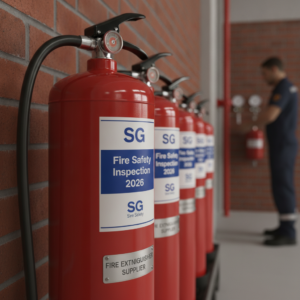
fire extinguisher basics: responsibilities and best practices
Portable fire extinguishers are frontline equipment.
Key practical actions:
- Maintain an up-to-date inventory: model, type (e.g., ABC powder, CO2, water), serial number and location.
- Perform daily or weekly visual checks (by on-site staff) to confirm pressure gauge, safety seal and physical condition.
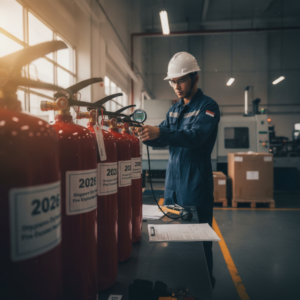
- Engage licensed contractors for scheduled servicing. Annual service is industry standard; frequency may vary by device and environment.
Note: Hydrostatic testing and full component replacement schedules depend on manufacturer guidance and extinguisher type. Always follow manufacturer instructions and certified contractor recommendations.
QR-tagging: making inspections auditable and efficient
QR-tagging has transformed how assets are tracked. Attaching a QR code to every extinguisher allows inspectors to:
- Instantly pull up an extinguisher’s history, last service date and next due date.
- Log on-site photos and comments during inspections, creating tamper-proof audit trails.
- Trigger automated reminders for contractors and facility teams.
Benefits for Singapore buildings:
- Reduced paperwork and lower risk of missed maintenance dates.
- Clear owner accountability when multiple tenants or managing agents are involved.
Implementation tip: Use QR tags with a centralised cloud dashboard that supports exportable reports (CSV/PDF) and role-based access for contractors, building managers and auditors.
IoT inspections and remote monitoring: what they deliver
IoT and sensor technologies are moving from novelty to necessity. For extinguishers and alarm systems, common IoT features include:
- Real-time pressure or tamper sensors for extinguishers that notify teams when pressure drops or seals are broken.
- Smart smoke and heat detectors that self-report faults, battery status and environmental metrics (e.g., humidity or particulate levels).
- Integration with property management systems (PMS) and building management systems (BMS) for centralised alerting.
Why adopt IoT now?
- Early detection of equipment degradation reduces emergency risk and emergency service callouts.
- Analytics can predict failures, enabling targeted maintenance rather than blanket schedules.
Cost consideration: IoT retrofits can be phased — start with high-risk areas (kitchens, plant rooms, loading bays) before full roll-out.
Fire alarm maintenance: schedules, tests and documentation
A well-maintained fire alarm system protects life and property. Maintenance obligations typically include:
- Routine checks by on-site staff (visual checks of panels, ensuring no faults) — weekly or monthly frequency depending on building complexity.
- Scheduled service by licensed fire alarm contractors for functional tests, detector cleaning and panel checks — typically quarterly or biannually, with full-system testing annually.
- Immediate remediation of faults and clear documentation of corrective actions.
Best-practice tasks during maintenance:
- Detector cleaning to remove dust and contaminants that cause nuisance activations.
- Verification of detector sensitivity and recalibration if readings drift.
- Verification of wiring integrity, backup battery health and communication lines to monitoring stations.
- Smoke control and emergency lighting integration checks for coordinated evacuation.
Reducing false alarms: technical and operational strategies
False alarms cost time, money and credibility. They can also lead to delayed responses when a real incident occurs. Reduce false alarms with a layered approach:
- Detection design: Use appropriate detector types (ionisation vs photoelectric vs aspiration) and intelligent sensors with adjustable sensitivity for different zones.
- Zoning and verification: Proper zoning confines alarms to specific areas. Two-stage alarms or verification algorithms (e.g., alarm requires confirmation from multiple detectors or a short verification delay) reduce nuisance activations.
- Environmental controls: Install detectors away from kitchens, loading docks and HVAC outlets or use specialised detectors in harsh environments.
- Regular cleaning and maintenance: Dusty or humid environments are common culprits. Scheduled cleaning and sensitivity checks prevent drift.
- Training and occupant awareness: Educate staff on how to respond to pre-alarm or fault indicators and how to avoid actions that trigger detectors (e.g., steam, aerosols).
Technology trend: AI and pattern recognition in alarm panels can identify recurring false-trigger patterns and prompt targeted fixes.
Practical compliance checklist for owners and facilities managers
- Create a complete asset register for all extinguishers and detectors.
- QR-tag all portable extinguishers and link to a cloud maintenance record.
- Implement monthly visual checks and annual certified servicing for extinguishers.
- Schedule detector cleaning and alarm system servicing per manufacturer and contractor guidance.
- Install IoT monitoring selectively for high-risk assets and connect to your PMS/BMS.
- Train staff on basic checks, false-alarm prevention and evacuation procedures.
- Use licensed contractors and confirm their registration and insurance status before engagement.
Choosing a contractor and preparing for audits
Selecting a competent fire safety contractor matters more than price. Consider:
- TUV SUD PSB approved or recognised registrations and a proven track record in Singapore projects.
- Capability to provide digital logs, QR integration and IoT services if you plan to modernise.
- Transparent service level agreements (SLAs), emergency response times and escalation pathways.
Looking ahead: 2025 and beyond
The next wave of fire safety in Singapore is digital, connected and predictive. Expect regulatory emphasis on reliable digital records and faster fault remediation. QR-tagging and IoT inspections will no longer be niche — they’re tools that reduce false alarms, speed audits and improve safety outcomes.
Adopting these practices now reduces risk, lowers long-term maintenance costs and demonstrates responsible stewardship of occupant safety.



No comment yet, add your voice below!