

Why fire extinguisher maintenance still matters in 2025
Fire extinguishers are often the first line of defence in a small fire. But an extinguisher that looks fine can fail when it’s needed most if it hasn’t been serviced or maintained properly. Regular fire extinguisher maintenance and fire extinguisher servicing keep equipment reliable, ensure compliance with local standards, and protect people and property. In Singapore, where dense urban environments and strict safety expectations intersect, timely servicing reduces risk and liability.
The Singapore context: regulation, responsibility and best practice
Owners and occupiers in Singapore have a legal duty to ensure fire safety equipment is kept in good working order. Best practice commonly includes routine visual checks, annual professional servicing, and periodic pressure/hydrostatic testing for certain cylinder types.
What professional fire extinguisher servicing includes
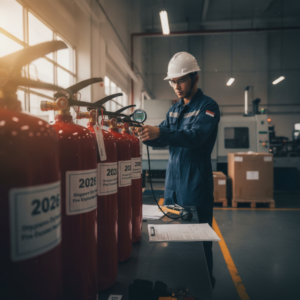
A full professional service for portable fire extinguishers typically covers:
- Visual inspection for physical damage, corrosion, leakage, or blocked nozzles
- Pressure gauge check and verification that the unit is within acceptable range
- Weight and content checks to confirm the agent is present
- Hose/nozzle and valve inspection and cleaning
- Recharging or replacement of extinguishing agent where required
- Labels, signage and mounting brackets checked for correct placement
- Hydrostatic testing of cylinders where mandated or recommended (typically at multi-year intervals)
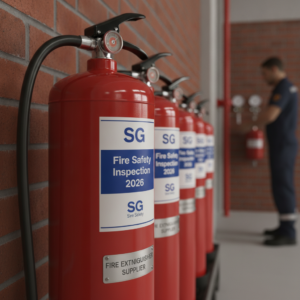
- A service tag and digital report confirming the work completed and next due date
Technicians will also advise on expired or obsolete units and recommend replacements or upgrades aligned with current fire risks.
What the 2025 servicing experience looks like: instant online quotes
One of the biggest trends in 2025 is immediate, transparent pricing. Fire extinguisher maintenance vendors now offer instant online quotes via web forms or apps. Typical flow:
- Enter location, number and types of extinguishers (e.g., ABC dry chemical, CO2, water mist)
- Optionally upload photos or accept a virtual walkthrough
- Receive an itemised quote with standard and optional services (recharge, hydrostatic testing, replacement)
Benefits:
– Fast budgeting for building managers and landlords
– Easier procurement and approvals
– Comparison shopping between vendors with standardised pricing
Instant quotes tend to reflect standard servicing packages; specialised work (structural repairs, complex installations) still requires inspection.
Same-day inspections: who can get them and when they matter
Same-day inspections are becoming commonplace—especially for commercial properties, tenant handovers, and emergency replacements. Situations that justify same-day inspections include:
- Failed visual checks or flat gauges discovered during routine audits
- New tenancy or change of occupancy where immediate compliance is needed
- Insurance or regulatory time pressure
- Post-incident assessments after a small fire or discharge
To qualify for same-day service, provide clear location details and extinguisher counts when requesting a booking. Expect a short surcharge for rapid response; many vendors include same-day options in priority packages.
Verified technicians: what to look for
When you book fire extinguisher servicing, the competence and verification of technicians matters as much as the service itself. Look for:
- Technicians with certification from recognised trade bodies or manufacturer training
- Companies that provide digital service records linked to the extinguisher serial number or QR tag
- Public liability insurance and clear warranties for work performed
- Positive, verifiable reviews and references from similar properties (offices, F&B, HDB/condo estates)
Many modern providers add an extra layer of assurance: ID-verified technicians, time-stamped inspection photos, and e-certificates suitable for audits.
New trends: digital tagging, IoT sensors and sustainability
2025 has brought practical innovations to a traditionally analogue category:
- QR-code service tags: Scan to view service history, next due date and technician notes
- IoT-enabled cabinets or sensors: Real-time readiness monitoring and automated alerts for pressure loss
- Predictive maintenance: Data analytics flag units that trend toward failure before a scheduled servicing
- Eco-friendly agents: Some suppliers now offer lower-GWP or halon alternatives and recycling of spent agents where permitted
These advances lower long-term costs and improve compliance and audit readiness.
Cost factors and ballpark pricing
Price varies by extinguisher type, service scope and urgency. Typical cost drivers:
- Type and size of extinguisher (CO2 and large cylinders often cost more)
- Recharge vs full replacement
- Hydrostatic testing requirements
- Emergency or same-day service fees
- Digital tagging or reporting add-ons
Ballpark (indicative) ranges in Singapore terms:
– Basic visual + annual service: modest per-unit fee
– Recharge and minor repairs: higher per unit depending on agent
– Hydrostatic testing: per-cylinder fee every few years
– Same-day inspection surcharge: additional fixed fee or percentage
Request itemised instant quotes to compare apples-to-apples and avoid hidden costs.
DIY checks everyone should do (but not replace professional servicing)
Owners can perform simple monthly checks between professional services:
- Confirm extinguisher is visible, unobstructed and properly mounted
- Check the pressure gauge is in the green or within recommended range
- Ensure the safety seal and tamper indicators are intact
- Look for obvious signs of damage, corrosion or leakage
- Verify service tag and next due date
These checks help catch obvious issues early, but they do not replace annual professional fire extinguisher servicing.
Choosing the right provider in Singapore
When selecting a servicing company, prioritise:
- Transparent, instant online quotes and clear scope of work
- Ability to schedule same-day inspections when needed
- Verified technicians with certifications and digital proof of work
- Detailed, accessible service records for audits
- Good customer support and clear warranty terms
Request references from properties similar to yours (retail, office, residential) and insist on written service reports.
Simple maintenance checklist and schedule
A streamlined schedule to maintain compliance and readiness:
- Monthly: Owner visual checks (gauge, seal, location)
- Annually: Full professional fire extinguisher servicing and tagging
- Every 3–5 years: Hydrostatic or internal inspections as recommended by manufacturer and standards
- After any discharge or incident: Immediate professional inspection and recharge/replacement
Keep digital or physical records for at least the period required by insurers and local regulations.
Final note — reliability, records and peace of mind
In 2025, fire extinguisher maintenance and fire extinguisher servicing in Singapore deliver more than compliance: they provide reliability, traceable records and faster response through instant online quotes and same-day inspections. Verified technicians and digital reporting remove uncertainty and make audits smoother. Prioritise a provider that combines technical competence with transparent pricing and modern tracking tools—so extinguishers work when they must and your building remains safe and compliant.


No comment yet, add your voice below!