

Why the 2026 update matters for Singapore buildings
Singapore’s built environment depends on practical, enforceable fire safety standards. The SCDF continues to refine regulations to reflect new building typologies, hybrid workspaces and evolving fire risks. For building managers, business owners and facility teams, understanding the 2026 guidance on fire extinguishers is essential to keep occupants safe, pass inspections and avoid enforcement actions.
This article breaks down what you need to know about SCDF fire safety requirements for fire extinguishers in 2026, how to choose the right extinguisher, maintenance and testing expectations, and how to work with compliant suppliers.
The big-picture changes in SCDF fire safety for 2026
SCDF’s recent emphasis is on risk-based, technology-aware fire protection. For fire extinguishers this means:
- Clearer guidance on extinguisher selection according to hazard type and space use.
- Stronger enforcement of competent maintenance and record-keeping by licensed providers.
- Greater attention to correct placement, signage and accessibility, especially in newly adapted workspaces.
- Encouragement to use certified equipment and vendors who can demonstrate traceable testing and service logs.
For a practical inspection-ready checklist that suppliers should follow, see this SCDF fire safety checklist for fire extinguisher supplier: https://nationalcitycorporation.sg/scdf-fire-safety-checklist-for-fire-extinguisher-supplier/.
Understanding extinguisher types and their SCDF relevance
Different extinguisher agents tackle different hazards. Common agent types in Singapore include:
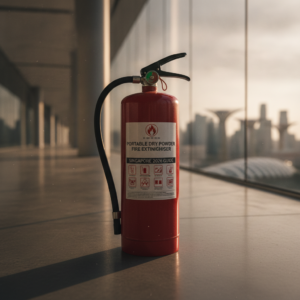
- Dry chemical (ABC/dry powder): Versatile for mixed hazards; widely used in commercial and industrial settings. More details are available in the dry powder guidance: https://nationalcitycorporation.sg/dry-powder-fire-extinguisher-singapore-scdf-fire-safety-2026/.
- Foam: Effective on flammable liquids (Class B) and Class A fires involving combustibles.
- Carbon dioxide (CO2): Useful for electrical fires and sensitive electronic equipment.
- Water-based (including water mist): Ideal for Class A risks but not for electrical or flammable liquid fires.
SCDF expects that extinguisher selection is matched to the hazard profile of the space. For an overview of how these elements fit into the broader fire protection system guidance for 2026, refer to SCDF fire safety 2026: https://nationalcitycorporation.sg/scdf-fire-safety-2026-singapore-fire-protection-system/.
Placement, quantity and accessibility best practices
Correct placement is as important as choosing the right agent. Key points:
- Extinguishers should be located where a fire is likely to start and along common escape routes.
- Mounting height must allow quick access — typically at eye-to-shoulder height and unobstructed.
- Signage must clearly mark extinguisher locations, and travel distance to an extinguisher should be minimised based on risk.
- Special-use areas (kitchens, plant rooms, server rooms) often require dedicated agents and additional units.
Carry out a walk-through using the 2026 guidance to verify locations; supplier and service teams can help map your coverage.
Inspection, maintenance and record-keeping (what SCDF looks for)
SCDF’s enforcement focuses strongly on maintenance competence and documentation. Practical expectations include:
- Monthly visual checks by the responsible person to ensure devices are present, sealed and gauge readings are normal.
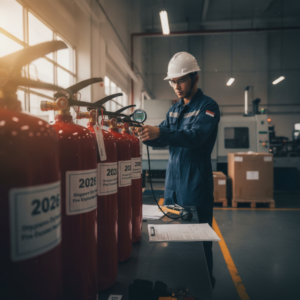
- Periodic servicing and maintenance by an SCDF-licensed fire protection equipment service provider with signed service reports.
- Clear labeling with installation and service dates, plus next-service due dates.
- Retention of service records and a maintenance log that is readily available during inspections.
If you need a detailed guide on servicing and compliance steps for fire extinguishers in Singapore, consult this SCDF fire extinguisher guide: https://nationalcitycorporation.sg/scdf-fire-extinguisher-guide-for-singapore-fire-protection/.
Note: Specific testing intervals (e.g., hydrostatic testing) depend on extinguisher type and manufacturer recommendations—confirm with your supplier and check SCDF guidance.
Choosing an SCDF-compliant supplier
Selecting the right supplier affects both safety and compliance. When evaluating suppliers, check that they:
- Are appropriately licensed and have demonstrable experience with SCDF audits.
- Provide clear service agreements including inspection frequency, spares, and emergency response.
- Offer traceable records, digital logs or printable certificates for each serviced unit.
- Can advise on correct extinguisher selection for diverse spaces and provide on-site risk assessments.
For vetted supplier options and comparison guidance tailored for 2026, see: https://nationalcitycorporation.sg/best-scdf-fire-extinguisher-supplier-options-singapore-2026/.
Training and readiness: beyond equipment
Fire safety is people plus equipment. SCDF emphasises competency among staff who will use extinguishers or assist in evacuation. Recommended training actions:
- Provide hands-on extinguisher familiarisation for designated responders in your workplace.
- Run periodic drills that include locating extinguishers, using PASS technique (Pull, Aim, Squeeze, Sweep) and coordinated evacuation.
- Maintain a short instruction card near extinguishers for quick reference by visitors.
Training records and drill schedules are valuable evidence of due diligence during an inspection.
Common non-compliance issues and how to fix them
During inspections, SCDF commonly flags the following:
- Missing or unreadable service tags and records.
- Wrong extinguisher type in a high-risk zone (e.g., water-based unit near electrical equipment).
- Obstructed access or extinguishers placed too high or too low.
- Expired or untested units with no proof of hydrostatic testing where required.
Fixes are usually straightforward: update records, replace or relocate units, engage a licensed servicing provider and schedule corrective drills. If you need a practical, field-ready checklist to walk through corrections, review the supplier checklist link above: https://nationalcitycorporation.sg/scdf-fire-safety-checklist-for-fire-extinguisher-supplier/.
Integrating extinguishers into a modern fire protection plan
Modern fire protection in Singapore blends detection, suppression, and portable extinguishers. Extinguishers are primarily first-response tools — they buy time until fire alarms and suppression systems operate or until evacuation is complete. Consider:
- Coordinating extinguisher placement with smoke detection and alarm zoning.
- Using digital records or asset tags to track expiry dates, last service and next due date.
- Upgrading to ergonomic, lower-weight models where staff comfort and repeated use are concerns.
For system-level planning that incorporates extinguisher strategy, this SCDF fire safety 2026 guidance is useful: https://nationalcitycorporation.sg/scdf-fire-safety-2026-singapore-fire-protection-system/.
Quick compliance checklist (practical actions for 2026)
- Conduct a hazard survey to identify the correct extinguisher types per zone.
- Ensure every extinguisher has a visible service tag and documented maintenance history.
- Implement monthly visual checks and schedule servicing with a licensed provider.
- Post clear signage and maintain unobstructed access to all units.
- Train a roster of staff in extinguisher use and run regular drills.
- Keep digital or printed logs ready for SCDF inspections and audits.
If you need specific supplier recommendations or product comparisons, consider reading the supplier options page: https://nationalcitycorporation.sg/best-scdf-fire-extinguisher-supplier-options-singapore-2026/.
Frequently asked practical questions
- Who is responsible? Building owners or appointed facility managers are typically responsible for ensuring compliance.
- What records should I keep? Service reports, installation dates, monthly check logs and any replacement certificates.
- When should units be replaced? Replace when damaged, corroded, beyond service life, or when an agent is depleted—follow supplier and SCDF guidance.
For a step-by-step extinguisher guide tailored to Singapore workplaces, use this practical resource: https://nationalcitycorporation.sg/scdf-fire-extinguisher-guide-for-singapore-fire-protection/.
Final recommendations: keep it simple and defensible
SCDF fire safety in 2026 is about aligning practical risk mitigation with good documentation and competent servicing. Prioritise the basics: the right extinguisher for the hazard, visible and accessible placement, reliable servicing by licensed providers, and clear records.
Make compliance part of your facilities routine: a short monthly audit, an annual supplier service, and periodic staff training will significantly reduce risk and keep your premises aligned with SCDF expectations. For technical details on dry powder and other agents in the Singapore context, refer to this resource: https://nationalcitycorporation.sg/dry-powder-fire-extinguisher-singapore-scdf-fire-safety-2026/.
Adopt these practical steps now and your building will be safer, more resilient and ready for SCDF inspections in 2026 and beyond.


No comment yet, add your voice below!