

Fire safety is non-negotiable in Singapore’s dense commercial and residential landscape. Whether you run an office, F&B outlet, factory or property management firm, choosing the right singapore fire safety company and fire extinguisher supplier is critical to meeting regulations, protecting people and reducing downtime after an incident. This 2025 guide breaks down the certifications to check, realistic pricing benchmarks, response-time expectations and practical questions to ask before signing a contract.
Why the right partner matters
Working with an experienced singapore fire safety company and a reputable fire extinguisher supplier reduces regulatory risk and improves on-site safety. Poor-quality products or inadequate servicing can mean non-compliance, voided warranties or, worse, equipment failure during an emergency.
Certifications and approvals to verify
- Singapore Standards (SS): Look for adherence to relevant SS standards such as SS 578 for portable fire extinguisher maintenance and any updates in 2024–2025. Suppliers and service vendors should be able to cite applicable standards for product performance and maintenance frequency.
- Manufacturer and international approvals: Fire extinguishers should carry recognized approvals (e.g., UL, EN, BSI or equivalent). Ask for product data sheets and test certifications.
- ISO and quality systems: ISO 9001 for quality management or ISO 14001 for environmental practices indicate stronger operational controls.
- Trained personnel and FSM competence: If your premises require a Fire Safety Manager (FSM) under local legislation, ensure the supplier’s technicians and trainers have approved FSM or WSQ-accredited training certificates.
- Insurance and liability coverage: Confirm the company holds adequate public liability and professional indemnity insurance for works and emergency support.
Choosing the right fire extinguisher supplier: product and service considerations
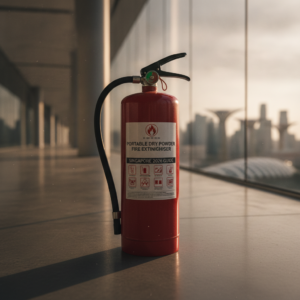
- Correct extinguisher type and rating: Ensure supplier advises on the right extinguisher class (A, B, C, F, CO2, water mist) and appropriate capacity per area. Avoid one-size-fits-all solutions.
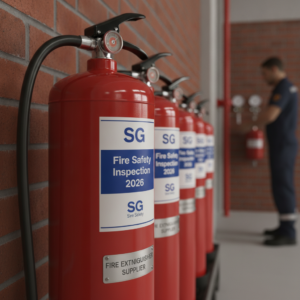
- Traceability and labeling: Suppliers should provide serial-numbered units, inspection tags or QR codes for digital maintenance logs.
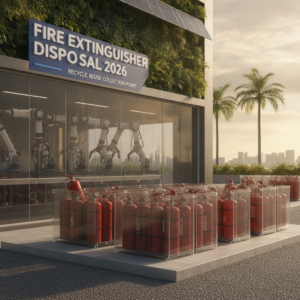
- Refills, disposals and recycling: Verify refill compatibility, safe disposal of expired cylinders and any eco-friendly extinguishing options if available.
- Spare parts and long-term availability: Check warranty periods and parts availability for at least 5–10 years.
Pricing benchmarks and contract models (2025 estimates)
Pricing depends on type, capacity and services bundled. Below are ballpark figures in SGD for Singapore as of 2025 — use these to compare quotes, not as exact offers.
- Portable extinguisher purchase:
- Small ABC dry powder (1–2 kg): SGD 40–120
- Medium ABC or water (3–6 kg/L): SGD 80–250
- CO2 2–5 kg: SGD 120–400
- Commercial/residential larger units and specialized agents: SGD 300–1,200+
- Installation and placement: SGD 20–80 per unit (depends on mounting, signage and travel)
- Annual maintenance/service:
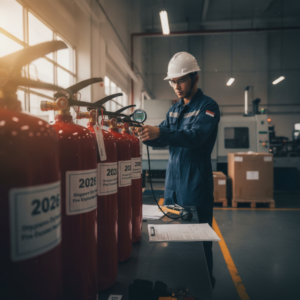
- Routine inspection & tagging: SGD 20–60 per unit per visit
- Recharge/refill: SGD 30–150 depending on agent and size
- Hydrostatic/internal test (periodic): SGD 60–250 per unit (depending on type)
- Service contracts:
- Basic subscription (annual inspection + emergency hotline): SGD 8–30 per unit/month
- Comprehensive managed service (inspections, refills, replacement pool, digital records, training): SGD 20–80 per unit/month
When comparing vendors, request itemised quotes that separate capital purchase from recurring maintenance and emergency call-out fees. Beware of low upfront prices that lock you into expensive ad-hoc service calls.
Response times, SLAs and emergency readiness
Response time is a key differentiator between suppliers. For emergencies, priority features to demand in Service Level Agreements (SLAs):
- 24/7 emergency hotline: Confirm a monitored number and escalation process.
- Guaranteed response window: Typical commercial SLAs promise on-site attendance within 60–120 minutes for urgent incidents in Singapore; for high-risk sites negotiate shorter windows.
- Spare stock and mobile units: The supplier should keep replacement extinguishers and mobile cart units to address immediate needs.
- Replacement vs repair policy: Clarify when the company replaces a unit immediately versus schedules repair.
- After-incident reporting and follow-up: Expect a written incident report, replaced equipment, and preventive recommendations.
Request SLA terms in writing, including penalties or credits for missed response times if rapid attendance is business-critical.
Modern trends shaping supplier selection (2025)
- Digital inspection and QR tagging: Leading suppliers deploy mobile apps for inspections with photos, time-stamped logs and automatic reminders, simplifying audits and evidencing compliance.
- IoT sensors and predictive maintenance: Smart devices on extinguisher cabinets and fire systems can report tamper events, pressure drops or missing units in real time.
- Subscription models: “Fire safety as a service” bundles equipment, maintenance and compliance reporting under predictable monthly fees, useful for multi-site operators.
- Environmentally friendly agents: Demand is growing for low-global-warming-potential agents and refillable cylinder programs.
- Integrated training (VR/AR): Some providers now offer immersive training and refreshers for staff, increasing retention and practical readiness.
Questions to ask every prospect
- Can you provide references from similar sites?
- Which Singapore standards and manufacturer approvals apply to the products you propose?
- What are your emergency response times and what’s included in your SLA?
- Do you provide digital inspection logs and evidence for audits? Are these accessible to my compliance team?
- How are recurring costs structured (annual contract, per-visit charges, or subscription)? Can I get an itemised total cost of ownership for 3–5 years?
- What training and handover will you provide for our staff? Do you offer refresher training?
- How do you handle end-of-life units, refills, and hydrostatic testing schedules?
10-point checklist before you sign
- Verify extinguisher approvals and product data sheets.
- Get a detailed, itemised quote (purchase, install, maintenance, emergency call-outs).
- Check SLA response times and emergency stock availability.
- Ensure technicians hold WSQ/FSM or equivalent training certifications.
- Ask for a sample maintenance report and digital record format.
- Confirm warranty, parts availability and product lifecycle support.
- Review insurance and liability coverage for on-site works.
- Check for modern features (QR tags, IoT or digital logs) if required.
- Compare references and recent client testimonials focused on response and reliability.
In Singapore’s regulatory environment, informed procurement matters. Selecting the right singapore fire safety company and a dependable fire extinguisher supplier protects people, assets and your reputation. Use this guide to set clear technical, contractual and service expectations — and insist on documentation, SLA commitments and digital records that make ongoing compliance straightforward.
Choosing a supplier is both a technical and commercial decision. Prioritise certified products, transparent pricing and demonstrable response capabilities. The right partner will reduce risk, simplify audits and give your team the confidence they need to maintain safe, compliant premises.


No comment yet, add your voice below!