

Why a clear extinguisher plan matters in Singapore
A functioning fire extinguisher is one of the simplest — and most effective — life-safety investments a home or business can make. In 2025, with stronger digital compliance tools and tighter building-safety expectations, knowing when to inspect, refill or do a fire extinguisher replacement isn’t just good practice — it helps you meet regulatory expectations and reduce risk.
This guide explains the practical timelines, inspection checks, refill vs replacement decisions, and where to buy certified extinguisher units in Singapore.
Basic types and why choice matters
There are several common portable extinguisher types: dry chemical (ABC), water, foam, CO2 and wet-chemical (for cooking oil fires). The right type depends on the hazard:
- ABC (dry powder) — versatile for general combustible materials, flammable liquids and electrical equipment. Widely used in offices and multi-purpose spaces.
- CO2 — best for electrical and small liquid fires where residue must be minimal.
- Wet-chemical — for kitchens and deep-fryer risks.
Choosing the correct type reduces the need for premature replacement and ensures a unit is effective when needed.
When to refill vs when to replace
Refill, recharge or replace? Here’s how to decide:
- Refill (recharge) is needed after any discharge — even a short one. Many rechargeable extinguishers are designed to be recharged and certified by service technicians.
- Replace the extinguisher if the cylinder fails a pressure test, shows severe corrosion, has significant physical damage (dents, cracks), has an expired or illegible rating/label, or if it’s non-rechargeable and has been discharged.
- Consider replacement rather than recharge when the extinguisher is old and obsolete, when replacement cost is comparable to recharge and parts are unavailable.
Sustainability note: refilling is usually less wasteful than replacement. But safety and certification must always come first.
Typical inspection and maintenance schedule (what most experts recommend)
While specific regulatory requirements may vary by building type and occupier, the following is a practical, industry-aligned schedule commonly used by building managers and fire contractors in Singapore:
- Monthly: Quick visual check by on-site staff — gauge in the green, tamper seal intact, nozzle/hose clear, no obvious damage, unit in its correct location.
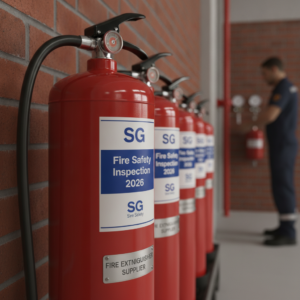
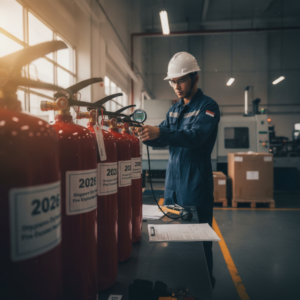
- Annually: Full service by a licensed contractor — internal/external inspection, pressure checks, refilling/recharging where needed, functional testing and tagging.
- Hydrostatic testing / pressure testing: Typically required every 5–12 years depending on extinguisher type and manufacturer. This is a specialised test that checks cylinder integrity.
Always keep inspection tags and digital records for audits.
Quick owner/operator inspection checklist
Before calling a contractor, you or a staff member can run a quick checklist monthly:
- Is the pressure gauge in the green zone?
- Is the tamper seal unbroken and the safety pin present?
- Is the nozzle/hose free of blockages or cracks?
- Is the extinguisher free from corrosion, heavy dents or paint damage?
- Is the inspection tag present and up to date?
- Is the unit mounted and easily accessible, with no obstructions?
If any item fails this quick check, arrange professional servicing promptly.
Signs you must replace now
Replace immediately if you find:
- Bulging, cracks, deep dents or severe corrosion on the cylinder.
- Leaks or a persistently low pressure gauge.
- Missing or illegible rating/inspection labels.
- The extinguisher is non-rechargeable and has been discharged.
- The unit fails a professional hydrostatic or pressure test.
A compromised cylinder can become a dangerous projectile under pressure; don’t delay replacement.
Legal & compliance considerations in Singapore
Keep service records and tags available for inspections and compliance checks.
Regulations can be updated; staying current ensures your fire extinguisher replacement and maintenance plan remains compliant.
Where to buy fire extinguishers in Singapore (2025 practical tips)
When buying a fire extinguisher, prioritise certified suppliers and licensed contractors. Key points:
- Avoid unbranded or grey-market imports. Certification and traceability matter for performance and warranty.
- Look for brands and suppliers who provide: warranty, maintenance contracts, inspection tags, hydrostatic testing services and proof of certification.
- Consider suppliers offering digital services: QR-coded tags for inspection logs, online maintenance scheduling and IoT-enabled monitoring — these are growing trends in 2025 for larger buildings and managed properties.
You can source units through: authorised brand distributors (global and regional), local licensed contractors, and reputable building-services platforms. For residential needs, ask for advice from a licensed contractor to select the correct type and size for your home environment.
Choosing a supplier: checklist
Ask vendors these questions before purchase:
- Do your extinguishers meet recognised standards and local requirements?
- Do you offer annual maintenance and emergency servicing?
- Is hydrostatic testing available in-house or via accredited partners?
- What warranty and documentation come with the unit?
- Do you provide digital inspection logs or QR tags for easier record-keeping?
A reliable supplier will gladly answer and provide documentation.
Cost expectations and budgeting (Singapore 2025)
Prices vary by type and capacity. As a rough guide:
- Small portable units (1–2 kg) for homes: entry-level models to mid-range typically start from a modest price, with higher-tier certified models costing more.
- Commercial-grade (2–6 kg) ABC or CO2 units commonly used in shops and offices will cost more and often include installation and tagging fees.
Always budget not just for purchase price but for annual servicing, hydrostatic testing, replacement parts and end-of-life disposal. Request a full quote that includes service plans.
Digital trends and the future: smart maintenance
In 2025, many Singapore buildings adopt digital compliance tools:
- QR-coded inspection tags that link to maintenance history.
- Cloud-based scheduling and reminders for monthly/annual checks.
- IoT sensors that report pressure and tamper status in real time (larger buildings and critical facilities).
These tools reduce paperwork, improve audit readiness and help catch issues earlier — especially useful for multi-site operators and facility managers.
Disposal and environmental considerations
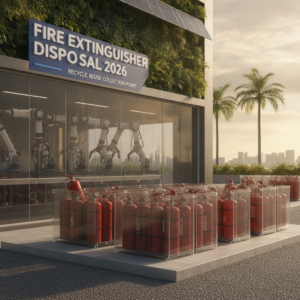
When replacing an extinguisher, ensure responsible disposal. Rechargeable units removed from service should be handled by a licensed contractor for proper depressurisation, recycling and disposal. Non-rechargeable units and spent contents may be classified as hazardous waste; do not discard them in municipal recycling bins.
Final practical steps for building owners and residents
- Set a simple schedule: monthly visual checks by staff or household members; annual professional servicing.
- Tag and log every service (digital or paper) and keep records for audits.
- Replace any unit with structural damage or failed tests; refill after any discharge.
- Consider digital tagging or IoT for larger properties to streamline compliance.
A robust, well-documented approach to fire extinguisher replacement and maintenance protects people, property and regulatory standing. In Singapore’s fast-evolving compliance landscape, small regular checks paired with trusted contractors deliver the best safety outcome.


No comment yet, add your voice below!