

Introduction
Fire safety remains a top priority across Singapore’s homes, workplaces and public spaces. A correctly selected and maintained fire extinguisher can stop a small incident from becoming a catastrophe.
What is a portable fire extinguisher and why it matters
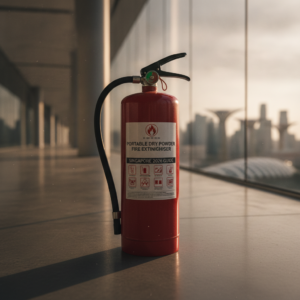
A portable fire extinguisher is a handheld device designed to discharge an agent that suppresses or extinguishes small fires. They are the first line of defense before the arrival of emergency services and are critical in workplaces, kitchens, vehicles and homes. Portable units are compact, quick to operate and intended for immediate response, buying time and reducing damage.
Benefits of having a portable fire extinguisher:
– Immediate intervention capability to prevent escalation.
– Compact and suitable for confined spaces common in Singapore properties.
– Variety of agents suitable for different fire classes (A, B, C, electrical hazards).
Types of fire extinguishers and what suits Singapore premises
Understanding types helps you match the extinguisher to likely fire risks:
– Dry powder (ABC): Versatile for A (combustibles), B (liquids) and C (gas) fires. Popular for vehicle fleets and industrial settings.
– Water (APW / Class A): Best for ordinary combustibles (wood, paper). Not for electrical or flammable liquid fires.
– Carbon dioxide (CO2): Effective on electrical and flammable liquid fires; leaves no residue but has limited range and short discharge time.
– Foam: Effective for flammable liquid fires (B) and class A; creates a cooling and sealing blanket over liquid fuel.
– Wet chemical: Designed for kitchen grease (Class F) fires — particularly important for restaurants and residential kitchens.
Selecting the right agent depends on your specific fire risks. Residential flats, HDB kitchens and small offices often need a mix: a wet chemical for kitchen risks and an ABC dry powder or CO2 for broader coverage.
Legal requirements and alignment (Singapore 2025)
Regular updates mean compliance and inspection obligations can change; staying current is essential.
Key points to remember:
– Some commercial premises and workplaces must have TUV SUD PSB approved fire extinguishers and display appropriate signage. Records should be kept to demonstrate compliance.
– From 2025, expect greater emphasis on traceability and documented servicing records as enforcement tools move toward digital logging and audit readiness.
Choosing the right portable fire extinguisher for your space
Consider these practical factors when buying:
– Fire risk profile: Identify the fuel sources — kitchen oils, electrical equipment, flammable liquids.
– Size vs portability: Extinguishers between 1kg–6kg are common. Smaller units are easy to handle but have limited discharge time. Trusted vendors and verified product listings reduce the risk of non-compliant equipment. For purchasing options and approved units, see this resource on where to buy TUV SUD PSB approved fire extinguisher.
– Accessibility: Choose units that can be mounted at a reachable height and are clearly visible.
Placement, mounting and accessibility best practices
Placement is as important as selection. An extinguisher that’s hard to reach is as good as none.
– Mounting height: Typically mounted with the carrying handle at about 1 to 1.5 metres from the floor for easy access.
– Visibility: Use clear signage and keep the area unobstructed.
Maintenance, inspections and record-keeping
Regular maintenance is non-negotiable. Typical schedule:
– Daily/weekly visual checks by occupants: ensure pressure gauge in green, no obvious damage, pin and tamper seal intact.
– Monthly documented inspections by site responsible persons: checklist of location, visibility, pressure and accessibility.
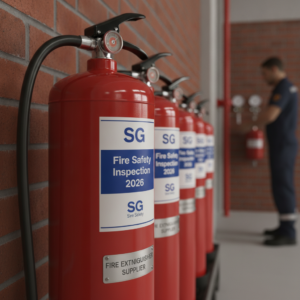
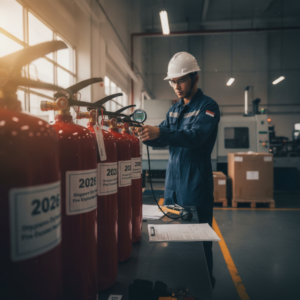
– Annual servicing by accredited personnel: full dismantling, recharge (if applicable), pressure testing and certificate of compliance.
Digital trends in 2025: Expect more facilities to adopt QR-coded units and cloud-based maintenance logs to streamline audits and compliance reporting.
Training and practical use
Having an extinguisher is only effective if people know how to use it. Basic training should cover:
– The PASS technique: Pull pin, Aim low, Squeeze lever, Sweep side to side.
– Understanding fire classes so the operator chooses the correct extinguisher.
– When not to fight a fire: personal safety and evacuation come first; use extinguishers only for small, contained fires and when exit routes are clear.
Conduct periodic drills with staff and occupants. Simulated use of training cartridges or empty-unit practice helps build confidence without wasting agents.
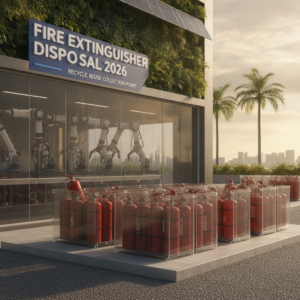
Disposal and end-of-life: safe, compliant options
Fire extinguishers have finite lifespans. Disposal protocols depend on type:
– Dry powder units often require specialised disposal because of environmental concerns and pressurisation. Follow recommended procedures to depressurise and dispose of contents safely. For practical disposal steps for dry powder units, see the dry powder fire extinguisher disposal guide.
– CO2 and other gas-based units should be returned to accredited service providers for safe discharge and recycling.
– Never puncture or incinerate an extinguisher.
Proper disposal protects the environment and avoids regulatory breaches.
Replacement, retrofitting and upgrades
Aging or corroded extinguishers must be replaced promptly. Signs that indicate replacement:
– Corrosion or body damage.
– Gauge consistently out of range or failed pressure test.
– Discharge or leakage.
Fast response for replacement and rectification is critical for operational safety. If you need quick replacement or an urgent inspection, consider services that offer expedited support — for example, providers that advertise fast fire extinguisher replacement and safety inspection.
Emerging trends for 2025: smarter, greener, more auditable
Several trends shaping fire extinguisher practice this year:
– Smart tracking: QR codes and IoT-enabled tags for maintenance records and location tracking help duty holders stay audit-ready.
– Environmentally friendlier agents: While safety is paramount, newer agents and recycling pathways reduce environmental impact.
– Integrated safety ecosystems: Extinguishers are increasingly part of broader building safety systems, tied into alarms and facility management platforms.
– Emphasis on data: Digital logs and service history will be used by regulators and insurers to assess compliance and risk profiles.
These trends mean building owners should plan for technology upgrades and budget for lifecycle management rather than one-off purchases.
Practical checklist for Singapore premises (quick reference)
- Identify fire risks by area (kitchen, electrical, storage).
- Select the correct portable fire extinguisher types and sizes.
- Mount extinguishers where visible and accessible; install signage.
- Perform monthly visual checks and annual servicing by accredited technicians.
- Train staff in PASS and run periodic drills.
- Follow safe disposal procedures at end-of-life and use accredited disposal services.
- Keep digital or physical service logs for inspections and audit purposes.
Conclusion
A portable fire extinguisher is an essential component of fire preparedness in Singapore. Choosing the right type, positioning it correctly, keeping up with inspections and embracing digital record-keeping will keep properties compliant and safer in 2025 and beyond. When in doubt, rely on accredited suppliers and service providers and keep documentation current to support both safety and regulatory obligations. For purchasing options and TUV SUD PSB approved products, a vetted supplier list can make procurement simpler — start by exploring where to buy TUV SUD PSB approved fire extinguisher.
End of guide.


No comment yet, add your voice below!