

Why this checklist matters for Singapore premises
In 2025, fire safety inspection expectations in Singapore remain rigorous. A structured fire safety inspection helps reduce risk to life and property, avoids fines and ensures business continuity.
Before the inspection: documentation and roles
- Fire Safety Manager (FSM): Verify that your premises has a designated FSM or person-in-charge with contact details displayed and records up to date. The FSM is responsible for coordinating inspections and corrective actions.
- Inspectors expect accessible records.
- Emergency contact list and evacuation plans: Ensure printed and digital versions of your evacuation plan, assembly point locations and emergency contacts are current and posted where needed.
Handover and initial walk-through
- Meet the inspector and provide a point of contact for the tour.
- Walk the building jointly where possible — this helps clarify any concerns quickly and demonstrates a cooperative safety culture.
Core checklist items for fire safety inspection
Below are the essential items you’ll be evaluated on during a fire safety inspection in Singapore. For each, we list what to check, recommended frequency, and common fail points.
Fire alarms and detection systems
- What to check: Test detectors, control panels, backups and annunciation systems. Confirm manual call points are accessible and unobstructed.
- Frequency: Quarterly functional checks and annual full system testing are typical; keep records of each test.
- Common fail points: Dead batteries in wireless units, obstructed detectors, or missing zone labelling.
(For professional maintenance and service guidance on alarm systems, refer to this fire alarm maintenance resource: https://nationalcitycorporation.sg/fire-alarm-maintenance-and-safety-inspection-singapore-2025/.)
Portable fire extinguishers
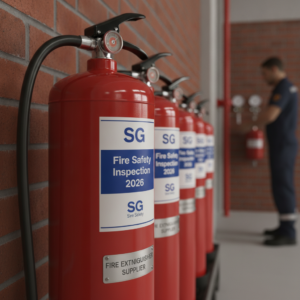
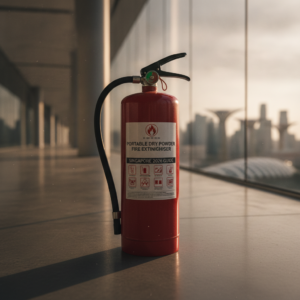
- What to check: Correct type for hazard (CO2, water, dry powder, foam), proper mounting height, intact tamper seals, legible instruction labels and up-to-date service tags.
- Common fail points: Incorrect extinguisher type for risk areas, expired servicing tags, or blocked access.
Fire hydrants, hose reels and sprinklers
- What to check: Pressure gauges, valve positions, unobstructed valves and visible signage. Sprinkler heads must be free of paint, corrosion and obstruction.
- Frequency: Monthly visual inspections and annual pressure tests. Hydrant flushing and hydrant flow tests should be recorded.
- Common fail points: Rusted or seized valves, missing caps on hydrants and inactive or isolated zones without documented reasons.
Emergency lighting and exit signage
- What to check: Emergency lights and illuminated exit signs must operate on mains and battery backup. Confirm adequate illumination along escape routes.
- Frequency: Monthly visual checks and annual duration tests (e.g., 1–3 hour discharge tests as applicable).
- Common fail points: Non-working battery backups, dim or damaged signage, and blocked escape route lighting.
Means of escape and compartmentation
- What to check: Escape routes, stairwells and doors must be clear, unlocked when occupied, and fit with self-closing or automatic closures where required.
- Frequency: Ongoing monitoring; log monthly checks.
- Common fail points: Items stored in corridors, propped fire doors, or combustible storage in fire-separated spaces.
Fire-rated doors and shutters
- What to check: Self-closing mechanisms, seals, and integrity of structural compartmentation.
- Frequency: Quarterly checks and after any maintenance or structural works.
- Common fail points: Damaged seals, non-closing doors due to hold-open devices, or unauthorized alterations.
Building services and utilities
- What to check: Mechanical ventilation shutdowns, electrical isolation procedures, and gas supply valves must be labelled and accessible.
- Frequency: Coordinate with planned maintenance and after any system changes.
- Common fail points: Poor labelling, lack of isolation diagrams and unattended live systems during hot works.
Hot works permits and contractors
- What to check: Have a formal hot works permit system; ensure contractors carry valid permits and risk assessments.
- Frequency: Permit for every hot works activity.
- Common fail points: Lack of permit, inadequate fire watches, or failure to remove combustibles before work begins.
Training, drills and staff competency
- What to check: Evidence of regular fire drills, staff training on extinguishers and evacuation procedures, and role-specific training for FSMs and fire wardens.
- Frequency: Evacuation drills at least twice a year in many occupancies; extinguisher familiarisation sessions periodically.
- Common fail points: Poor drill turnout, out-of-date attendance records, and untrained temporary staff.
Records, logbooks and maintenance contracts
- What to check: Up-to-date logbooks with inspection dates, defects rectified and contractor reports. Ensure accredited contractors perform specialized works.
- Frequency: Maintain ongoing records; make them available during inspections.
- Common fail points: Missing service invoices, unsigned log entries, or inadequate traceability of corrective actions.
(For extinguisher-specific maintenance and tips, see: https://nationalcitycorporation.sg/fire-extinguisher-maintenance-and-safety-inspection-sg-2025/ and dry powder servicing advice: https://nationalcitycorporation.sg/singapore-dry-powder-fire-extinguisher-servicing-tips/.)
Smart trends to improve inspection outcomes in 2025
- IoT and remote monitoring: Sensor networks now provide real-time status of hydrant pressure, extinguisher tamper indicators and alarm connectivity. These reduce human error and speed up corrections.
- Predictive maintenance: Data analytics can flag equipment likely to fail before the next scheduled check, minimising downtime and non-compliance.
Common reasons premises fail inspections (and how to avoid them)
- Incomplete or missing records: Keep digital backups and a well-organised filing system for all maintenance and testing paperwork.
- Blocked escape routes: Implement strict housekeeping and storage policies with regular audits.
- Unserviced or wrongly selected extinguishers: Use risk assessments to match extinguisher types to hazards and schedule certified servicing.
- Non-functional detection or alarm systems: Perform regular detector cleaning, battery replacements and system tests.
Practical day-before and day-of-inspection checklist
Day before:
– Ensure all tests and routine checks are logged and recent corrective actions are completed.
– Inform building occupants of the inspection and ensure key personnel are available.
– Print emergency plans, service certificates and logbooks.
Day of inspection:
– Escort the inspector, pointing out recent improvements and documentation.
– Provide short, factual answers and note any observations for immediate follow-up.
– If defects are found, propose a remediation timeline and confirm responsible contractors.
After the inspection: handling findings and follow-ups
- Action plan: Prepare a corrective action list with deadlines and responsible persons.
- Engage accredited contractors promptly for repairs and servicing; keep receipts and updated service tags.
Penalties and compliance consequences
Serious lapses that endanger life may trigger prosecution. Treat every inspection as an opportunity to demonstrate a robust safety culture rather than just a regulatory hurdle.
Final tips for facility managers in Singapore
- Adopt a regular inspection cadence: monthly visible checks, quarterly functional checks and annual comprehensive testing.
- Train multiple staff to perform basic checks so coverage is continuous during absences.
- Use accredited service providers and keep digital records for instant retrieval during inspections.
- Consider modern monitoring systems to reduce manual workload and improve early detection.


No comment yet, add your voice below!