

Why every home and workplace in Singapore needs fire extinguisher awareness
Fire safety in Singapore is tightly regulated and rightly so: a timely, well-maintained portable extinguisher can stop a small blaze from becoming a disaster.
Understanding requirements and standards
Key points to know:
- Approved types and ratings: Extinguishers must be suitable for the class of fire they are intended to fight and carry the correct discharge rating for the size of hazard.
- Records should be kept for audits.
- Certification and supply: Equipment should be from reputable suppliers or distributors and installed according to guidelines.
Being familiar with these expectations helps you work with a licensed Singapore fire safety company to ensure compliance and safety.
Types of fire extinguishers commonly used in Singapore
Different fire classes require different extinguishing agents. The common types you’ll see around Singapore include:
- Water (Class A): For ordinary combustibles like wood and paper.
- Foam (A, B): For liquid fires and solids.
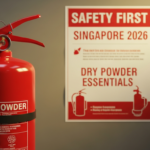
- Dry Powder (A, B, C): Multipurpose, but may create residue; common in workshops and plant rooms.
- CO2 (B, electrical): Ideal for electrical fires and small liquid fires; leaves no residue.
- Clean agents (e.g., FM-200 alternatives): Used for sensitive environments like server rooms.
Selecting the right type depends on the hazards present. A Singapore fire safety company can perform a risk assessment and recommend the correct mix of portable extinguishers.
Choosing the right extinguisher for your premises
A one-size-fits-all approach won’t work. Consider:
- Fire load: Kitchens and chemical stores need different protection from offices and retail areas.
- Occupant profile: Higher footfall areas require more accessible extinguishers.
- Environmental concerns: Clean agents or CO2 might be preferable where residue is an issue.
- Ease of use: Staff should be trained on the extinguishers provided.
An experienced Singapore fire safety company will match extinguishers to risk and advise on placement, signage, and accessibility.
Servicing, inspection and maintenance: what expects
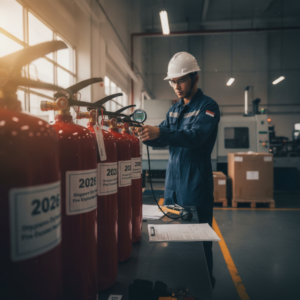
Regular servicing keeps extinguishers reliable. Typical maintenance tasks include visual checks, pressure gauge inspection, recharge after use, and internal checks for certain types. Make sure your provider performs:
- Monthly visual checks by on-site staff.
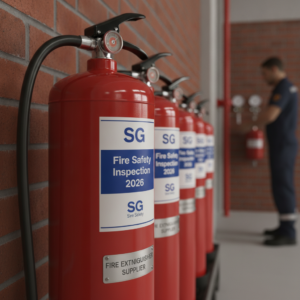
- Annual service by a licensed technician, including pressure and valve checks.
- Hydrostatic testing and internal examinations at manufacturer-recommended intervals.
For professional work on servicing and lawful disposal, many facilities use accredited partners that specialise in fire extinguisher servicing. Keeping digital service records and proof-of-service receipts helps during audits and renewals.
Installation, placement and signage best practices
Correct installation improves extinguisher accessibility and effectiveness:
- Mounting height: Extinguishers should be installed at standard heights to be reachable by most people.
- Visibility: Keep units unobstructed and clearly signposted.
- Quantity and spacing: Determined by hazard classification and floor area—often part of the fire safety plan.
- Training: Staff must know where extinguishers are and how to use them safely.
Clear labeling and an evacuation-aware workforce are essential complements to physical equipment.
Disposal and replacement: safe and compliant options
Empty, expired, or non-serviceable extinguishers must be disposed of safely. Incorrect disposal risks environmental harm and regulatory breaches. Follow these steps:
- Identify the reason for disposal: corrosion, failed hydrostatic test, or agent obsolescence.
- Engage licensed specialists for safe discharge, recycling of metal parts, and proper handling of extinguishing agents.
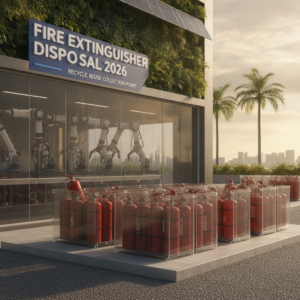
If you need guidance on end-of-life procedures, consult a specialist who handles fire extinguisher replacement and disposal. Proper disposal protects the environment and ensures compliance.
How to select a reliable Singapore fire safety company
Selecting a trusted partner matters. When evaluating companies, look for:
- Transparent service records and clear maintenance tagging.
- Experience with the types of hazards you manage (kitchens, laboratories, server rooms, industrial facilities).
- Emergency response procedures and promptness for reactive servicing.
- Up-to-date knowledge on regulations, safe disposal, and emerging technologies.
Request references and examples of similar projects. A reputable provider will offer a free site assessment and customised plan that balances compliance, budget and operational needs. For suppliers with a strong track record and product range, consider reviewing top portable extinguisher providers.
Digital trends and innovations in extinguisher management
Fire safety is evolving. Expect to see more technology-driven solutions in Singapore:
- Digital logbooks: Mobile apps and cloud records for real-time maintenance history and audit readiness.
- IoT-enabled cabinets: Sensors that alert when extinguishers are removed, tampered with, or when pressure drops.
- Predictive maintenance: Analytics that help plan servicing before faults occur.
- Eco-friendly agents: Alternatives to high-global-warming-potential agents as part of sustainability drives.
Working with a forward-looking Singapore fire safety company can help you pilot these innovations and integrate them into your safety management system.
Practical checklist for fire extinguisher compliance
Use this quick checklist to stay on top of obligations and readiness:
- Have a site-specific extinguisher plan based on risk assessment.
- Ensure extinguisher types match identified fire classes.
- Keep monthly visual checks and documented records.
- Schedule annual servicing and perform hydrostatic tests as required.
- Replace or dispose of failed units through approved channels (see safe disposal guidance).
- Train staff regularly and run tabletop or practical drills.
- Maintain clear signage and unobstructed access at all times.
- Use digital record-keeping for audit readiness; review inspection best practices to tighten processes.
Common pitfalls and how to avoid them
Avoid these frequent errors that lead to non-compliance or reduced protection:
- Using incorrect extinguisher types for specific hazards.
- Relying on visual checks alone without scheduled professional servicing.
- Storing extinguishers in humid or corrosive environments without protection.
- Choosing suppliers on price alone without verifying accreditation and service quality.
A proactive relationship with a qualified Singapore fire safety company prevents small issues from becoming expensive liabilities.
Final points: building a resilient fire safety program
Combine the right equipment, routine maintenance, staff training and a qualified service partner to create a resilient program. Regularly review your fire protection strategy—especially after changes in operations, renovations, or new equipment installations—to ensure extinguishers and procedures remain suitable.
Maintaining compliance and readiness protects people, preserves property, and keeps your organisation operating smoothly in Singapore’s tightly regulated environment.

No comment yet, add your voice below!