

Why fire extinguisher maintenance matters in Singapore
Portable fire extinguishers are the first line of defence in many building fires. In 2026, expectations have evolved: regulators and auditors increasingly look for documented maintenance, up-to-date servicing, and adoption of digital record-keeping.
Key components of an effective maintenance programme
A robust maintenance programme balances daily vigilance, scheduled servicing, and lifecycle management. Core elements include:
- Regular visual checks by on-site staff
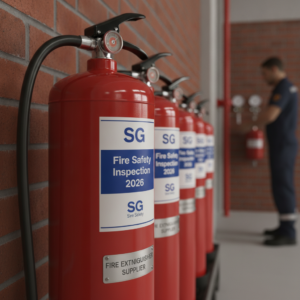
- Annual servicing by qualified technicians
- After-use recharging and inspection
- Timely replacement and proper disposal of end-of-life units
- Accurate maintenance records and certificates
- Clear labelling and accessibility
Monthly and daily visual checks (what occupiers should do)
Daily or weekly visual checks are simple but essential. They should be done by building managers, security personnel or trained staff, and logged for audit.
Checklist for visual checks:
- Confirm extinguisher is installed in its designated location and is unobstructed
- Check pressure gauge is in the green (where applicable)
- Ensure tamper seal and safety pin are intact
- Inspect for physical damage, corrosion, dents, or leakage
- Verify nozzle/hose is clear and undamaged
- Readability of labels and operating instructions
- Ensure mounting bracket is secure and appropriate signage present
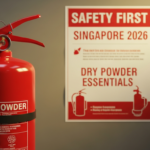
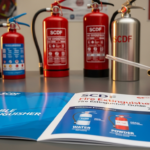
Record each check in a logbook (paper or digital) showing date, initials and any observations. For guidance on everyday upkeep of dry powder extinguishers, see this resource on fire extinguisher maintenance.
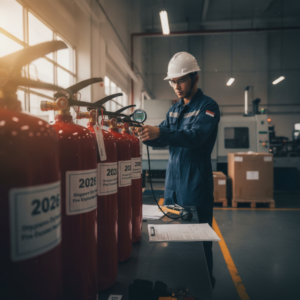
Annual servicing and certified technicians
This involves a deeper inspection and functional tests that go beyond visual checks, such as:
- Internal inspection where applicable and safe
- Verification of agent weight and pressure
- Replacement of worn or expired parts (hoses, nozzles, O-rings)
- Recharge or refill after any discharge
- Hydrostatic testing where required by the manufacturer or standard
Always obtain a formal service certificate and enter the service details into your maintenance log.
After-use procedures: recharging and inspection
Any extinguisher used on a fire — even partially — must be recharged and inspected immediately. Steps include:
- Remove from service and tag as ‘Out of Service’ until recharged
- Have a qualified service provider perform a complete recharge and inspection
- Replace any damaged parts and confirm operating pressure
- Record the service and attach the new certificate
Replacement, disposal and sustainability considerations
Extinguishers reach end-of-life due to corrosion, repeated repairs, failure to pass tests, or when agent technology is obsolete. When replacing or disposing:
- Use licensed contractors for safe, environmentally responsible disposal
- Replace halon or phased-out agents with environmentally friendlier alternatives
- Keep disposal records and certificates
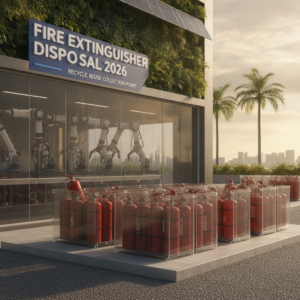
For practical steps on replacement and safe disposal, review this guide on fire extinguisher replacement and disposal. If you’re dealing with discarded units, this article on fire extinguisher disposal provides useful tips.
Documentation, record-keeping and audits
Your documentation should include:
- Inventory of all portable extinguishers with location, type and serial numbers
- Visual check logs with dates and responsible staff
- Service certificates and contractor details for every annual or special service
- Incident reports for any use or malfunction
- Disposal and replacement certificates
Digital systems and QR-coded tags simplify auditing. Each extinguisher can carry a QR label linking to its service history, certificate scans and next-service due date — a trend becoming standard in modern asset management.
Choosing a maintenance provider: what to ask for
Ask potential contractors for:
- Proof of licence and accreditation
- References and case studies in Singapore properties
- Detailed service scope and equipment lists
- Insurance cover and warranty terms
- Digital service records and QR-tag options
A reputable vendor should also advise on extinguisher types suitable for your facility, and whether additional equipment (e.g., fire blankets, signage) is recommended. For a curated list of companies experienced with portable units, see this roundup on top Singapore fire safety companies.
Trends affecting maintenance in 2026
Several trends are shaping extinguisher maintenance programmes:
- Digital records and QR-code tagging for instant, verifiable service history
- Remote monitoring and IoT-enabled cabinets that report tamper events and pressure changes
- Eco-friendly agents and replacement of phased-out chemicals
- Contactless inspection workflows developed since the pandemic to improve safety and efficiency
Adopting these trends improves compliance readiness and reduces administrative overhead for busy facilities managers.
Common mistakes and how to avoid them
Avoid these pitfalls that commonly lead to non-compliance or failures:
- Treating extinguishers as ‘set-and-forget’ assets — regular checks are essential
- Relying on unverified or unlicensed contractors
- Poor record-keeping and missing service certificates
- Delaying replacement of damaged units
- Incorrect extinguisher type or placement for the identified risk
A proactive maintenance culture and periodic audits of your own records will catch issues early.
Practical monthly checklist for facilities managers
- Verify all extinguishers present and unobstructed
- Confirm pressure gauges and seals are intact
- Log any changes, replacements or incidents
- Schedule pending annual services at least 30 days in advance
- Ensure signage and access routes are visible and unobstructed
If you need step-by-step operational guidance for dry powder types and their specific upkeep, this resource on fire extinguisher maintenance outlines practical tips.
Final notes on fire extinguisher expectations
By instituting monthly checks, annual certified servicing, accurate documentation, and modern record-keeping (QR tags, digital certificates), owners and managers in Singapore can confidently meet compliance demands and keep occupants safe.
A well-organised maintenance programme reduces risk, lowers liabilities and demonstrates due diligence to regulators. Treat your portable extinguishers as living assets: inspect, service, replace and document — and update your approach as technology and standards evolve.

No comment yet, add your voice below!