

Introduction: Why a focused guide matters in 2026
Fire safety remains a top priority for Singapore households and businesses. As properties and commercial activities evolve, so do the risks and the products designed to mitigate them. It’s designed for homeowners, office managers, landlords and facilities teams who need a clear, actionable overview.
What is a dry powder fire extinguisher?
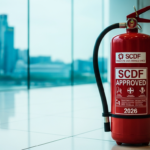
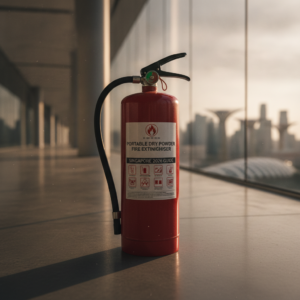
A dry powder fire extinguisher contains a fine chemical powder that smothers flames, interrupts chemical reactions and isolates fuel from oxygen. It’s commonly used for Class A (solids), Class B (flammable liquids) and Class C (flammable gases) fires and is generally safe on electrical equipment (with the power isolated where possible). Dry powder agents are versatile, making these extinguishers a popular multi-hazard choice.
Keywords to remember: fire extinguisher, dry powder fire extinguisher.
How dry powder works — the basics
- Smothering: The powder forms a barrier between the fuel and oxygen.
- Chemical inhibition: Some powders interrupt combustion at a molecular level.
- Fast knockdown: Powder can rapidly suppress flames across a broad area.
Because powder tends to blanket surfaces, it can be very effective at stopping rapidly spreading fires. But its physical properties also create clean-up and sensitivity issues in certain environments, so suitability must be assessed per location.
Which fires are suitable for dry powder extinguishers?
- Class A: Wood, paper, textiles and other ordinary combustibles.
- Class B: Petrol, oils, solvents and other flammable liquids.
- Class C: Flammable gases (where rated for gas fires).
- Electrical fires: Safe for use on live electrical equipment with caution—aim from a distance and isolate power when possible.
Notably, dry powder is not a universal solution. Some high-risk scenarios demand specialist agents (e.g., wet chemical extinguishers for deep-fat fryer grease fires or Class D powder for metal fires).
Advantages and limitations — practical considerations
Advantages:
– Multi-class capability (A/B/C) makes it cost-effective for mixed-risk areas.
– Rapid suppression and wide coverage for fast response.
– Relatively inexpensive and widely available.
Limitations:
– Cleanup: Powder is messy and can damage sensitive equipment, electronics, and HVAC systems.
– Visibility and breathing: Use in confined spaces may reduce visibility and require respiratory protection during clean-up.
– Not ideal for deep-seated grease fires (kitchens) or lithium-ion battery fires in many cases — specialist extinguishers or suppression systems may be needed.
Ratings, sizes and selecting the right capacity
Extinguishers are marked with class ratings and performance figures (for example, 2A, 13B, C). The numeric part relates to the extinguisher’s effectiveness: higher numbers indicate greater firefighting capability. When choosing:
– Match the class rating to your hazard (kitchen, electrical room, chemical store, vehicle fleet).
– Consider the size and layout of your space — larger or high-risk areas usually require higher-capacity units or multiple extinguishers placed strategically.
– For offices and residential units, a common choice is a 1–3 kg dry powder portable extinguisher. For workshops or industrial sites, larger wheeled units or multiple units are preferable.
compliance, inspections and maintenance
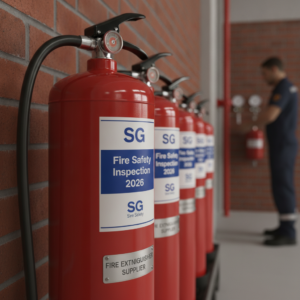
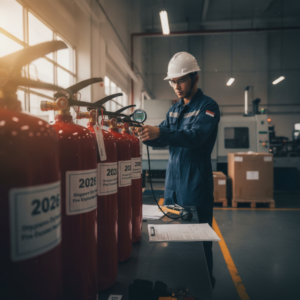
For an overview of inspection and fire alarm maintenance routines, consult resources on scheduled checks and integrated systems: fire safety inspection and maintenance.
Disposal, replacement and end-of-life
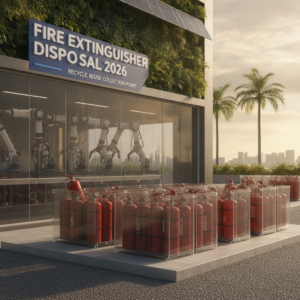
Extinguishers must be responsibly disposed of or replaced when they’re expired, damaged, used, or fail pressure tests. Improper disposal risks environmental harm and legal issues.
– After discharge: Recharge or replace immediately — do not store used units.
– Expired or failed units: Contact certified disposal services; do not simply throw extinguishers into general waste.
For guidance on environmentally safe disposal and replacement options in Singapore, see: dispose and replace fire extinguishers in Singapore.
Using a dry powder fire extinguisher safely (the PASS method)
- Pull: Remove the safety pin or tamper seal.
- Aim: Stand at a safe distance and aim at the base of the fire.
- Squeeze: Depress the handle to discharge the agent.
- Sweep: Sweep the nozzle from side to side, covering the fire base until extinguished.
Special hazards: kitchens, server rooms and battery fires
- Kitchens: For deep-fat fryer or grease fires, a wet chemical extinguisher (Class F/K) is the correct choice. A dry powder extinguisher may spread burning oil and is not recommended.
- Server rooms and laboratories: Dry powder can damage electronics. CO2 extinguishers or pre-engineered suppression systems are often preferable for critical equipment.
- Lithium-ion batteries: These can be persistent and can re-ignite. Specialist suppression and containment measures are often required — consult specialists and consider purpose-built suppression systems.
Maintenance specifics for dry powder units
2026 trends and innovations to watch
- Smart monitoring: IoT sensors that report pressure, location and service status to facility managers are becoming more common, improving uptime and compliance tracking.
- Eco-conscious agents: Manufacturers are refining powders and packaging to reduce corrosivity and environmental impact.
- Modular and rechargeable systems: More businesses choose refillable options and service contracts that reduce waste and lifecycle costs.
These trends make it easier for building owners and FM teams to maintain readiness and demonstrate compliance to regulators and insurers.
Quick checklist for Singapore property owners (practical takeaway)
- Identify fire hazards and assign extinguisher types to each area.
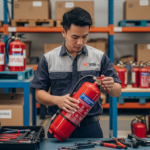
- Schedule monthly visual checks and annual professional servicing.
- Keep a record of purchases, services and disposals.
- Use specialist agents where dry powder is unsuitable (kitchens, battery storage, sensitive electronics).
Conclusion — practical next steps for 2026 readiness
Dry powder fire extinguishers are a flexible, cost-effective choice for many Singapore settings, but they are not universally suitable. For disposal, purchasing and maintenance resources, follow the linked practical guides above to ensure your property stays safe and compliant.

No comment yet, add your voice below!