

Why fire extinguisher maintenance matters in Singapore
Fire extinguishers are the first line of defence for small fires in homes, workplaces and public buildings. In Singapore, keeping devices in serviceable condition is not only good practice but part of a building’s broader fire safety responsibility. Regular fire extinguisher maintenance reduces the risk of failure during emergencies, ensures compliance with local rules, and helps avoid costly replacements or penalties.
This article explains what routine maintenance looks like, when to service or replace units, and how to manage safe fire extinguisher disposal in Singapore. It’s written for homeowners, facilities managers and small business owners seeking practical, up-to-date guidance for 2026.
Quick overview: key terms and responsibilities
- Fire extinguisher maintenance: routine checks, professional servicing and testing that keep an extinguisher ready to operate. This includes visual inspections, pressure checks, refills after discharge and record-keeping.
- Fire extinguisher disposal: safe removal and disposal of extinguishers that are expired, irreparably damaged, or have contained agents that require special handling.
- Responsible parties: building owners, facility managers or appointed fire safety personnel are typically responsible for arranging maintenance and ensuring disposals are handled correctly.
Typical maintenance schedule (practical guidance)
A robust maintenance programme typically includes actions at several time intervals:
- Monthly/weekly: quick visual checks by the premises’ responsible person — check pressure gauge, seals, tamper indicators, obvious damage and accessibility.
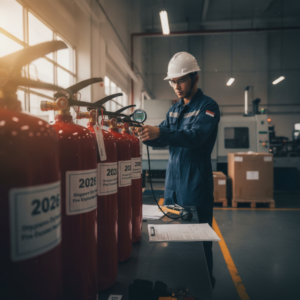
- Annually: a full service and safety inspection by a licensed fire protection company to test, recharge, replace parts and issue a service record.
- Periodic internal checks and pressure testing: many types of extinguishers require internal servicing or hydrostatic testing at intervals recommended by the manufacturer and certifying authority. These intervals vary by extinguisher type and agent — confirm with your service provider.
Note: these are practical, commonly used checkpoints. Always follow the manufacturer’s instructions and the recommendations of a licensed Singapore fire safety contractor for exact intervals.
Monthly user checklist (quick, printable)
- Is the extinguisher visible and unobstructed?
- Is it mounted correctly and accessible?
- Is the pressure gauge in the correct (green) range?
- Is the safety pin and tamper seal intact?
- Any signs of corrosion, dents or leaks?
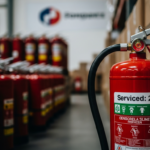
- Is the inspection tag up to date?
If any item fails the check, remove the unit from service and contact a licensed technician for inspection and repair.
What licensed technicians do during annual servicing
Professional servicing typically includes:
- Full visual inspection and functional tests
- Pressure verification and recharging if required
- Replacement of seals, hoses or nozzles as needed
- Internal maintenance and cleaning where applicable
- Re-labelling and tagging with the service date and technician’s details
- Recommendations for repairs, recharge or replacement
Choosing the right extinguisher and buying replacements
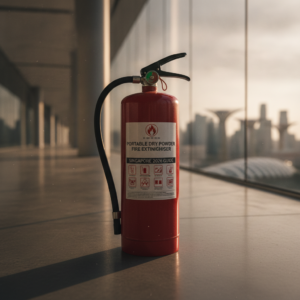
Selecting the right extinguisher for the hazard is essential: water/foam for Class A, dry powder for mixed risks (A/B/C), CO2 for electrical fires, and specialist clean agents for sensitive equipment. Where possible, choose units that are TUV SUD PSB approved and supplied by reputable vendors.
If you need to buy or replace extinguishers, use certified suppliers to ensure compliance and warranty support.
Trends in 2026: smarter maintenance and greener disposal
- Digital tagging and QR codes: many service providers now attach QR-coded tags to extinguishers so inspectors and owners can view service history instantly.
- Predictive maintenance: integrated building management systems and IoT-enabled sensors are emerging in larger facilities to monitor extinguisher status continuously.
- Environmental concerns: there is growing attention on agent disposal and recycling of cylinder materials. Servicers increasingly offer eco-conscious disposal and recycling pathways.
These trends improve compliance tracking and reduce the risk of overlooked maintenance.
When to repair, recharge or replace
- Repair/Recharge: after any use (even partial), an extinguisher must be recharged and inspected by a qualified technician. Minor faults like a worn hose can typically be repaired.
- Replace: if the cylinder is badly corroded, dented, has failed pressure testing, or the agent is expired or incompatible with safe reuse, replacement is usually required.
Documentation of every repair/recharge keeps your maintenance records defensible and helps property owners demonstrate compliance during inspections.
Safe fire extinguisher disposal in Singapore
Disposal is a two-step process: safe removal of the extinguishing agent and correct recycling/disposal of the cylinder according to hazardous waste requirements. Important points:
- Do NOT discard pressurised extinguishers in general waste or recycling bins.
- Do NOT attempt to puncture or open fully charged cylinders yourself — this can be dangerous.
- Engage a licensed fire protection or hazardous waste contractor to depressurise, neutralise (if needed) and dispose of the agent and cylinder safely.
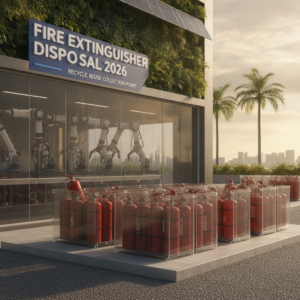
For convenient local guidance on where to dispose and replace fire extinguishers in Singapore, consult this disposal resource: Where to dispose and replace fire extinguishers Singapore.
How authorised disposal typically works
- Collection or drop-off at approved facilities.
- Verification of unit condition, service history and type of extinguishing agent.
- Safe depressurisation and emptying of contents by trained staff.
- Proper handling of extinguishing agents — some agents are inert powders, others are regulated chemicals requiring special treatment.
- Recycling or safe disposal of the cylinder per local environmental requirements; return of certification or disposal receipt to the customer.
Using accredited contractors ensures documentation you may need for audits or compliance checks.
Avoid common maintenance and disposal mistakes
- DIY repairs: attempting complex repairs or pressure work without certification is risky and often illegal.
- Ignoring small defects: minor corrosion or missing tags can quickly escalate to functional failure.
- Improper disposal: throwing extinguishers in regular waste can contaminate recycling streams or pose hazards to collection staff.
Good practice is to contract licensed professionals for servicing and disposal and to maintain clear service records.
Documentation and compliance records
Maintain a fire extinguisher logbook (paper or digital) with: installation date, model and serial number, monthly check initials, annual service certificates, repair receipts and disposal records.
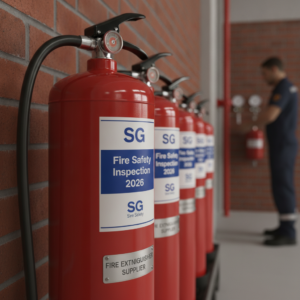
If you operate a business or manage a commercial property, also coordinate extinguisher maintenance with other fire safety systems — for example, annual checks often coincide with fire alarm and sprinkler inspections. For integrated building safety service options, see: Fire safety inspection and fire alarm maintenance SG 2026.
Resources for extinguisher types and handling
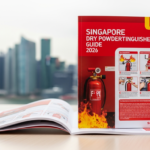
For detailed guidance on specific extinguisher chemistry and selection (for example, dry powder vs clean agents), consult technical guides and suppliers’ documentation. A focused resource on dry powder extinguishers can be helpful for many mixed-risk settings: Singapore dry powder fire extinguisher guide 2026.
Practical next steps for property owners (checklist)
- Identify all extinguishers on the premises and confirm their service tags.
- Implement a monthly visual inspection rota and log results.
- Arrange annual servicing with a licensed fire protection company.
- Plan for responsible disposal or replacement of units that are expired or failed.
- Store documentation centrally (digital logs reduce paperwork) and ensure staff know where to find it.
Final notes: safety-first approach to maintenance and disposal
Maintaining fire extinguishers and disposing of them correctly are safety-critical responsibilities in Singapore. Regular fire extinguisher maintenance keeps equipment reliable when it matters most, and responsible fire extinguisher disposal prevents environmental harm and ensures legal compliance. When in doubt, use certified suppliers and waste contractors to handle servicing, recharging and disposal. For practical buying, servicing and disposal options local to Singapore, explore the linked resources above for approved suppliers and step-by-step guidance.

No comment yet, add your voice below!