

Quick overview
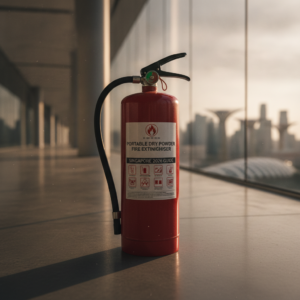
Dry powder fire extinguishers are among the most common portable fire extinguishers found in homes, offices and light industrial sites across Singapore. They’re versatile, effective on multiple classes of fire and relatively inexpensive — which makes them a popular choice for general-purpose protection. This guide explains how dry powder extinguishers work, where they belong (and where they don’t), maintenance obligations in Singapore, and practical tips for safe use and replacement.
How dry powder fire extinguishers work
Dry powder extinguishers contain a fine chemical powder formulated to interrupt the chemical reaction of a fire. There are two main formulations commonly used:
- ABC (multipurpose) powder — effective on Class A (ordinary combustibles), Class B (flammable liquids) and Class C (flammable gases or energized electrical equipment) fires.
- BC powder — designed primarily for Class B and C fires.
When discharged, the powder coats fuel surfaces and breaks the chain reaction that sustains combustion. The powder is non-conductive, so it can be used safely on energized electrical equipment — a reason many offices and server rooms opt for ABC powder units.
Advantages and limitations
Advantages:
- Versatility: One extinguisher covers several fire classes.
- Cost-effective: Lower upfront cost and long shelf life.
- Non-conductive: Generally safe to use on electrical fires.
Limitations:
- Residue: Powder leaves a fine, corrosive and abrasive residue that can damage electronics, machinery and HVAC systems; cleanup can be expensive and time-consuming.
- Not ideal for deep-seated Class A fires: Dry powder can extinguish surface flames quickly but may not penetrate dense materials where embers remain.
- Unsuitable for cooking oil/fat fires: For deep-fryer or cooking oil fires (Class F), wet chemical extinguishers are recommended instead.
For product details and specifications tailored to local needs, read more about the dry powder fire extinguisher options available in Singapore: dry powder fire extinguisher.
Where to use dry powder extinguishers in Singapore
Dry powder units are a good fit for many environments across the city-state:
- General office spaces and common areas
- Workshops, garages and light industrial sites with mixed combustible and flammable liquid risks
- Electrical rooms and areas with energized equipment (while acknowledging residue concerns)
- Construction sites and temporary worksites where multi-hazard coverage is needed
However, do not rely on dry powder for commercial kitchens or areas with significant cooking oil hazards — wet chemical extinguishers are the correct choice for those risks.
Choosing the right size and rating
Selecting the correct fire extinguisher is a balance between fire risk, space size and expected user capability. Common portable dry powder sizes in Singapore range from 1 kg to 9 kg. Larger units offer longer discharge time and reach but are heavier to operate.
Key considerations:
- Risk type: Match class rating (ABC vs BC) to the likely fire sources.
- Coverage area: More extinguishers or larger units are needed for larger spaces.
- Accessibility: Units must be easily reached and mounted at appropriate heights.
Consult fire safety professionals or site assessors to produce a protection plan. For help with system-level planning and inspection, see services covering the broader building needs: fire protection system and fire safety inspection.
Installation, placement and storage best practices
Proper placement ensures a fire extinguisher will be usable in an emergency:
- Mount extinguishers near escape routes and at predictable locations (entrances, machine exits, near chemical stores).
- Keep them unobstructed and visible with signage.
- Avoid placing dry powder units directly above sensitive electronics unless no alternative exists due to residue risk.
- In humid or coastal areas of Singapore, store units away from direct exposure to salt spray; corrosion can affect valves and seals.
Inspection and maintenance requirements in Singapore
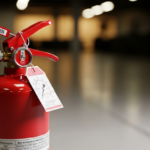
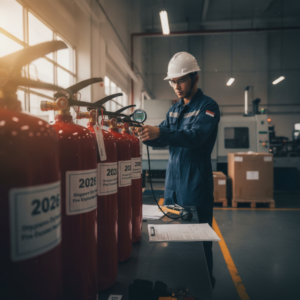
Portable fire extinguishers require routine attention to stay reliable. Basic self-checks should be carried out monthly by occupants or designated safety personnel. These checks typically include ensuring the unit is in its designated place, the seal and pin are intact, the pressure gauge is within the recommended range, and there are no obvious signs of damage or corrosion.
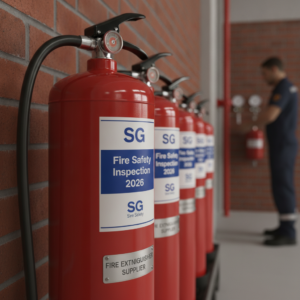
Professional servicing is mandatory under fire safety regulations and is critical for warranty and insurance compliance. For authorised servicing and scheduled maintenance, use accredited local providers for comprehensive checks, recharge, and testing: fire extinguisher servicing.
Important maintenance notes:
- After any discharge, even partial, the extinguisher must be recharged or replaced.
- Hydrostatic pressure testing and full internal inspections should be completed by certified technicians at intervals recommended by manufacturers and servicing standards. Timelines vary by extinguisher type and local codes.
Replacement and disposal
Extinguishers that fail inspection, are heavily corroded, have been discharged, or are beyond recommended service life should be replaced. Building owners and facilities managers in Singapore must ensure replacements meet approved standards.
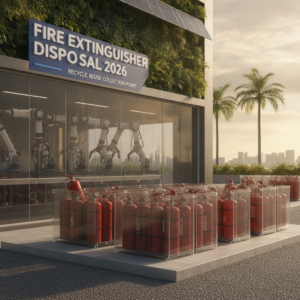
If you need guidance on where to replace portable units or arrange proper disposal of old extinguishers, consult authorised replacement services: replace portable fire extinguishers.
Dealing with dry powder residue after use
Dry powder residue can be messy and damaging:
- Keep people out of the area until it’s safe to enter.
- Avoid turning on sensitive equipment until a qualified technician has assessed and cleaned it.
- Use appropriate PPE (masks, gloves, goggles) during cleanup. Vacuuming with industrial vacuums fitted with suitable filters is often recommended rather than sweeping.
Because of cleanup costs and potential equipment damage, some facilities choose to use alternative extinguisher types near sensitive assets.
Training and safe operation
Every building or workplace should provide basic hands-on fire extinguisher training and familiarisation for staff. The familiarised user is more likely to operate a unit successfully and to recognise when to evacuate instead of attempting extinguishment.
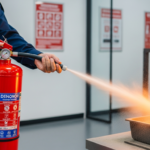
Remember the PASS technique:
- Pull the pin
- Aim low at the base of the fire
- Squeeze the lever slowly
- Sweep side to side
Only attempt to use a portable extinguisher if the fire is small, you have a clear escape route, and you feel confident using the unit. Prioritise personal safety and evacuation over property protection.
For combined services that include alarm and extinguisher alignment, consider providers who handle integrated maintenance: fire alarm maintenance and dry powder.
Legal obligations and Singapore context
Building owners, occupiers and managers have clear responsibilities to ensure firefighting equipment is correctly installed, accessible and maintained. Non-compliance can result in enforcement actions or fines.
Engaging a certified local fire protection company helps ensure compliance with local regulatory expectations and industry best practices. You can combine extinguisher upkeep with broader building protection by working with companies that provide inspection and system maintenance: fire alarm maintenance and fire extinguisher servicing.
Practical checklist before you leave a site or complete an installation
- Confirm extinguisher type matches identified risks.
- Verify extinguishers are mounted, labelled and unobstructed.
- Conduct and record a monthly visual check.
- Schedule annual professional servicing with a licensed provider.
- Replace or recharge after any use.
- Train staff on PASS and evacuation protocols.
- Keep documentation of all maintenance and inspections for compliance.
Final notes
Dry powder fire extinguishers are a valuable, multipurpose tool in Singapore’s mixed-use environments, but they’re not a one-size-fits-all solution. Understanding their strengths, limitations and care requirements helps building owners and managers choose the right protection strategy, maintain legal compliance, and protect people and property effectively.
For tailored recommendations, replacement services or integrated inspection plans that suit your premises, consult authorised local providers with the right certifications and experience.

No comment yet, add your voice below!