

Why fire extinguisher servicing matters in 2026
For businesses and homeowners in Singapore, maintaining fire safety equipment is both a legal obligation and a practical investment in protection. Since 2024–2026, the industry has increasingly moved toward digital records, QR-tagged extinguishers and faster mobile servicing — all of which make compliance simpler but demand licensed, up-to-date technicians.
Understanding the regulatory landscape and your responsibilities
Owners and occupiers are expected to ensure extinguishers are maintained in working order, accessible and clearly tagged.
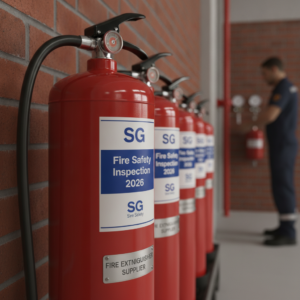
If you need practical steps to meet inspection requirements, check this guide on how to pass fire safety inspection for extinguishers.
Typical servicing schedule and tests (what to expect)
A compliant servicing regime usually includes a mix of user checks and professional servicing:
- Daily or monthly visual checks by the occupier: verify accessibility, pressure gauge in range, intact seals and no obvious corrosion.
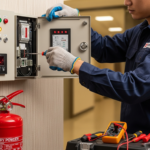
- Regular professional maintenance: carried out by certified service providers. This includes inspection of valves, hoses, gauges, extinguisher weight and agent condition, and recharging where required.
- Periodic pressure/hydrostatic testing and full overhauls: frequency depends on extinguisher type and manufacturer recommendations.
For more on routine maintenance and alarm integration, see this overview of fire extinguisher maintenance.
How to find reliable “fire extinguisher servicing near me” in Singapore
Finding a trustworthy local service provider means checking credentials and service scope. Use these steps:
- Verify licensing and certifications.
- Confirm the company provides printed or digital service certificates and that records include dates, work performed, parts replaced and technician IDs.
- Look for modern conveniences: mobile servicing vans, same-day attendance for urgent faults, and QR-coded asset records for easy audits.
- Read case studies and customer reviews; ask for references from similar premises (offices, F&B, retail, industrial).
A good supplier will also advise on procurement and replacement. See more from a reputable fire extinguisher supplier.
What a full service includes — checklist for owners
When you book professional servicing, ensure the report covers these items:
- Identification: model, serial number and location of each unit.
- Visual inspection: corrosion, dents, nozzle condition, pressure gauge, tamper seals and accessibility.
- Functional checks: valve operation, hose integrity and discharge mechanism.
- Agent assessment: weight checks and top-up or recharge if agent has settled or been partially discharged.
- Pressure/hydrostatic testing where due.
- Replacement parts and consumables documented.
- Tagging and issuance of a service certificate (paper and/or digital) with clear next-service due date.
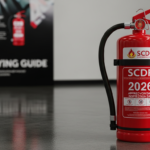
For buyers choosing units or replacements, review the portable fire extinguisher TUV SUD PSB approved buying guide to ensure compatibility with maintenance regimes.
Common issues found during servicing and how they’re fixed
Technicians commonly find a handful of recurring issues that compromise extinguisher readiness:
- Low or fluctuating pressure: typically fixed by recharging or replacing the valve assembly.
- Corrosion or physical damage: depending on severity, refurbishment or replacement is recommended.
- Missing or broken seals and tags: immediate replacement and a follow-up inspection.
- Caked or clumped dry chemical agents: some older units require full discharge and refill; newer maintenance contracts prevent agent degradation.
- Blocked nozzles or damaged hoses: replacement during the same visit for safety-critical equipment.
Addressing these promptly avoids costly replacements later and keeps records up to date for audits.
Costs, turnaround time and trends in 2026
Costs vary by extinguisher type (dry chemical, CO2, foam, wet chemical) and the depth of service. Expect basic servicing and tagging to start from an affordable baseline per unit, with more complex items or hydrostatic testing charged separately. Many providers now offer bundled maintenance contracts and fleet plans that reduce per-unit costs.
Turnaround time has improved with mobile workshops and pre-stocked vans — many urban sites in Singapore can be serviced same-day for routine requirements. Digital reporting and QR codes expedite record keeping, and some companies now offer IoT-enabled monitoring for critical assets in high-risk facilities.
Choosing a service provider — a short evaluation checklist
Select a company that offers:
- Clear, itemised quotations and transparent pricing for parts and labour.
- Digital service certificates and QR-tagging for each extinguisher.
- Fast response times and scheduled preventive maintenance plans.
- Warranty on parts and a robust safety policy.
If you want a supplier that combines maintenance with alarm integration, investigate providers listed under fire extinguisher and alarm maintenance.
Preparing your premises for servicing and inspections
Make servicing visits more efficient by doing a few simple preparations:
- Keep extinguisher locations unobstructed and ensure staff know where units are kept.
- Compile any existing service records and purchase details for each extinguisher.
- Secure access to all areas, including roof spaces and storerooms where extinguishers are stored.
- Assign a responsible person to perform monthly visual checks and sign logbooks.
Practical tips for small businesses and landlords
Small business owners and landlords can reduce hassle and risk by:
- Consolidating extinguisher maintenance under a single annual contract to simplify invoicing and scheduling.
- Choosing service providers who issue digital service certificates and asset tags.
- Training a few staff on basic extinguisher checks and simple use — this complements professional servicing and improves occupant safety.
For more guidance on combining purchase and ongoing maintenance effectively, see this buying and maintenance resource from a local supplier: portable fire extinguisher TUV SUD PSB approved buying guide.
Final checklist before your next service visit
- Ensure all extinguishers are accessible and free from obstructions.
- Gather existing service logs and any manufacturer documentation.
- Request a digital certificate and QR tag for each item.
- Verify warranty terms for replaced parts and recharges.
For trusted local support on both supply and maintenance, consider contacting an established fire extinguisher supplier and service team.

No comment yet, add your voice below!