

Introduction
Fire safety is a top priority for every building owner, facilities manager and homeowner in Singapore. Two critical components that protect lives and property are the dry powder fire extinguisher and a well-maintained fire alarm system. When both are installed and maintained correctly, they reduce risk, speed response and improve compliance with local standards. This article explains practical maintenance routines, compliance considerations and modern trends that make maintenance more reliable and cost-effective.
Why dry powder fire extinguishers are widely used
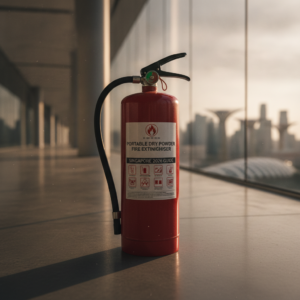
Dry powder fire extinguishers (often labelled ABC powder) are a versatile choice for many Singapore properties because they can tackle Class A (combustibles), Class B (flammable liquids) and Class C (flammable gases/electrical) fires. Advantages include:
- Broad coverage across common fire classes, making them ideal for mixed-use locations.
- Good shelf stability and relatively low cost compared with some specialist agents.
- Effective on electrical fires when used at recommended standoff distances.
However, they also have limitations: powder creates cleanup challenges, can obscure visibility and may damage sensitive equipment. For areas with high-value electronics, consider alternatives or ensure immediate professional cleanup after discharge. For help selecting the right model and approvals, consult a portable fire extinguisher buying guide.
Daily, weekly and monthly checks every responsible person should do
A strong maintenance programme begins with simple checks that can be done by a building’s responsible person or facilities staff:
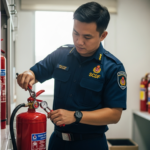
- Visual inspection: ensure the dry powder fire extinguisher is in its bracket, clearly visible, unobstructed and with intact signage.
- Pressure gauge / indicator: verify the needle is within the operable range (if the model has a gauge).
- Tamper seal and pin: confirm the safety pin and tamper seal are present and undamaged.
- Physical condition: inspect for dents, corrosion, cracked hoses or nozzle damage.
- Weight check: a quick lift or weight comparison against the service tag can show significant loss of content.
Keep a simple log of these checks. Regular quick reviews reduce the chance that a missing or unserviceable extinguisher is only discovered during an emergency.
Professional servicing, recharge and testing — what to expect
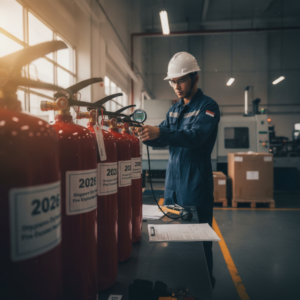
While basic checks are essential, professional servicing by licensed technicians is required for safety and compliance. Professional servicing typically includes:
- Full internal inspection and, if required, disassembly to inspect the powder condition.
- Recharging or refilling after use or if the contents have settled or clumped.
- Replacing defective hoses, nozzles, valves and seals.
- Hydrostatic or pressure tests per manufacturer and regulatory intervals (these intervals vary by cylinder type; technicians follow approved schedules).
- Updating service tags and maintaining service records for audits.
If you need certified support, consider TUV SUD PSB approved servicing to ensure inspections and repairs meet local standards.
Fire alarm maintenance: fundamentals every manager must know
A fire alarm system is the building’s early-warning backbone. Effective fire alarm maintenance protects occupants and enables faster emergency response. Key elements of a maintenance routine include:
- Control panel testing: verify normal, fault and alarm states and that logs are recorded.
- Detector cleaning and sensitivity checks: smoke and heat detectors must be free of dust and operating within manufacturer tolerances.
- Battery and backup system tests: ensure uninterrupted operation during mains failure.
- Siren, strobe and voice-evacuation tests: confirm audible and visual devices work across all zones.
- Interfacing checks: confirm the alarm communicates with automatic suppression systems, lifts, HVAC shutdowns and emergency lighting.
Fire alarm maintenance must be carried out by competent, licensed technicians who understand local codes. For integrated services that cover both alarms and extinguishers, see providers that specialise in fire extinguisher supplier and fire alarm maintenance.
Compliance and passing inspections
Regulatory compliance in Singapore demands documented maintenance and evidence of regular servicing. Common inspection focal points include:
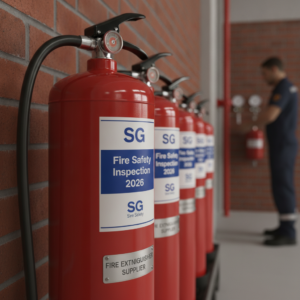
- Valid service tags and up-to-date maintenance logs for each extinguisher and alarm system.
- Accessibility and correct location of extinguishers according to floor plans and signage.
- Maintenance records showing periodic testing, battery replacement and any corrective actions taken.
- Proof that any discharged extinguishers were recharged and hydrostatically tested as required.
To prepare for official inspections and avoid last-minute failings, follow a systematic checklist and coordinate with an approved service partner. For guidance on inspection readiness, review resources about how to pass fire safety inspection for extinguishers.
Modern trends: IoT, predictive maintenance and digital records
Technology is reshaping fire safety maintenance in Singapore. Notable trends include:
- IoT-enabled sensors and smart tags: these provide live status updates on extinguisher location, pressure and tamper events, reducing manual walkarounds.
- Remote monitoring for alarms: cloud-connected panels can notify technicians or facilities managers when faults occur, enabling faster corrective action.
- Predictive analytics: by analysing historical faults and service data, providers can predict likely failures and schedule preventative work more efficiently.
- Digital compliance records: mobile apps and cloud platforms produce audit-ready logs, service histories and certificates that simplify inspections.
Integrating smart monitoring into your maintenance plan improves uptime, reduces risk and gives stakeholders real-time assurance that both dry powder fire extinguishers and alarms are ready when needed. For combined service options in Singapore, explore solutions focused on Singapore fire extinguisher and alarm maintenance.
Common mistakes to avoid
Even with good intent, some recurring errors undermine fire safety:
- Storing extinguishers behind doors or under equipment, making them hard to reach.
- Neglecting service records — missing paperwork is often cited in inspections.
- Using non-approved refill agents or uncertified technicians.
- Delaying replacement of expired or damaged units instead of scheduling immediate service.
- Assuming a single extinguisher type is suitable for every area — match agents to fire risks.
Addressing these mistakes requires a simple policy: assign responsibility, schedule routine checks, and use licensed suppliers and technicians.
Choosing the right service partner in Singapore
When selecting a maintenance provider, evaluate them on these criteria:
- Clear service contracts, response-time guarantees and full documentation.
- Capabilities for both extinguisher servicing and fire alarm maintenance, which reduces coordination gaps.
- Use of modern monitoring tools and transparent pricing.
If you want a provider that combines supply, servicing and compliance support, look at companies offering comprehensive packages. For example, suppliers that cover both appliances and systems can be found via fire extinguisher supplier and fire alarm maintenance listings.
Practical checklist for building owners (quick reference)
- Monthly: visual checks, tamper seal, signage and accessibility.
- Quarterly/biannual: detectors cleaning, battery checks, basic control panel diagnostics.
- Annual: full professional servicing of extinguishers and comprehensive fire alarm maintenance.
- After any discharge: immediate professional recharge and inspection.
- Maintain a centralised digital log of all checks, repairs and certificates.
Closing summary
A well-maintained dry powder fire extinguisher combined with reliable fire alarm maintenance forms the backbone of practical fire safety in Singapore. Regular in-house checks, scheduled professional servicing and modern monitoring tools reduce risk and help you meet regulatory requirements. Invest in a documented programme, partner with approved service providers and adopt digital records — these steps protect occupants, assets and your compliance standing.
For certified servicing, inspection readiness and combined alarm-extinguisher solutions in Singapore, consult TUV SUD PSB approved service providers and suppliers who can ensure your systems are routinely tested, documented and ready when they are needed most. TUV SUD PSB approved servicing and specialist maintenance teams can make the difference between a checked box and true preparedness.

No comment yet, add your voice below!