

Introduction
Maintaining fire safety systems is non-negotiable in Singapore. This guide walks through practical maintenance routines, documentation best practices, emerging trends for 2026 and how to choose reliable service providers.
Why regular maintenance matters
Well-maintained fire extinguishers and fire alarm systems do more than meet rules — they save lives and reduce loss. A defective extinguisher or a misfiring detector can turn a minor incident into a major emergency. Regular maintenance ensures:
- Equipment will operate when needed — correct pressure, intact seals and functional discharge mechanisms.
- Early detection systems remain reliable: sensors, batteries, wiring and control panels must be tested frequently.
- Insurance validity: many policies require proof of maintenance and inspection logs.
Understanding expectations and practical intervals
Key practices to adopt:
- Daily/weekly visual checks and housekeeping: ensure extinguishers are unobstructed, visible, and signage is intact.
- Monthly or routine visual inspections by facility staff: check pressure gauges, tamper seals, hose conditions and expiry tags.
- Annual servicing by accredited technicians for extinguishers and comprehensive servicing and testing for fire alarm systems.
For a practical approach to portable fire extinguisher servicing and alarm checks, consider an integrated program such as a combined portable fire extinguisher and fire alarm maintenance contract that consolidates records and simplifies scheduling.
Fire extinguisher maintenance: what to check and when
A clear routine reduces risk. Use the following checklist to guide on-site staff and maintenance contractors:
- Visuals (daily/weekly): ensure placement, signage, and accessibility; note physical damage or corrosion.
- Pressure gauge (monthly): pointer in the green zone; record readings.
- Tamper seal and pins (monthly): intact and not tampered with.
- Hose and nozzle condition: flexible, unblocked and free of cracks.
- Weight (for some types): confirm the extinguisher still contains the correct charge.
- Annual servicing (by qualified technician): inspect internal components, replace or refill extinguishers after use, service mechanical parts and update service tags.
- Periodic testing: pressure/hydrostatic testing and major overhauls as required by manufacturer specifications and regulatory guidance.
For a full walkthrough of recommended inspection and servicing tasks for 2026, review industry checklists for fire extinguisher maintenance and inspection.
Fire alarm maintenance: keeping detection systems reliable
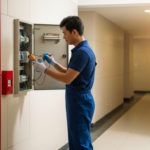
Fire alarm systems are complex: detectors, notification devices, control panels, power supplies and communication links must work as an integrated system. A typical maintenance regime includes:
- Regular functional tests of detectors and manual call points (frequency determined by system type and occupancy).
- Checking batteries and backup power supplies; replacing aged or failing batteries promptly.
- Verifying wiring integrity and connections during scheduled servicing.
- Examining control panels for fault logs, indicator lights and firmware/software updates.
- Cleaning detectors where dust or steam may compromise sensitivity.
- Performing acceptance and system integration tests after any system modification.
Engaging experienced technicians ensures tests are conducted safely and documented correctly. You can find service frameworks that combine both extinguishers and alarms to streamline compliance under a single provider offering — search for comprehensive fire safety inspection packages.
Documentation and record-keeping
Maintain a centralized logbook (physical or digital) that includes:
- Dates and results of visual inspections and professional servicing.
- Service provider credentials and technician details.
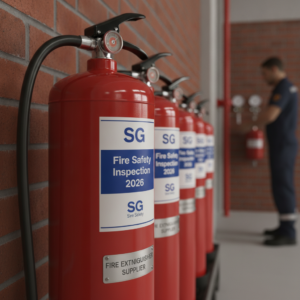
- Tags or labels on each extinguisher showing last service date and next due date.
- Test reports from fire alarm maintenance, including detector IDs and fault resolutions.
- Certificates for pressure/hydrostatic tests and any component replacements.
Digital logs and cloud-based maintenance platforms are increasingly popular because they provide audit-ready records, automatic reminders and analytics for predictive planning.
Choosing the right service provider
Selecting an accredited, experienced vendor reduces risk. Consider these criteria:
- Technicians with recognised credentials and manufacturer training.
- Transparent pricing and clear scope for routine and emergency visits.
- Availability of spare parts and compliant replacement equipment.
- Ability to offer integrated services (extinguishers, alarms, hydrants, suppression systems).
Review supplier portfolios and look for companies offering up-to-date solutions and trustworthy client references. For a curated list of reliable options, evaluate top fire extinguisher suppliers.
Emerging trends for 2026: smarter, greener, more connected
Fire safety is evolving. In 2026 the major trends impacting maintenance are:
- IoT and remote monitoring: connected extinguisher cabinets and alarm panels report health status in real time, allowing faster response to faults.
- Predictive maintenance: analytics identify components nearing end-of-life, reducing unexpected failures.
- Eco-friendly extinguishing agents: new agents and refill options reduce environmental impact while maintaining effectiveness.
- Mobile service apps and digital certificates: reduce paperwork and improve audit readiness.
Common pitfalls and how to avoid them
- Relying solely on annual servicing: daily/weekly visual checks by staff catch many issues early.
- Poor documentation: missing records lead to compliance problems and potential insurance disputes.
- Using unaccredited technicians or non-genuine parts: may void warranties and reduce system reliability.
- Ignoring age-related degradation: older extinguishers and alarm components should be replaced proactively.
A structured programme combining in-house checks and accredited contractor servicing addresses these pitfalls efficiently.
Practical maintenance plan for building managers (sample roadmap)
- Daily: Keep exit paths and extinguishers unobstructed; quick visual scan.
- Weekly: Create a simple checklist for facility staff to inspect pressure gauges, seals and signage.
- Monthly: Log more detailed visual checks; update the central record.
- Quarterly/biannual: Technician visits for minor servicing of alarms and extinguishers where applicable.
- Annual: Full professional servicing for extinguishers and comprehensive fire alarm maintenance with test reports.
- As-needed: Immediate action after any discharge, fault detection or building modification; maintain clear records.
If you need combined servicing solutions that include both extinguisher servicing and alarm maintenance, consider providers that offer integrated contracts for simplified scheduling such as portable fire extinguisher and fire alarm maintenance.
Resolving non-compliance issues and audits
- Act immediately: isolate and tag defective equipment, and arrange expedited servicing.
- Document all corrective actions with dated reports and technician signatures.
- Review and strengthen internal inspection routines to prevent recurrence.
Proactive servicing and up-to-date records reduce the risk of enforcement actions and help demonstrate due diligence.
Final checklist before you close each maintenance cycle
- Are all extinguishers visible, accessible and serviced within stated intervals?
- Have all fire alarm detectors and panels been tested and logged?
- Are battery backups tested and replaced when needed?
- Do you have digital or physical records for every maintenance activity?
- Are service providers accredited and are replacement parts compliant with manufacturer specs?
For a tailored approach to extinguisher servicing and to align maintenance with best practices in 2026, review guidance on combined fire extinguisher maintenance and inspection.
Conclusion
Embrace technology where it adds value, choose accredited providers and maintain clear logs to demonstrate compliance.
Maintaining these systems is ongoing work — but with the right programme it becomes manageable, auditable and reliably protective of people and property.

No comment yet, add your voice below!