

Introduction
Managing fire safety in Singapore is both a regulatory requirement and a practical necessity for every home, HDB, office, and industrial site. Two decisions repeatedly surface for building managers and business owners: selecting a reliable fire extinguisher supplier and knowing when to schedule a fire extinguisher replacement.
Why timely fire extinguisher replacement matters in Singapore
Fire extinguishers are life-saving devices only if they function when needed. Over time, pressure loss, corrosion, expired agents, or mechanical faults can render an extinguisher ineffective.
- Faulty or expired extinguishers increase response time and fire spread risk.
- Replacement intervals depend on type, manufacturer, and usage history; dry powder units and CO2 units have different lifespans and inspection needs.
Understanding requirements and record-keeping
Key obligations include:
- Monthly visual checks by the premises operator.
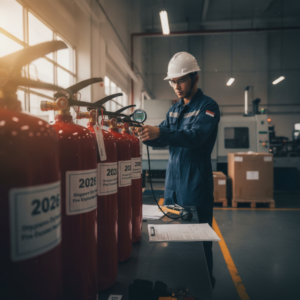
- Annual servicing and comprehensive inspections every 1–5 years depending on the type.
- Proper tagging and service records maintained for audits.
Maintaining clear service records and tagging makes audits straightforward and demonstrates due diligence.
Types of extinguishers and replacement triggers
Choose the right extinguisher for the fire risks present (Class A, B, C, F, or electrical). Common types in Singapore include:
- Water and water mist extinguishers — for Class A fires; replacement when corrosion or mechanical faults occur.
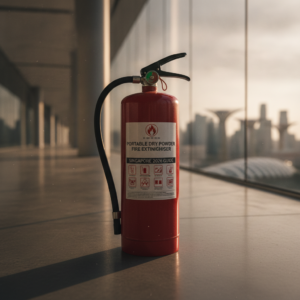
- Dry powder (ABC) extinguishers — versatile for mixed-risk areas; powder compaction or humidity damage can necessitate replacement. Learn more on dry powder maintenance here: dry powder fire extinguisher maintenance.
- CO2 extinguishers — for electrical fires; check for cylinder integrity and pressure loss.
- Foam extinguishers — ideal for flammable liquid fires; seal and pressure checks determine service vs replacement.
Replacement is required when:
- The cylinder fails hydrostatic testing or shows signs of corrosion.
- Agent has degraded, been contaminated, or the pressure is irretrievable.
- The extinguisher has been discharged and cannot be economically refilled or repaired.
How to choose a trustworthy fire extinguisher supplier in Singapore
Selecting a fire extinguisher supplier goes beyond price. A reputable supplier ensures compliance, provides trained technicians, offers transparent pricing, and maintains service records. Consider these criteria:
- Certified technicians and evidence of training for servicing and hydrostatic testing.
- End-to-end services: supply, installation, tagging, servicing, and disposal/recycling of old units.
- Warranties, transparent replacement policies, and parts availability.
- Customer reviews and a track record with similar properties.
Comparing supply vs servicing: what to buy and when to replace
Deciding between repair/refill and replacement depends on cost, downtime, and safety. General guidance:
- Minor faults and discharged but intact units can often be refilled and re-tagged.
- Corroded cylinders, failed hydrostatic tests, or severely damaged valves typically require full replacement.
- For older units (10+ years) replacement is often more cost-effective given the evolution of agents and technologies.
When sourcing a new unit, work with suppliers who provide site assessments. They can recommend the optimal type and coverage strategy for your layout.
Cost considerations and budgeting for replacement
Budgeting for fire extinguisher replacement in Singapore includes the cost of units, installation, disposal of old cylinders, and ongoing servicing:
- Basic domestic or small office extinguishers: moderate equipment cost with low installation expense.
- Commercial and industrial-grade units (larger capacities or special agents): higher upfront cost but longer life and better coverage.
- Recurring costs: annual servicing, hydrostatic testing cycles, and potential refills after discharge.
Obtain itemised quotes from several suppliers and verify that servicing costs and compliance tagging are included.
Service contracts, emergency response, and training
A strong supplier will offer service contracts that include scheduled maintenance, emergency replacements, and technician response windows. Consider:
- SLA (service level agreement) for emergency call-outs.
- Training offerings for staff on correct extinguisher use and monthly checks.
- Digital logs and certificates of compliance you can present during audits.
Training plus practical in-house drills significantly increase the chance of a safe outcome in an actual fire incident.
Emerging trends: digital monitoring, greener agents, and consolidation
Singapore’s fire-safety market is evolving. Key trends to watch:
- IoT-enabled monitoring: Sensors and smart cabinets report pressure and tamper status in real time, enabling proactive replacement and reducing missed inspections.
- Eco-friendly agents: Suppliers increasingly offer low-GWP (global warming potential) and less toxic extinguishing agents for sensitive environments.
- Centralised servicing platforms: Platforms that manage multiple sites, assets, and compliance records are growing popular among chains and facility managers.
Choosing a forward-looking supplier who supports digital record-keeping and greener agents can future-proof your safety program.
Practical replacement checklist for building managers
Follow this checklist when you plan fire extinguisher replacement:
- Inventory: List extinguisher types, locations, ages, and last service dates.
- Risk assessment: Confirm extinguisher type matches nearby fire risks.
- Schedule inspections: Ensure a licensed technician performs an annual check and hydrostatic testing as required.
- Evaluate repair vs replacement: Consider cost, safety, and downtime.
- Train staff: Run refresher training and document attendance.
For a supplier- and replacement-focused step-by-step guide, refer to the comprehensive replacement and supplier guide.
Common mistakes to avoid
- Ignoring monthly visual checks and relying solely on annual servicing.
- Choosing the cheapest extinguisher without verifying compliance or technician credentials.
- Failing to keep service records and tags up to date, which complicates audits.
- Not upgrading older systems to modern agents or monitoring solutions when appropriate.
Final recommendations
Prioritise safety and compliance when sourcing a fire extinguisher supplier and planning replacement. For maintenance specifics, particularly for dry powder units and alarm interfaces, see dedicated guidance on dry powder maintenance and alarm links.
Replacing extinguishers on a timely basis and partnering with a capable supplier are practical investments in risk reduction and regulatory peace of mind. Practical procurement, routine servicing, and clear records keep premises safer and compliant with Singapore’s fire-safety framework.

No comment yet, add your voice below!