

Introduction
Keeping fire extinguishers in top working order isn’t just best practice — in Singapore it’s a core part of workplace and building safety management. With 2026 bringing renewed emphasis on documented servicing, owner responsibilities and integrated fire-safety programs, understanding practical fire extinguisher maintenance steps will protect lives, assets and ensure regulatory compliance.
This guide explains what Singapore businesses and building managers need to know about fire extinguisher maintenance in 2026: how often to inspect and service units, the checklist you should follow, where to get professional servicing, disposal options and how to budget for recurring costs.
Why regular fire extinguisher maintenance matters
A fire extinguisher that looks fine can still fail when needed. Regular maintenance ensures:
- Reliability during an emergency — correct pressure, intact seals and working mechanisms
- Extended service life and lower total cost of ownership
- Clear audit trails and records for regulatory inspections
- Reduced liability and better protection for occupants and assets
Fire extinguisher maintenance is preventive safety: it reduces the chance of equipment failure and helps meet Singapore’s fire safety expectations.
2026 compliance highlights for Singapore
Singapore’s enforcement approach focuses on competency, documentation and demonstrable maintenance. Key practical points for 2026 compliance:
- Licensed or qualified technicians must perform periodic servicing and testing that goes beyond simple visual inspections.
- Clear maintenance records (dates, technician details, work performed, serial numbers) must be retained and made available during inspections.
- Linkage between portable extinguisher maintenance and other systems (e.g., alarms, hydrants) is increasingly expected in integrated safety audits. See combined services for both fire extinguishers and alarms fire extinguisher and fire alarm maintenance.
These are practical trends rather than a list of verbatim legislation.
Types of fire extinguishers and their maintenance needs
Different extinguisher types require slightly different maintenance:
- Water and foam extinguishers: check for corrosion, pressure and nozzle condition. Annual service normally involves opening and internal inspections where required.
- Dry chemical (ABC) extinguishers: check pressure, seals, and inspect for caking of powder. They commonly require annual servicing and periodic internal examination.
- CO2 extinguishers: pressure checks and inspecting discharge horns for damage; they often have separate testing regimens because they are stored at high pressure.
- Wet chemical extinguishers: used in kitchen or F&B settings; maintenance includes verifying correct agent and nozzle condition.
Regardless of type, the core elements of fire extinguisher maintenance — visual checks, pressure verification, accessibility, signage and correct mounting — remain consistent.
Routine schedule: what to do and when
A practical maintenance frequency guide for Singapore settings in 2026:
- Daily/Weekly: quick visual checks by workplace staff — unit accessibility, obvious damage or tampering.
- Monthly: documented visual inspection for pressure gauge in the green, intact seals, clear signage and unobstructed access.
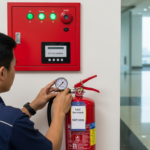
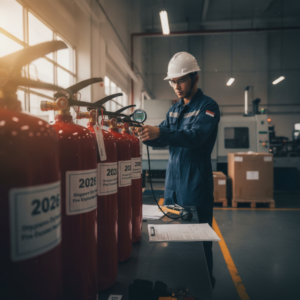
- Annual: full service by a qualified technician — functional tests, pressure recharge, replacement of worn parts, updating service tags and records.
- Every 5–12 years: internal inspection or hydrostatic testing depending on extinguisher type and manufacturer recommendations.
For a downloadable, standardised checklist you can adopt into your maintenance program, review the practical fire extinguisher maintenance checklist.
Step-by-step annual servicing process
- Verify unit type and location against inventory records.
- Isolate and tag units due for service.
- Qualified technician conducts a thorough inspection:
- Check pressure gauge and cylinder integrity
- Inspect hose, nozzle and valve assembly
- Replace damaged tamper seals and service labels
- Empty and internal-examine where required
- Recharge or replace extinguishers that fail tests.
- Record all findings, parts replaced and the next due date.
- Return serviced units to their designated locations with updated signage.
This systematic approach reduces surprises during audits and keeps your property compliant and safe.
Selecting a qualified service provider
Choosing the right service provider matters. Look for:
- Qualified technicians with verifiable experience
- Transparent pricing and written reports with serial-numbered records
- Ability to provide both scheduled servicing and emergency replacements
- Local presence and fast response time for large sites or multi-building campuses
To find vetted locations and recommended service partners in Singapore, consult resources that explain where to service portable fire extinguisher.
Cost considerations and budgeting
Budgeting for fire extinguisher maintenance is predictable when you understand typical cost components:
- Routine annual inspection and tagging
- Parts and agent recharges (medium cost when needed)
- Hydrostatic testing or major repairs (less frequent but higher one-off cost)
- Replacement units (when beyond economical repair)
Different providers price differently — compare bundled service contracts vs per-unit fees. For a transparent pricing reference, review typical fire extinguisher servicing pricing.
Safe disposal and recycling
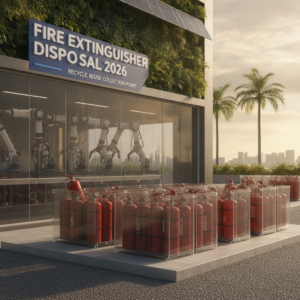
Extinguishers that are obsolete, corroded beyond repair or past their hydrostatic test dates must be disposed of safely. Disposal involves depressurisation, separation of agents and recycling of metal parts where possible. Improper disposal is hazardous and can lead to enforcement action.
If you need guidance on environmentally responsible disposal procedures and recycling options, see this practical fire extinguisher disposal and recycling guide.
Documentation and record-keeping best practices
Maintaining thorough records is as important as the physical servicing. Recommended documentation practices:
- Maintain a central register (digital preferred) indexed by unit serial number and location
- Record every inspection, service, recharge and disposal event with dates, technician name and license details
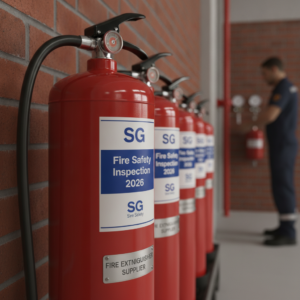
- Attach a visible service tag on each unit showing the last service date and next due date
- Retain service records for a minimum period consistent with local guidelines (commonly several years)
Good documentation makes regulatory inspections smoother and demonstrates due diligence in safety management.
Training and staff responsibilities
Fire extinguisher maintenance extends beyond technicians. Staff training and awareness are critical:
- Ensure staff know how to perform basic monthly visual checks and report issues promptly
- Provide practical fire extinguisher use training for designated responders; maintenance status should be verified before any practical drills
- Assign a responsible person for scheduling annual servicing and keeping records up to date
Routine training reduces panic and misuse during incidents and helps preserve extinguisher condition.
Common mistakes to avoid
- Relying solely on annual servicing and ignoring monthly visual checks
- Using unqualified technicians or informal suppliers without documentation
- Delaying replacement of units after failed hydrostatic tests
- Poor inventory control leading to missing or unserviceable units during audits
Avoiding these mistakes makes compliance straightforward and cost-effective.
Quick compliance checklist (summary)
- Schedule monthly visual checks and log results
- Book annual servicing with a qualified technician and retain service reports
- Keep an up-to-date central extinguisher register with serial numbers and locations
- Ensure safe disposal for units past repair or expiry
- Train staff to identify faults and understand basic extinguisher operation
For a printable checklist to integrate into your maintenance routine, use the fire extinguisher maintenance checklist as a template.
Conclusion
A proactive approach to fire extinguisher maintenance protects people, property and compliance status. In 2026, Singapore emphasises documented servicing, qualified technicians and integrated fire-safety programs. Adopt a regular inspection schedule, keep robust records, work with reputable service providers and ensure safe disposal of obsolete units. These measures deliver safer buildings and fewer surprises during inspections, helping organisations focus on their core operations with confidence.

No comment yet, add your voice below!