

Introduction
Maintaining portable fire extinguishers is a simple but crucial part of any Singapore fire protection system. Proper maintenance keeps equipment ready in an emergency, ensures compliance with regulations, extends service life, and reduces liability for building owners and facility managers. This 2026 checklist breaks down practical steps, modern trends, and local resources so you can build a reliable routine for homes, offices, and commercial properties across Singapore.
Why regular fire extinguisher maintenance matters in Singapore
- Safety first: A locked or faulty extinguisher is useless during an incident. Routine maintenance minimizes the risk of failure.
- Cost control: Timely maintenance identifies small issues before they become expensive replacements, and proper disposal/recycling protects the environment.
The modern context: trends in fire extinguisher maintenance (2026)
- Digital records and asset management: Many facility teams are moving from paper logs to digital platforms that track inspections, service dates, and certification — improving visibility across multiple sites.
- IoT and sensor-ready cabinets: Advanced systems can monitor cabinet status, temperature and even pressure remotely — useful for large estates and critical facilities.
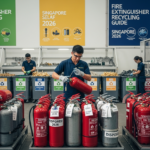
- Sustainability and recycling: End-of-life extinguishers are increasingly recycled or disposed of responsibly. See the fire extinguisher disposal and recycling guide for local options.
- Transparent pricing and licensed servicing: Demand for clear pricing has grown; compare quotes and check licences before choosing a supplier (links below).
Quick-reference maintenance frequencies (practical guidance)
The guidance below is a general, practical starting point:
- Daily/Weekly: Visual access check for high-risk locations; ensure extinguishers are not obstructed.
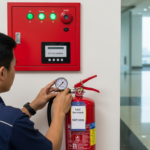
- Monthly: Visual check by the responsible person — gauge in green, no obvious damage, safety seal intact, correct mounting and signage.
- Annually: Full professional servicing by a licensed technician (inspection, cleaning, recharge, parts replacement as needed).
For help identifying where to service your portable fire extinguisher in Singapore, refer to this page: where to service portable fire extinguisher Singapore 2026.
Comprehensive maintenance checklist (step-by-step)
Use this checklist for routine audits and to prepare for annual servicing. Mark off each item and keep a dated record.
- Visual and accessibility checks (monthly)
- Is the extinguisher in its designated location and easy to reach?
- Is the mounting bracket or cabinet secure and free from corrosion?
- Is signage visible and legible (fire extinguisher location signs)?
- Is the unit physically damaged (dents, rust, cracks)?
- Are hoses and nozzles free from blockages, kinks or deterioration?
- Is the pressure gauge needle in the green zone (where applicable)?
- Is the safety pin and tamper seal intact?
-
Is the unit within its marked service/recharge date?
-
Weight and content integrity (monthly/annually)
- For some types (e.g., dry chemical), weigh the extinguisher to detect loss of agent or leakage.
-
Check for signs of internal corrosion or residue near valves.
-
Functional check (during professional service)
- Valve and discharge assembly inspected and lubricated.
- Full pressure check and leak test performed.
- Recharge or replace extinguishing agent after discharge or per schedule.
-
Replace damaged hoses, nozzles, or other parts with manufacturer-approved components.
-
Hydrostatic and internal examinations (periodic)
- Schedule hydrostatic testing when required for your extinguisher type; the interval depends on agent and cylinder material.
-
Any cylinder that fails testing must be taken out of service and appropriately disposed of or recycled.
-
Record-keeping and tagging
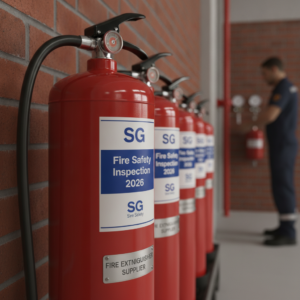
- Attach a service tag showing last service date, next due date, technician’s name and company.
-
Maintain digital or physical logs for inspections, repairs and replacements.
-
Post-discharge action
- Any used extinguisher must be recharged or replaced immediately after use.
-
Do not return a partially discharged unit to service without a full recharge and inspection.
-
Replacement and disposal
- If an extinguisher is beyond economical repair, follow regulated disposal routes.
- For local guidance on replacement and disposal, see: Singapore fire extinguisher replacement and disposal 2026.
Practical tips for facility managers and landlords
- Assign responsibility: Nominate a responsible person on each floor who completes monthly checks and records them.
- Use checklists: Standardise the monthly and annual checklist across properties for audit readiness.
- Train occupants: Basic extinguisher use and evacuation procedures should be part of staff onboarding and periodic fire drills.
- Centralise documentation: Use a cloud-based asset register for multiple properties to track expiry dates and service histories.
- Compare quotes and licences: When procuring servicing, verify the company is licensed and request clear pricing. See local servicing pricing details here: fire extinguisher servicing Singapore 2026 pricing.
Choosing the right service provider in Singapore
When selecting a maintenance vendor consider:
– Licensing and qualifications: Confirm technicians are trained and licensed for Singapore’s fire protection system requirements.
– Transparent scope: A good provider lists what is included in annual servicing, replacement parts, and hydrostatic tests.
– Response time: For multi-site managers, choose vendors with fast mobilisation and emergency recharge capability.
– Environmental policies: Ask about their disposal and recycling process; responsible firms should follow safe disposal protocols. For recycling guidance see: fire extinguisher disposal and recycling guide.
For a pointer to local service centres and recommended practices, the following resource explains where to service portable extinguishers and what to expect: where to service portable fire extinguisher in Singapore 2026.
Common issues found during maintenance and how to address them
- Faulty pressure gauge: If the needle is out of range, the unit requires immediate service or replacement.
- Corroded cylinders or fittings: Replace corroded components and evaluate the environment (humidity control, ventilation).
- Missing or tampered seals: Investigate cause and reseal after service; consider relocating units to more secure cabinets.
- Blocked or damaged nozzles: Replace immediately; keep spare parts on hand for critical locations.
- No service history: Schedule a professional inspection right away and establish a regular plan; lack of records can be a compliance issue.
Cost considerations and budgeting tips (2026)
- Annual servicing costs vary by type and quantity of extinguishers. Factor in labour, parts, recharge agent and testing.
- Budget for periodic hydrostatic tests and potential replacements every few years.
- Consider a service contract for multi-site management to stabilise costs and ensure predictable maintenance windows. Compare typical pricing and contract options here: servicing pricing.
Sustainability and disposal best practices
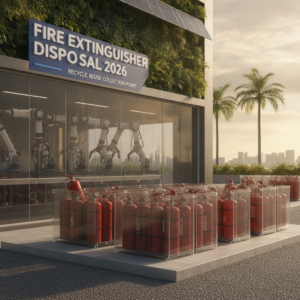
End-of-life extinguishers must be handled safely. Many parts and agents can be recycled or responsibly disposed of; improper disposal risks contamination or regulatory penalties. Consult a reputable vendor who offers certified disposal or recycling — local disposal and replacement guidance is available here: replacement and disposal 2026.
Sample maintenance checklist (copy and adapt)
- Monthly:
- [ ] Unit accessible and signage clear
- [ ] Gauge in green and safety pin present
- [ ] No visible damage or corrosion
- [ ] Cabinet/hanger secure
-
[ ] Record inspection in log
-
Annual (professional):
- [ ] Full inspection and functional test
- [ ] Recharge or replace agent if required
- [ ] Replace worn hoses, nozzles or parts
-
[ ] Update service tag and digital record
-
Periodic:
- [ ] Schedule hydrostatic/internal test as required
- [ ] Review and update replacement schedule
- [ ] Confirm disposal or recycling for condemned units
Final checklist: action plan for the next 30/90/365 days
- Next 30 days: Conduct a building-wide visual audit and update digital logs.
- Next 90 days: Book annual servicing for units due within the quarter; verify licences and pricing.
- Next 365 days: Review hydrostatic test schedule and budget for any cylinder testing or replacements.
Reliable servicing, clear records and consistent checks form the backbone of an effective fire safety programme in 2026.

No comment yet, add your voice below!