

Introduction
Fire extinguishers are the first line of defence in many small fires. This guide breaks down what every owner, facilities manager and occupant should know: simple monthly checks, the role of licensed servicing, common faults to watch for, record-keeping, safe disposal, and useful trends that make compliance easier.
Why regular fire extinguisher maintenance matters
A portable fire extinguisher is only effective if it functions when needed. Corroded valves, lost pressure, blocked nozzles and expired agents can render an extinguisher useless. Regular maintenance:
- Ensures operability during an emergency.
- Preserves warranty and service lifecycles.
- Helps avoid fines and enforcement actions that can follow neglected equipment.
responsibilities and owner obligations
Practical obligations include:
- Conducting regular visual checks and logging them.
- Keeping service records, labels and inspection tags accessible for audit.
- Replacing or disposing of units that no longer meet safety standards.
For more detail on inspection cycles and professional servicing, review guidance on proper extinguisher servicing and inspection practices.
Learn about professional inspection and servicing practices
Monthly visual checks — what to inspect
Monthly checks are inexpensive yet powerful. Trained staff can perform them without specialised tools. Key items to inspect each month:
- Pressure gauge: ensure the needle is in the recommended green zone.
- Tamper seal and safety pin: intact and not removed.
- Physical condition: dents, corrosion, cracked hoses or other damage.
- Labels and operating instructions: legible and facing outward.
- Mounting bracket or stand: secure and not blocking access.
- Recent service tag: verify last professional service date.
Document these checks on a simple log sheet or digitally. Even brief monthly entries help prove due diligence during audits and help spot trends before failures occur.
Annual servicing and certified contractors
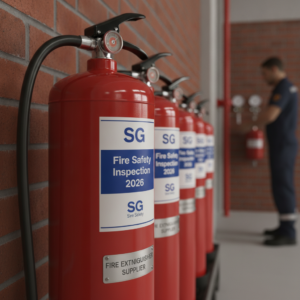
Beyond monthly visual checks, extinguishers should be serviced by trained, certified technicians. Annual servicing generally includes:
- A full inspection of mechanical parts and seals.
- Pressure testing and recharging as necessary.
- Replacing worn or expired components (hoses, nozzles, tags).
- Correct labelling and re-tagging with service dates.
If you need help choosing the right extinguisher models or suppliers for your premises, consult professional resources to compare options and certifications.
Explore extinguisher choices and supplier guidance
Hydrostatic testing, refills and service intervals
Certain extinguisher types (especially stored-pressure units and those containing specific agents) require periodic pressure testing or hydrostatic testing at intervals defined by the manufacturer and recognised standards. Key points:
- Follow manufacturer recommendations and certificates supplied by licensed servicers.
- Recharging is necessary after any use — even a partial discharge — and should be performed by a qualified technician.
- Stay current on service dates and planned testing cycles to avoid lapses in protection.
If you operate multiple sites, consider centralised tracking of test schedules to avoid missed tests and to simplify compliance reporting.
Common faults and how to address them
Understanding typical faults helps maintenance teams prioritise actions:
- Low or lost pressure: usually visible on the gauge. Arrange for recharging or replacement.
- Corrosion and rust: weakens cylinders; consult a technician to determine serviceability or disposal.
- Blocked or damaged nozzles/hose: replace parts or the entire unit if necessary.
- Illegible instructions or missing tags: relabel and re-tag after service.
- Missing mounting hardware: reinstall immediately to keep units accessible.
Addressing these quickly keeps units ready and reduces the chances of enforcement action during an inspection.
Disposal and replacement
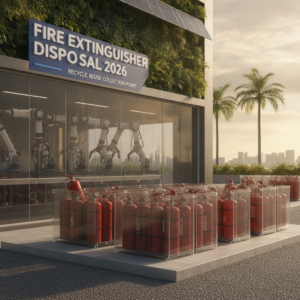
When an extinguisher reaches its end of life or fails hydrostatic testing, it must be disposed of safely. Disposal best practices in Singapore include:
- Using licensed contractors for disposal to ensure environmentally safe handling of extinguishing agents and pressurised vessels.
- Documenting disposal along with replacement details.
- Selecting replacement units tailored to the hazard class (A, B, C, electrical fires) and environment.
If you are unsure how to dispose of or replace old extinguishers, consult professional guidance on extinguisher disposal and replacement pathways.
Read about safe extinguisher disposal and replacement
Record-keeping: audits, logs and digital tools
Good records demonstrate compliance and simplify audits. Records to maintain include:
- Monthly visual check logs with dates and inspector names.
- Annual service reports and technician certificates.
- Hydrostatic test certificates and replacement invoices.
- Disposal and replacement documentation.
Consider solutions that let you attach photos, time-stamps and service provider reports to each extinguisher record.
Discover inspection and servicing solutions for easier compliance
Staff training and emergency readiness
Maintenance is only one part of readiness. Staff should also know:
- Where extinguishers are located and when to use them.
- How to operate common extinguisher types safely (PASS: Pull, Aim, Squeeze, Sweep).
Regular fire drills and short hands-on demonstrations (with training units or supervised practice) reinforce confidence and reduce panic during real incidents.
Emerging trends that help with compliance
Singapore’s fire safety ecosystem is adopting practical tech and process improvements:
- QR-coded tags and mobile apps for instant maintenance history checks.
- Cloud-based asset management that triggers reminders for tests and recharges.
- Integrated building safety platforms that combine alarm, extinguisher and suppression system data.
These trends make routine fire extinguisher maintenance easier to manage across multiple sites and support faster, paperless audits.
Learn about fire alarm and safety system integration
Practical checklist for building owners and facilities managers
A quick, actionable checklist to put into practice:
- Assign a responsible person for monthly checks and log every inspection.
- Book annual servicing with a licensed contractor and keep certificates on file.
- Replace or repair any units showing damage, low pressure or corrosion.
- Ensure all extinguishers are correctly rated for the hazards present.
- Use digital tools (QR tags, apps) where possible to centralise records.
- Train staff in basic extinguisher use and emergency procedures.
Conclusion
Regular monthly checks, annual servicing by qualified technicians, proper record-keeping and adoption of digital inspection tools together create a resilient approach to fire readiness. Prioritise maintenance today to protect people, property and business continuity tomorrow.


No comment yet, add your voice below!