

Why this guide matters for Singapore owners
Fires are fast and unpredictable in high-density environments like those in Singapore. A reliable fire extinguisher is often the first line of defence for small outbreaks.
What is a dry powder fire extinguisher?
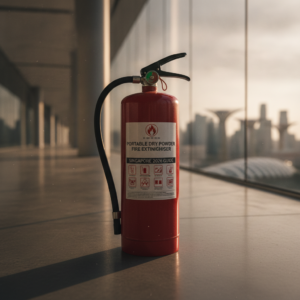
A dry powder fire extinguisher contains a finely milled chemical powder (often mono ammonium phosphate or sodium bicarbonate blends) that interrupts the chemical reactions sustaining a flame. These extinguishers are typically rated for multiple fire classes (A, B and C), making them versatile for mixed-risk environments. In Singapore, they are commonly used in workshops, warehouses, vehicles and construction sites where combustibles, flammable liquids and electrical risks exist.
Key advantages:
– Multi-class capability (A, B, C) for general-purpose protection.
– Fast knockdown for spreading flames and fuel fires.
– Robust and relatively low-cost to procure and service.
Common limitations:
– Powder residues can damage sensitive electronics and are hard to clean.
– Not ideal for Class F (cooking oil) fires — wet chemical extinguishers are better for kitchens.
– Can reduce visibility and produce inhalation irritants if used in enclosed spaces.
Understanding fire classes and suitability in Singapore
To pick the right extinguisher, first map your fire risks:
– Class A: Combustible solids (wood, paper)
– Class B: Flammable liquids (paint, oil)
– Class C: Flammable gases and energized electrical equipment
– Class F: Cooking oils and fats
Dry powder units are effective for A, B and C hazards, which makes them useful in general-purpose applications across homes, small businesses, vehicle fleets and industrial sites. However, for kitchens (commercial or residential) and areas with lots of electronics, consider complementary agents: wet chemical for deep-fat fryer risks, and CO2 or clean-agent extinguishers for server rooms.
Choosing the right size and rating
Extinguishers are rated by the amount of extinguishing agent and a numerical performance rating. For typical Singapore settings:
– Homes and small offices: 1–3 kg dry powder units can offer immediate response for small fires.
– Commercial premises and workshops: 4–6 kg or larger units provide longer discharge and higher fire ratings.
– Vehicle fleets: compact 1 kg or 2 kg units are popular for convenience and compliance.
When selecting, balance portability and run-time. A larger 6 kg unit has more discharge time but is heavier to operate.
How to use a dry powder fire extinguisher (PASS method)
Quick, confident action is essential. Use the PASS technique:
– Pull: Remove the safety pin.
– Aim: Direct the nozzle at the base of the flames, not at the top of the fire.
– Squeeze: Depress the lever to discharge the agent.
– Sweep: Move the nozzle side-to-side across the fire base until extinguished.
Maintenance: what Singapore owners must know
Follow a tiered approach:
– Daily/Weekly: Visual checks for obvious damage, broken seals, dents or corrosion. Ensure the gauge (if present) is in the correct range.
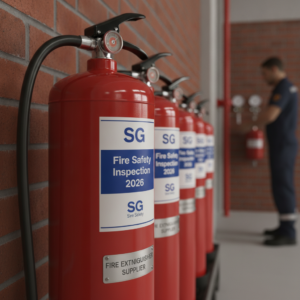
– Monthly: A more thorough visual inspection — check mounting brackets, labels and expiry or service tags.
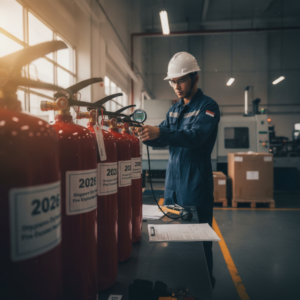
– Annually: Full service and inspection by a licensed extinguisher contractor. This includes internal checks, refilling or replacement of the agent, pressure testing if needed, and replacing worn parts.
– Periodic testing: Some extinguisher types require hydrostatic testing or full overhaul at manufacturer-specified intervals. Intervals vary by design and manufacturer; consult your service provider.
A convenient reference on maintaining portable units is the [portable fire extinguisher maintenance] (https://nationalcitycorporation.sg/portable-fire-extinguisher-maintenance-singapore-2025/) page, which outlines common service tasks and timelines.
requirements and inspection readiness
While specific legal requirements can depend on building class and use, best practice includes:
– Keeping accurate service records and tags on each extinguisher.
– Ensuring servicing is carried out by qualified personnel.
– Locating extinguishers in accessible, signposted areas with proper mounting.
Placement and accessibility best practices
Effective placement maximises the chance an extinguisher can be used quickly:
– Mount extinguishers where they are visible and within quick reach of typical hazard zones.
– Avoid blocking access with furniture, storage or equipment.
– Install signage and lighting so units are locatable during low-visibility conditions.
– For larger premises, perform a risk survey to determine the number and distribution of units. For combined protection strategies, co-locate appropriate agents (e.g., dry powder near workshop machinery, wet chemical near commercial kitchens).
Buying in Singapore: what to look for
A trusted local source for broader fire safety services and products is [National City Corporation] (http://nationalcitycorporation.sg), which can help with product selection and ongoing service arrangements.
Integrating extinguishers into a wider fire strategy
A dry powder extinguisher is one element of a layered fire safety plan. Complementary measures include:
– Fire detection and alarm systems for early warning. For guidance on integrating maintenance and inspection of alarms, review [fire alarm maintenance and safety inspection] (https://nationalcitycorporation.sg/fire-alarm-maintenance-and-safety-inspection-singapore-2025/).
– Passive fire protection and suppression systems in higher-risk buildings. For larger sites, consult advice on [fire safety inspection & protection systems] (https://nationalcitycorporation.sg/2025-singapore-fire-safety-inspection-protection-systems/).
– Staff training and evacuation drills so people know how to use extinguishers safely.
Common mistakes to avoid
- Choosing the wrong extinguisher for the hazard (e.g., using powder as the only agent in a commercial kitchen).
- Neglecting routine checks and service records — an out-of-service extinguisher is useless during an emergency.
- Storing extinguishers in hidden or hard-to-reach places.
- Assuming all extinguishers are identical — agent type, rating and discharge time vary widely.
Practical checklist before you buy or service
- Identify the primary fire risks in each area.
- Select extinguisher types and sizes to match those risks.
- Label and log each extinguisher with service dates and next due date.
- Train staff on PASS and safe evacuation priorities.
Final notes: balancing safety, cost and practicality in 2025
In 2025, Singapore’s fire safety ecosystem increasingly blends traditional hardware with digital record-keeping and QR-tagged inspection logs. Regular inspection, appropriate placement and staff training will meaningfully improve outcomes during an incident.
Practical next steps: map your premises’ hazards, choose the right dry powder models for non-kitchen zones, and schedule annual servicing with an authorised contractor.


No comment yet, add your voice below!