

Why timely fire extinguisher servicing and maintenance matters
Fire extinguishers are simple in design but critical in function. Regular professional servicing and maintenance keeps units ready to work the moment they’re needed, protects building occupants and helps meet legal, insurance and workplace-safety obligations in Singapore. Beyond life-safety, a well-documented servicing history avoids compliance fines during inspections and reduces liability exposure after an incident.
Who should you book with: certified teams, not general handymen
When arranging fire extinguisher servicing, choose companies that specialise in fire safety or are authorised service agents for extinguisher brands. Look for:
– Technicians with formal training and certification in portable fire-fighting equipment
– A business licence and public liability insurance
– Clear service records and standardised inspection tags or certificates
In Singapore, many building owners use specialist fire-safety firms or facility-management providers that include extinguisher maintenance in their service packages. Independent certified teams can offer faster turnaround for small portfolios; larger properties often prefer a single FM contractor for integrated records and inspections.
Where to book: channels that get fast quotes and service
- Specialist fire-safety companies: These firms focus solely on fire protection products and maintenance. They typically provide onsite inspections, preventive servicing and recharge or replacement.
- Facility management companies: Best for commercial buildings and multi-site portfolios — they bundle extinguisher maintenance with other compliance services.
- Authorised brand service centres: If you use a specific manufacturer’s extinguishers, authorised centres can ensure warranty-compliant servicing and correct spare parts.
- Online service marketplaces: Platforms that aggregate local vendors can deliver multiple fast quotes and estimated lead times within hours. Use marketplaces to compare price, availability and customer ratings.
- Emergency mobile teams: Many certified providers run mobile service vans for same-day recharges and tag updates — useful for urgent replacements or last-minute inspections.
How to get fast, accurate quotes
- Provide extinguisher inventory upfront: number, type (CO2, dry powder, water, foam), size (kg or litre), and age. Photos help.
- State whether you need one-off servicing, an annual contract or a full replacement.
- Ask for itemised quotes showing labour, parts (recharges, seals, hoses), testing fees and transport.
- Request lead times and availability for emergency attendances.
Fast quotes are often possible when vendors can pre-assess via photos or an inventory spreadsheet. For larger buildings, schedule a site visit for a formal quote.
What typical service includes (and what to check on the day)
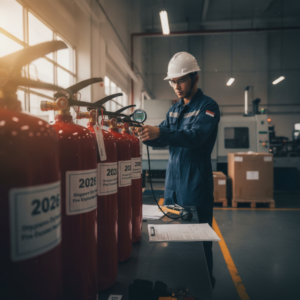
A professional fire extinguisher servicing visit usually comprises:
– Visual and physical inspection (corrosion, dents, hose/nozzle condition)
– Pressure check and weight verification
– Checking handle, safety pin and tamper seals
– Replacement of damaged seals or labels
– Recharging discharged or partly discharged units
– Hydrostatic testing or internal maintenance referrals when required
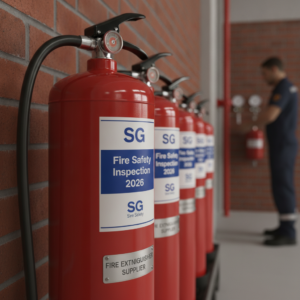
– Affixing a service tag and issuing a certificate or digital record
When the technician is on site, ensure they record the unit serial numbers, service date and next due date on the tag. Verify that digital records (if offered) are accessible for audits.
Typical costs and factors that affect price (Singapore 2025 estimates)
Costs vary by extinguisher type, size, age and whether recharging, replacement parts or hydrostatic testing are required. As a general guide (SGD):
– Small extinguishers (1–2 kg): S$25–S$60 per annual service
– Medium extinguishers (4–6 kg): S$45–S$90 per annual service
– Large extinguishers (9 kg and above): S$80–S$150 per annual service
– Recharge or replacement of discharged units: additional S$30–S$150 depending on agent and size
– Hydrostatic testing or internal overhauls: priced separately, typically higher and done every few years per manufacturer guidelines
Bulk contracts or annual maintenance agreements will lower per-unit cost. Always ask vendors to provide a breakdown of labour vs parts so you can compare quotes fairly.
Compliance and record-keeping: what auditors expect
Regulatory bodies and insurers expect clear evidence of regular maintenance. A compliant servicing provider should supply:
– A dated service tag on each extinguisher showing the next service due date
– A written or digital service certificate listing units inspected
– A logbook or online portal for multi-unit portfolios
– Records of any repairs, recharges or replacements, plus original serial numbers
Keep copies of all records for at least several years; these documents are often required during fire-safety inspections or insurance claims.
How to choose the right local certified team
Ask potential vendors these questions:
– Are your technicians certified to service portable fire extinguishers? Can you show proof?
– Do you provide service certificates and electronic records?
– Are you familiar with Singapore’s fire-safety audit requirements and local building codes?
– What is your response time for emergency attendances?
– Do you carry spare parts and recharge agents in your service vehicles?
– Can you service our whole site on a scheduled date and provide consolidated reports?
Check customer reviews, ask for references and confirm the company’s public liability insurance. A short trial job on a small number of units is a low-risk way to test quality and responsiveness.
2025 trends that affect bookings and maintenance
- Digital tagging and QR-code records: More providers use QR tags so building managers can scan units for instant service history.
- Subscription-based maintenance: Monthly or annual plans that include regular checks, priority response and replacement credits continue to grow.
- Mobile recharge vans and same-day service: For compliance-driven sectors, faster field service is now common.
- Data integration with facility management software: Maintenance logs feed directly into building management systems for audit readiness.
- Eco-conscious agents and refill options: Providers increasingly offer environmentally friendlier extinguishing agents and recycling for spent cylinders.
These trends make it easier to get fast quotes, maintain audit-ready records and reduce downtime for equipment.
Quick booking checklist for landlords and property managers
- Compile an inventory with unit types, quantities, locations and ages.
- Decide whether you need a one-off audit, an annual servicing or an ongoing maintenance contract.
- Request at least three quotes with itemised pricing and lead times.
- Confirm technician certification, insurance and warranty terms.
- Request digital service records or QR-tagging where available.
- Schedule services to keep records clustered around common due dates for easier management.
Final practical tips
Keep a simple monthly visual check routine at the premises: confirm extinguisher visibility, unobstructed access, intact seals and no obvious damage. That small habit reduces the chance of surprises during professional servicing. For anyone responsible for multiple sites, consider a maintenance contract with a certified local team that offers digital records and rapid response. It streamlines compliance, often lowers costs, and provides peace of mind that extinguishers will work when needed.
Regular fire extinguisher servicing and well-documented fire extinguisher maintenance are investments in safety, compliance and continuity. Choosing certified providers with transparent pricing and digital records will make the process faster and more reliable in Singapore’s evolving 2025 landscape.


No comment yet, add your voice below!