

Introduction
Whether you manage an HDB block, a commercial building, or an industrial facility, being inspection-ready reduces downtime, avoids penalties, and — most importantly — protects lives and assets.
Use these tips to streamline your processes and stay compliant.
What fire safety inspections look for
Inspectors typically check:
- Fire detection and alarm systems — are detectors, panels and zones functional?
- Portable fire extinguishers — present, accessible, properly tagged and serviced.
- Fire mains, hydrants and hose reels — pressure, accessibility and signage.
- Emergency lighting, exit signs and illuminated escape routes.
- Fire doors and compartmentation integrity — gaps, self-closing functionality and seals.
- Housekeeping and fire hazards — storage near exits, combustible materials, and electrical risks.
- Fire safety management — training records, evacuation plans and maintenance logs.
Pre-inspection checklist: quick wins to pass the first sweep
- Walk every escape route and verify that exit signage and emergency lights operate.
- Confirm every portable extinguisher is in place, with visible service tags and no obvious damage.
- Test a sample of alarm manual call points and ensure central alarm logs exist.
- Inspect fire doors for proper closing, no wedges, and intact seals.
- Check fire hydrants and hose reels are unlocked, accessible and clearly labelled.
- Review hot work permits and storage areas for flammable liquids—ensure correct segregation.
- Compile training and drill records for the past 12 months.
A focused pre-check often catches issues that would otherwise generate a defect notice. Digitalising these checks (photos + timestamped logs) strengthens your case if questions arise.
Fire extinguisher maintenance — what inspectors expect
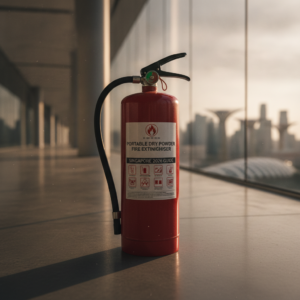
Portable extinguishers are among the most commonly inspected items.
- Correct type and capacity for the hazard present.
- Clearly accessible, unobstructed and mounted at the right height.
- Visibly intact (no corrosion, dents, or damaged hoses/nozzles).
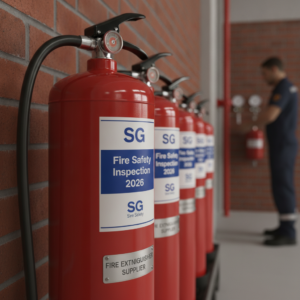
- Properly labelled with service tags and maintenance records.
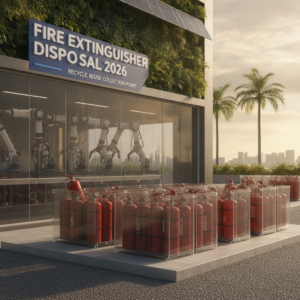
For detailed guidance on disposal of expired units in Singapore, see this dry powder guidance: dry powder fire extinguisher disposal.
Common failures and how to avoid them
Based on inspection outcomes, these failures are common — and easily avoidable with routine discipline:
- Missing or expired service tags: Keep an enforced annual service schedule with reminders.
- Blocked hydrants and obstructed exits: Enforce a zero-storage policy in escape paths.
- Non-functional emergency lighting: Test monthly and replace batteries or lamps proactively.
- Wedges on fire doors: Educate staff and install signage explaining penalties for wedging doors.
- Incomplete documentation: Maintain a central digital log (photos, timestamps, service reports).
Leverage technology: trending tools for 2025 inspections
The last few years have accelerated adoption of tools that make inspections smoother and compliance easier:
- IoT sensors on extinguishers, hydrants and panels that alert you to tampering or pressure loss.
- Mobile inspection apps to log checks with photographs and GPS timestamps.
- Thermal imaging for predictive maintenance of electrical switchgear and HVAC that can prevent fires before they start.
If you’re upgrading services, ask your contractor about smart maintenance options. For fast replacement and inspection services that combine manual checks with efficient turnaround, explore options such as fast fire extinguisher replacement and safety inspection.
Servicing, replacement and certified contractors
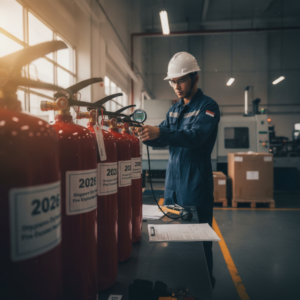
While frequency depends on manufacturer and extinguisher type, a typical regime includes monthly visual checks, annual basic servicing, and periodic overhaul or hydrostatic testing as required.
When choosing a contractor, prioritise:
- Clear, itemised quotes and service records.
- Transparent scheduling and digital tagging of units.
- Warranty on parts and proof of competence.
For guidance on comprehensive servicing options in Singapore, this resource on fire protection and extinguisher servicing is useful.
Documentation and after-inspection follow-up
Ensure you have:
- A digital folder with the latest service reports, calibration certificates and statutory checks.
- Signed drill and training attendance sheets for staff and keyholders.
- A corrective action log showing how defects were addressed and by whom.
- Photographic evidence of corrected defects, dated and stored alongside the original non-compliance entry.
Training and culture: beyond equipment
Equipment is only half the story. A fire-ready culture reduces risk and inspection friction:
- Conduct regular fire drills and record outcomes and action plans.
- Train fire wardens and ensure rotation so knowledge isn’t concentrated in a few people.
- Promote good housekeeping and immediate reporting of hazards through clear SOPs.
- Brief contractors on site-specific fire safety rules before works begin to prevent accidental breaches.
These human factors are assessed during inspections and often differentiate compliant sites from those with repeat issues.
Practical timeline for 30/60/90 day preparation
- 30 days out: Run a full walk-through, collate all maintenance records, and address obvious hazards (blocked exits, missing tags).
- 60 days out: Engage certified servicing for extinguishers, alarms and emergency lighting if due; implement digital logging tools if needed.
- 90 days out: Run a drill, update staff training, and finalise documentation packet for the inspector.
Starting early reduces last-minute costs and demonstrates proactive safety management.
Final checklist before an visit
- All extinguishers present, tagged and unobstructed.
- Functional emergency lighting and illuminated exit signage.
- Fire doors close and latch correctly; no wedges.
- Up-to-date digital maintenance records and service reports accessible.
- Trained wardens on-site with drill records.
Conclusion
Use technology to reduce manual burden, prioritise regular servicing from competent providers, and treat corrective actions as urgent.


No comment yet, add your voice below!