

Introduction
Singapore’s dense urban environment and strict safety expectations make proactive fire protection essential. In 2026, building owners, facility managers and safety officers must balance regulatory compliance, insurer requirements and evolving technology when planning fire extinguisher maintenance and fire alarm maintenance. This guide explains practical schedules, common faults, selection of contractors, record-keeping and modern trends such as IoT-driven predictive maintenance — all tailored for the Singapore context.
Why regular maintenance matters in Singapore
Regular maintenance reduces the risk of asset damage, business interruption and injury. For buildings in Singapore, it also affects insurance, tenant safety and inspection outcomes. Routine servicing keeps extinguishers working when needed and ensures fire alarm systems detect and notify reliably across a building’s life cycle.
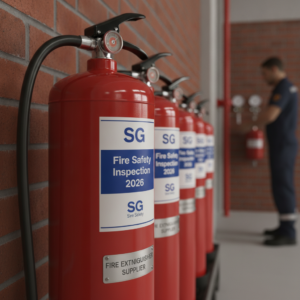
Beyond safety, maintenance preserves capital value and avoids costly emergency replacements. Proper upkeep demonstrates due diligence to regulators and insurers, and it helps pass routine fire safety inspections such as those required for commercial premises and places of public assembly. For sourcing and aftersales support, working with an experienced fire extinguisher supplier is valuable when upgrading or replacing older units: see a local fire extinguisher supplier here for options and services fire extinguisher supplier.
Fire extinguisher maintenance: what to check and recommended schedules
A simple programme, consistently applied, prevents most failures. Standard industry practice typically includes:
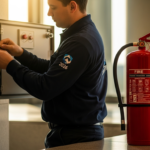
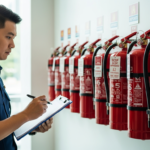
– Monthly visual checks by site staff: ensure gauges are in the green, safety seals intact, no obvious corrosion, units are accessible and signage is clear.
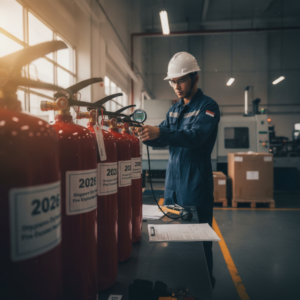
– Annual professional servicing: licensed technicians perform operational checks, clean components, replace defective parts and update service tags and records.
– Internal maintenance and pressure tests: many types of extinguishers require internal servicing every several years and hydrostatic testing at longer intervals. Industry guidance such as NFPA recommends internal maintenance at around six years for dry chemical units and hydrostatic testing at around 12 years; local contractors will confirm manufacturer requirements.
Common failures found during maintenance include blocked discharge nozzles, discharged or under-pressurised cylinders, corroded valves, and expired or missing service tags. For guidance on replacing aging portable units and knowing when to retire an extinguisher, review practical replacement tips at this resource on extinguisher replacement.
Specific extinguisher types require attention:
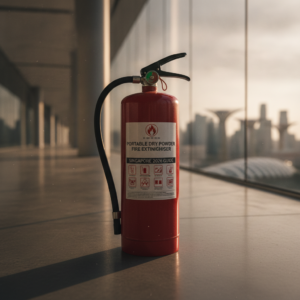
– Dry powder units: need periodic internal inspection and correct refilling processes. Learn more about handling and maintenance of dry powder units.
– CO2 and soda-acid cylinders: follow specific hydrostatic test intervals and valve checks per manufacturer guidelines.
Always follow the extinguisher manufacturer’s instructions and the recommendations of a licensed contractor. Conservative scheduling and immediate replacement of compromised units is cheaper than equipment failure during an incident.
Fire alarm maintenance: tests, intervals and best practices
Fire alarm maintenance ensures early detection and reliable notification. A standard maintenance programme contains a mix of routine checks by staff and detailed servicing by licensed technicians:
– Weekly or monthly visual checks: inspect control panels for faults and ensure indicator lights are normal.
– Quarterly or semi-annual functional tests: simulate detector activations, check manual call points and verify alarm initiation and evacuation sounders across zones.
– Annual full system maintenance: technicians test detectors, clean sensors, inspect cabling and power supplies, service batteries and review system logs.
Battery health is a frequent issue. Lead-acid standby batteries typically need condition checks twice yearly and may require replacement every 3-5 years; newer lithium-based options have different lifecycles. Integration with building management systems (BMS) and sprinkler systems should be covered in routine service checks.
For a combined approach to both portable equipment and alarm systems, many Singapore companies offer bundled services. For certified maintenance and supplier support specifically for fire alarm maintenance, see this integrated service page on fire alarm maintenance.
Modern trends: IoT, predictive maintenance and remote monitoring
By 2026, smart maintenance is mainstream. Key trends affecting fire system upkeep in Singapore:
– IoT-enabled detectors and extinguishers: sensors report battery health, environmental conditions and tamper status to the cloud, enabling prioritised, condition-based servicing.
– Predictive maintenance: analytics identify components likely to fail and trigger pre-emptive repairs, reducing downtime and emergency call-outs.
– Remote diagnostics and notifications: facility managers get real-time alarms and fault reports on mobile dashboards, accelerating response times.
These technologies reduce routine manual checks and improve compliance documentation, but they require secure networks and careful vendor selection. Cybersecurity of connected fire systems is a critical consideration for building owners and managers.
Choosing a licensed contractor and structuring service agreements
Selecting the right contractor determines reliability. When evaluating providers, consider:
– Licensing and certifications: confirm the firm uses trained technicians and follows accepted standards for Singapore facilities.
– Scope of service: check whether contracts include monthly visual checks, annual servicing, emergency response, parts and testing documentation.
– Response time SLAs: ensure guaranteed attendance windows for faults and emergency call-outs.
– Transparent pricing: know what is included in fixed service fees and what counts as billable extras.
– References and local experience: contractors familiar with Singapore’s regulatory environment and building types will avoid common pitfalls.
Many contractors also assist with statutory inspections and provide detailed service reports used during a formal fire safety inspection. Keep copies of all certificates and tags on site and in digital form.
Practical checklist for building managers (monthly, annual and long-term)
Monthly:
– Check extinguisher pressure gauges and seals, inspect fire alarm control panel for faults, verify evacuation signage is visible.
– Record visual inspections in the logbook or maintenance app.
Quarterly/Semi-annual:
– Test break-glass or manual call points, exercise alarm sounders in each zone, verify battery condition and backup power.
– Ensure fire doors and access routes are unobstructed and marked.
Annual:
– Professional servicing of extinguishers and alarm systems, replacement of perishable parts and cleaning of detectors.
– Review and update the fire risk assessment and evacuation plans.
Long-term (multi-year):
– Internal maintenance and hydrostatic testing schedules applied to extinguishers per manufacturer guidance.
– Replacement of aging equipment based on condition and change in building use.
Document everything. Auditable logs make fire safety inspections straightforward and support insurance claims.
Common mistakes and how to avoid them
- Skipping monthly visual checks: small issues compound into system failures. Assign responsibility and use simple checklists.
- Using unlicensed technicians: this risks non-compliance and poor workmanship. Always verify credentials.
- Ignoring environmental factors: humid coastal air in Singapore accelerates corrosion; store and install equipment to minimise exposure.
- Overlooking training: staff unfamiliar with extinguisher operation or alarm procedures create unnecessary delays during an incident. Regular drills keep people prepared.
For practical tips on selecting the right extinguisher types and service partners, review guidance on dry powder and related units and suppliers at these helpful resources about dry powder units and supplier services.
Cost considerations and budgeting
Budgeting for maintenance is easier when you separate routine upkeep from capital replacement. Typical cost components:
– Routine service contracts: predictable annual fees covering periodic checks and reports.
– Emergency call-outs and parts: variable costs for repairs after incidents or faults.
– Replacement units: reserve capital for end-of-life extinguisher replacement and major alarm system upgrades.
Adopting IoT-enabled monitoring can reduce overall lifecycle costs by prioritising interventions only when needed. Seek multi-year contracts with clear pricing to stabilise budgeting and ensure continuity of service.
Final practical steps for compliance and resilience
Create a simple roadmap:
1. Inventory all extinguishers and alarm components, noting installation dates and model numbers.
2. Implement a monthly visual check regime with logged records.
3. Sign an annual service contract with a licensed vendor and confirm SLAs for emergency response.
4. Schedule multi-year internal maintenance and hydrostatic testing per manufacturer guidance.
5. Consider smart monitoring and predictive services for large or high-risk sites.
Consistent attention to extinguisher maintenance and fire alarm maintenance protects people, assets and reputation. Proactive systems, clear responsibilities and reliable contractors make compliance manageable and cost-effective for Singapore properties in 2026 and beyond.

No comment yet, add your voice below!