

Why fire extinguisher guidance matters in Singapore
In Singapore, fire safety is non-negotiable. Knowing how to select, use and maintain a portable fire extinguisher can be the difference between a contained incident and a costly emergency. This article gives practical, Singapore-focused tips for staying compliant and safe.
Understanding portable fire extinguisher types and what they do
Not all extinguishers are created equal. Choosing the correct portable fire extinguisher for the hazard at hand is the first step in effective fire safety.
- Water (Class A): Effective for ordinary combustibles such as wood or paper. Not suitable for electrical or grease fires.
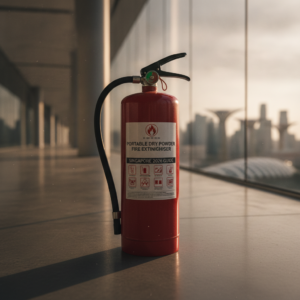
- Dry Chemical (ABC/BC): Versatile and common in homes and offices. ABC powder covers solids, liquids and electrical fires; BC is for flammable liquids and electrical equipment.
- Carbon Dioxide (CO2): Ideal for electrical fires and flammable liquids; leaves no residue but has a short discharge time.
- Wet Chemical: Designed for kitchen fires involving cooking oils and fats (Class F). Highly recommended for commercial kitchens and condo kitchens with frequent cooking.
Choosing the right portable fire extinguisher for home and workplace
A good selection strategy balances risk, convenience and compliance:
- Conduct a basic hazard assessment: Identify likely sources of fire (kitchen, electrical panel, storage of flammable liquids).
- Match extinguisher type to hazard: e.g., wet chemical for kitchens, CO2 for server rooms, ABC for general areas.
- Size matters: 1kg units are portable and good for small spaces; 2kg–6kg units offer longer discharge for larger spaces—select based on reach and expected hazard size.
- Placement: Mount extinguishers near escape routes and at eye level for quick access. For kitchens, keep a wet chemical unit within reach but away from direct heat sources.
For convenience and compliance-focused services, see organisations offering reliable fire extinguisher Singapore.
How to use a portable fire extinguisher safely (PASS method)
When a small fire breaks out and it’s safe to intervene, use the PASS technique:
- Pull the pin to break the tamper seal.
- Aim low at the base of the fire, not the flames.
- Squeeze the handle to discharge the agent.
- Sweep the nozzle from side to side until the fire is out.
Regular checks and servicing: keep your extinguisher ready
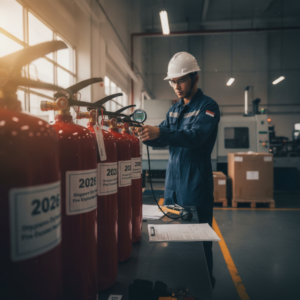
A portable fire extinguisher is only useful if it works when needed. Follow a simple maintenance routine:
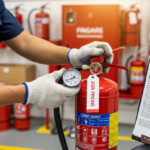
- Monthly quick check: confirm the pressure gauge is in the green, pin and tamper seal intact, nozzle clear and unobstructed, and casing free of major dents or corrosion.
- Annual checks typically include internal inspection and hose testing.
- Periodic pressure/hydrostatic testing: Some extinguisher types and cylinders require hydrostatic testing at intervals defined by the manufacturer and regulations—confirm with your service provider.
For detailed servicing schedules and professional guidance tailored to Singapore premises, consult a specialist in portable fire extinguisher servicing.
Replacement and safe disposal in Singapore
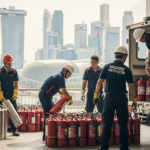
Extinguishers that are expired, damaged beyond repair, or have failed hydrostatic tests must be replaced and disposed of responsibly. Improper disposal of pressurised cylinders is hazardous.
- Replacement triggers: visible corrosion, ruptured cylinder, failed pressure test, or agents past their usable life.
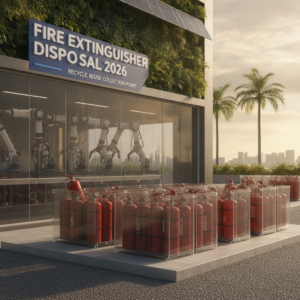
- Disposal: Use an authorised company to depressurise and recycle or safely scrap the cylinder. Do not discard pressurised units in household waste.
If you need step-by-step help for end-of-life units, reference local guidance on fire extinguisher replacement and disposal.
Placement, signage and integration with building safety plans
Singapore buildings often follow strict fire safety layouts. Ensure your extinguishers are:
- Located near exits, corridors, and high-risk areas (kitchens, fuel storage)
- Clearly signed and unobstructed
- Integrated into your building’s fire response plan, with staff trained to use them
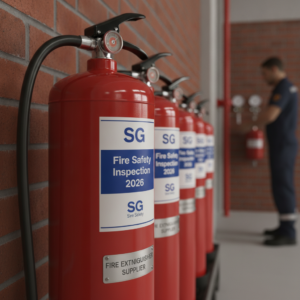
For workplaces, make sure your extinguisher placement and records are part of regular fire safety inspection audits.
Training and drills: more than just owning equipment
Owning a portable fire extinguisher isn’t enough. Regular, practical training ensures people know how to respond:
- Basic hands-on courses teach PASS and situational judgement (when not to fight a fire).
- Drills build muscle memory—practice retrieving and operating an extinguisher in a controlled environment.
- For businesses, include extinguisher use in workplace safety briefings and evacuation drills.
Digital trends and innovations in fire extinguisher management
Singapore’s smart-city momentum is influencing fire safety too. Emerging trends to watch:
- Digital tagging and QR codes on extinguishers for instant service history and inspection logs.
- Cloud-based compliance platforms that alert facilities teams when servicing is due.
- IoT sensors that monitor pressure and location, enabling proactive maintenance.
- Subscription and managed-service models that bundle supply, servicing and replacement.
These innovations help building managers stay compliant and reduce human error. Many local service providers now offer combined packages—research suppliers that support digital records for seamless audits.
Quick monthly and annual checklist (Singapore-focused)
Monthly:
– Check pressure gauge in green.
– Ensure tamper seals and pins are intact.
– Verify extinguisher is easily accessible and not blocked.
– Look for physical damage, corrosion or leaks.
Annually:
– Professional service and inspection by an authorised company.
– Refill or recharge as required after use or after indicated service life.
– Replace or perform hydrostatic testing as recommended by manufacturer and service provider.
For comprehensive servicing programs and compliance help, consult a Singapore specialist that handles full lifecycle services for portable extinguishers.
Choosing a qualified supplier and service partner
When selecting a supplier or servicing company in Singapore, confirm the following:
- Transparent service records and clear quotes for inspection, recharge and replacement
- Availability of digital service logs and reminders
- Good local references and experience with your building type
If you’re sourcing equipment or need a trusted partner, explore options from firms offering reliable local solutions for installation, servicing and compliance.
Final thoughts: practical safety you can act on today
A portable fire extinguisher is a core, practical defence against small fires—but only if it’s the right type, positioned correctly, and kept in good working order. Follow simple monthly checks, schedule annual professional servicing, and ensure staff or household members are trained in safe operation.
Take proactive steps now: verify the type and placement of your extinguishers, confirm their service history, and ensure your building’s fire safety plan includes extinguisher training and regular inspections. Effective, well-maintained portable fire extinguishers help protect lives, property and business continuity in Singapore.

No comment yet, add your voice below!