

Introduction
Maintaining safe, compliant fire protection in Singapore means more than owning a fire extinguisher — it means knowing when to replace one, and how to dispose of old or damaged units responsibly. This guide explains the practical steps, regulatory considerations, and best-practice processes for fire extinguisher replacement and fire extinguisher disposal in Singapore in 2026. It’s aimed at building managers, facility teams, landlords and homeowners who want clear, up-to-date guidance.
Why timely replacement matters
A fire extinguisher that looks fine may still be unreliable. Regular servicing and timely replacement protect lives, property and legal compliance. Common reasons to replace an extinguisher include:
- Failed annual service or a failed pressure test.
- Visible corrosion, dents, or damaged valves and hoses.
- Discharge or partial discharge during an incident — most units must be refilled or replaced after use.
- Expired service tags, manufacturer end-of-life, or after hydrostatic test failure.
Routine checks and annual servicing help detect problems early, but once an extinguisher is structurally compromised or fails testing, replacement is the safest choice.
Key regulatory and environmental considerations in Singapore
Singapore’s fire safety framework expects owners to keep fire-fighting equipment in serviceable condition.
- Do not dispose of pressurised extinguishers in general municipal waste — they are a hazard if punctured or crushed.
- Some extinguishing agents (dry powder, chemical foams, CO₂, halogenated agents) require controlled handling and specialist disposal or recycling.
- Use licensed waste or fire-safety service providers to ensure compliance and safe handling.
How to decide between repair, recharge and replacement
When an extinguisher fails inspection, the options are:
- Recharge or refill: After a discharge (even partial), most extinguishers need professional recharge and re-tagging.
- Repair and replace parts: Minor defects (like a hose or nozzle) can sometimes be replaced if the cylinder passes inspection.
- Full replacement: Necessary if the cylinder is corroded, damaged, or if the unit fails hydrostatic testing.
Always use a certified service provider for repairs, recharges and hydrostatic tests to ensure the unit meets safety standards.
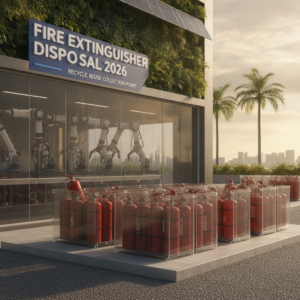
Step-by-step: Safe fire extinguisher disposal in Singapore
- Identify the extinguisher type and condition: water, foam, dry powder (BC/ABC), CO₂, wet chemical, or inert gas. This determines the disposal path.
- Do not puncture or open the cylinder yourself. Pressurised cylinders are hazardous and must be handled by professionals.
- Arrange collection with an authorised fire-safety or hazardous-waste handler. Many suppliers include disposal when you purchase a replacement.
- If the extinguisher contains a chemical agent, ensure the collector provides proper documentation and a disposal certificate.
- Keep disposal records and receipts for building compliance and audits.
For help with professional servicing and disposal arrangements, contact a trusted supplier listed in local directories or consult a certified company for on-site assessment.
Replacing a fire extinguisher: practical checklist
- Confirm the fire class needed (A, B, C, D, F) based on hazards present (kitchens, workshops, electrical rooms).
- Choose the appropriate size and rating for coverage and manoeuvrability.
- Ensure correct mounting height, signage and accessible placement according to building rules.
- Update your fire safety logbook with installation and disposal records.
Reliable installation and documentation help during inspections and demonstrate proactive compliance.
Costs and typical timelines
- Annual servicing and tagging are standard and typically scheduled within 1–2 weeks depending on provider availability.
- Recharge and small repairs can often be completed within one visit; full replacements may require ordering specific models and can take several days.
- Costs vary by extinguisher type and capacity. A basic portable replacement may range from moderate to higher cost for specialist agents (e.g., wet chemical or CO₂). Ask for a full quote that includes disposal of the old unit.
Many service providers offer bundled plans for inspection, maintenance and replacement — these can be more cost-effective for multi-unit sites.
Documentation and records to keep
- Service tags attached to each extinguisher (date and technician initials).
- Annual service reports and inspection records.
- Disposal certificates or written confirmation that an extinguisher was collected and processed.
- Purchase and installation invoices for replacements.
After replacement: placement, signage and training
- Mount extinguishers in visible, accessible locations with clear signage.
- Ensure travel distance to an extinguisher meets fire-safety recommendations for the building class.
- Provide basic training or a short drill so occupants know how to use an extinguisher safely — proper technique and the limits of portable extinguishers reduce risk.
Well-placed equipment combined with trained users improves real-world effectiveness.
Choosing a professional service provider in Singapore
Select suppliers with documented credentials, experience across extinguisher types, and a clear disposal process. For example, consider contacting a reliable service partner for assessment and replacement arrangements:
- For comprehensive service and supply, explore reliable fire extinguisher service providers: reliable fire extinguisher service
- To arrange routine maintenance or recharging for portable units, see: portable fire extinguisher servicing
- For full-site audits and installations post-replacement, consult a specialist in fire safety inspection
- To reduce future replacements by keeping equipment in top shape, review essential maintenance tips
These links point to local resources that can help with servicing, compliance checks and safe disposal.
Environmental best practices and recycling
Where possible, choose suppliers who offer recycling or environmentally responsible disposal of extinguishers. Recovered metals can be recycled and some extinguishing agents can be neutralised or handled in ways that reduce environmental impact. Ensure any recycling partner provides documentation and follows hazardous-waste regulations.
Common mistakes to avoid
- Don’t store expired or unserviceable extinguishers; they give a false sense of security.
- Don’t attempt to depressurise or dismantle cylinders yourself.
- Don’t rely solely on visual checks — annual professional servicing is essential.
- Don’t discard extinguishers with building demolition waste; coordinate proper collection.
Avoiding these mistakes improves safety and reduces liability.
Summary — key actions for 2026
- Inspect units now: check pressure gauges, service tags and visible condition.
- Schedule annual servicing with certified technicians and keep records.
- Replace units that fail tests, are corroded, or were discharged.
- Arrange professional disposal through licensed handlers — don’t puncture or dump extinguishers.
- Keep documentation of servicing and disposal for compliance and insurance.
Timely fire extinguisher replacement and responsible fire extinguisher disposal protect people, property and the environment. Use certified local suppliers and keep clear records to stay compliant and prepared.


No comment yet, add your voice below!