

Introduction
For businesses, property managers and homeowners, choosing the right fire extinguisher and working with a reputable singapore fire safety company are essential steps to protect people, property and reputation.
Why proper fire extinguishers and certified providers matter
A fire extinguisher is often the first line of defence in a small outbreak. Yet an extinguisher that’s the wrong type, expired, or poorly located is effectively useless. Singapore’s regulations require regular checks and certifications to make sure equipment will perform when needed. Engaging an experienced singapore fire safety company reduces risk, ensures compliance, and helps create a workplace culture of preparedness.
Key benefits:
- Faster response to small fires and reduced property damage
- Clear documentation for audits and insurance claims
- Ongoing support: training, installation and maintenance
Understanding fire classes and extinguisher types
Not all extinguishers work on all fires. Choosing the right unit depends on the likely fuel sources in your premises.
- Class A: Combustibles (wood, paper, cloth). Common agent: water or foam.
- Class B: Flammable liquids (oil, petrol). Common agent: foam, dry chemical, CO2.
- Class C: Gases. Typically handled by specialized dry agents.
- Class D: Combustible metals. Rare in general buildings—used in specific industrial settings.
- Class E (electrical hazards): Use non-conductive agents such as CO2 or dry chemical.
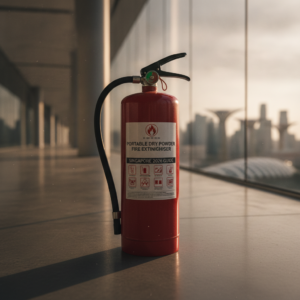
Modern multipurpose dry chemical extinguishers are common in offices and retail spaces because they cover A, B and E hazards. A qualified singapore fire safety company can assess your site and recommend the correct mix of extinguishers.
certification, inspections and legal obligations
Most commercial and multi-occupancy buildings must maintain valid certification and provide inspection logs on request.
For step-by-step procedural checklists and the latest regulatory clarifications, consult an up-to-date fire protection systems inspection checklist.
Fire extinguisher maintenance: routine checks and schedules
Routine maintenance is non-negotiable. An extinguisher that hasn’t been serviced may be undercharged, corroded, or otherwise inoperable.
Typical maintenance schedule:
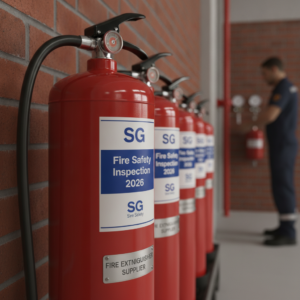
- Monthly: Visual inspection for pressure gauge status, obvious damage, mounting security and unobstructed access.
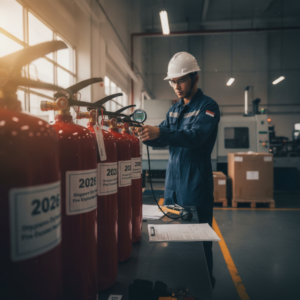
- Annual: Full service by a certified technician, functional checks, internal examination where required.
- Every 5–12 years: Major overhaul or replacement depending on the type and manufacturer recommendations.
Use the fire extinguisher maintenance checklist to standardize inspections and ensure compliance documentation is maintained.
Practical inspection checklist (what to look for during a walk-through)
- Pressure gauge in the green zone
- Nozzles and discharge hoses clear of blockages
- Tamper seal intact and pin secured
- Mounting bracket stable and extinguisher accessible within reach
- Correct signage and instructions visible
- Last service tag and next service date recorded
If any item fails, tag the unit out of service and contact a certified technician.
Choosing a singapore fire safety company: what to evaluate
Selecting the right provider goes beyond price. Look for:
- Proven experience across building types (retail, F&B, industrial)
- Transparent maintenance contracts with documented service history
- On-site training offerings for staff and emergency response planning
- Use of modern tools like digital logs, QR-tagged equipment and cloud records
A reputable partner will also explain how your extinguishers integrate with alarm and suppression systems, and offer a tailored service frequency.
Installation and placement best practices
Correct placement ensures quick access during early-stage fires:
- Position extinguishers along escape routes and near likely fire sources (kitchen, electrical rooms)
- Keep extinguishers visible and within 1.5 m from the floor to the handle for easy reach
- Avoid installing in direct sunlight, excessive moisture or where chemicals may corrode the unit
- Provide clear signage and unobstructed paths to the unit
For guidance on how extinguisher locations affect your overall protection plan, review professional system advice on fire protection systems.
Training staff: effective, practical exercises
Hardware without trained users reduces effectiveness. Practical training should include:
- How to read an extinguisher label and choose the right agent
- P.A.S.S. technique: Pull, Aim, Squeeze, Sweep
- When to fight a small fire and when to evacuate
- Familiarity with access routes and emergency shutdowns
Training sessions should be short, frequent and include hands-on use with trainers or controlled demos. A professional singapore fire safety company will provide refresher sessions tailored to shift patterns and staff turnover.
Trends in 2026: digital tracking, IoT and smarter compliance
Increasingly, fire safety providers use digital tools to simplify compliance and maintenance:
- QR codes and NFC tags on extinguishers for instant service history checks
- Mobile apps for technicians to log inspections in real time
- IoT sensors that monitor pressure/temperature and send alerts for faults
- Centralised dashboards for building managers to track expiries and upcoming inspections
These trends reduce manual paperwork and improve audit readiness. When assessing vendors, prioritise those offering transparent digital records and integration with building maintenance systems.
Cost considerations and budgeting
Budget realistically for purchase, installation and recurring maintenance. Typical costs include:
- Initial purchase and installation per unit (varies by size and type)
- Annual inspection and tagging fees
- Recharge or replacement costs after discharge
- Staff training sessions and refresher courses
Investing in properly certified equipment and a reliable singapore fire safety company often reduces long-term costs by preventing false failures, failed audits and insurance disputes.
Documentation and audit readiness
Digital record-keeping simplifies retrieval during audits and insurance claims.
Next steps: building a robust fire extinguisher strategy
- Conduct a site risk assessment with a certified singapore fire safety company.
- Inventory existing extinguishers and compare against recommended coverage.
- Implement an inspection schedule using the fire protection systems inspection checklist.
- Train staff and integrate digital tracking for maintenance transparency.
Conclusion
A proper fire extinguisher program is both a legal obligation and a practical safeguard. Start by auditing your current setup, scheduling certified inspections and implementing digital logs to keep your premises compliant and protected.


No comment yet, add your voice below!