

Why a 2026 checklist matters for Singapore buildings
Singapore maintains some of the strictest fire safety standards in the region.
Quick overview: scope of the inspection
A thorough inspection covers both active and passive fire protection measures:
- Portable fire extinguishers, hose reels and hydrants
- Automatic sprinkler systems and deluge systems
- Fire detection and alarm systems
- Emergency lighting, exit signage and evacuation routes
- Fire doors, compartmentation and structural protection
- Electrical safety items and hot-work controls
- Training, drills and documentation
Documentation & legal compliance checklist
- Update permits if use of space has changed.
- Confirm maintenance contractor licences and technicians’ credentials.
- Collect service logs for the past 12 months for extinguishers, sprinklers, alarms and emergency lighting.
- Ensure hydrant and hose reel test records and pressure test results are accessible.
- Keep fire drills and staff training attendance sheets for the last year.
Tip: Digital logs and timestamped records streamline audits and are increasingly expected. Consider cloud-based maintenance platforms to centralise records.
Portable fire extinguishers (PFE) — what to check
Portable extinguishers are commonly inspected and frequently cited in non-compliance reports. During inspection:
- Confirm correct type and rating for hazards (e.g., water, CO2, dry chemical, foam).
- Check pressure gauges and tamper seals; recharge or replace if pressure is low or seal broken.
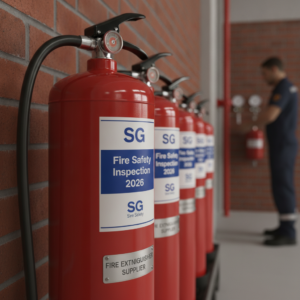
- Verify inspection tags show monthly visual inspections and annual maintenance dates.
- Inspect physical condition — dents, corrosion, hose integrity and nozzle condition.
- Ensure wall brackets or cabinets are secure, unobstructed and labelled.
Fire extinguisher servicing & maintenance schedule
- Monthly: visual checks and secure mounting verification.
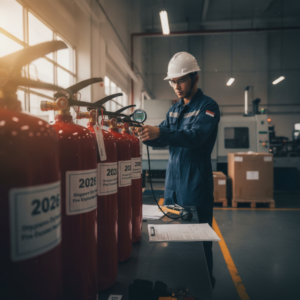
- Annually: full maintenance by a licensed technician (pressure test, weigh where applicable, label update).
- Every 5–12 years: hydrostatic testing or manufacturer-specified internal service depending on extinguisher type.
Maintain a clear, dated service log and ensure technicians sign off on all actions. Use the fire extinguisher maintenance checklist to standardise in-house monthly checks.
Fire detection & alarm systems
- Test all manual call points, detectors (smoke, heat, beam), control panels and zone indicators.
- Check battery backup health and replace batteries per manufacturer guidelines.
- Review detector sensitivity and cleaning records — false alarms often originate from dirty or wrongly-positioned detectors.
Document test results and response times for alarm activation. This evidence is essential for a smooth fire safety inspection.
Sprinklers, deluge systems and water supplies
- Inspect sprinkler heads for corrosion, obstruction and correct orientation.
- Test system pressure and flow, and verify alarm actuation on flow switches.
- Ensure water pumps, jockey pumps and backup power are tested and logs kept.
- Check inlet valves, drainage and freeze protection (where relevant) are functional.
If your building relies on a complex water-based suppression system, engage a qualified contractor for a full annual inspection and pressure testing.
Hydrants and hose reels
- Perform pressure and flow checks at hydrant points.
- Confirm hose reels are fully rolled out and nozzles function under pressure.
- Check hydrant cabinets for corrosion, signage and accessibility.
Hydrant caps should be secured to prevent theft or tampering and clearly signed for quick identification.
Emergency lighting, signage and evacuation routes
- Test emergency lighting for at least 1 hour under battery backup (or as specified by regulations).
- Confirm exit signage is illuminated and unobstructed.
- Walk all evacuation routes to ensure doors open correctly, corridors are clear and egress times meet design assumptions.
Keep a log of duration tests and battery replacements. Short-duration failures are a common non-compliance finding.
Passive fire protection: doors, compartmentation and penetrations
- Inspect fire doors for closing action, seals, latches and signage. Doors should self-close and latch.
- Check floor and wall penetrations for improper cable penetrations or unsealed service openings.
- Assess condition of fire-rated walls and identify any modifications that could compromise compartmentation.
Document remedial actions and repair dates — passive protection often takes longer to remediate and needs scheduling ahead of audits.
Electrical and hot work controls
- Verify that electrical systems have recent thermographic inspections to detect hotspots.
- Ensure extension cords are not used as permanent wiring and that switchboards are accessible.
- Confirm hot work permits and controls are in place for any welding or cutting activities.
Electrical causes remain a top source of building fires; prioritise electrical audits as part of your inspection routine.
Training, drills and people readiness
- Run at least annual fire evacuation drills; keep records of times, occupant counts and any issues encountered.
- Ensure fire wardens and response teams have up-to-date training certificates.
- Provide building-specific training for staff who operate life-safety systems (e.g., fire pump operation, alarm silencing protocol).
Good people preparedness often distinguishes minor incidents from major losses.
Common deficiencies and quick fixes before inspection
- Missing or expired service tags on extinguishers — schedule maintenance or replace tags.
- Blocked fire exits or obstructed hydrants — clear routes and add signage immediately.
- Non-functioning emergency lights — replace batteries or fixtures.
- Unsealed cable penetrations — use firestop materials to restore compartmentation.
Addressing these low-cost, high-impact items reduces the risk of enforcement notices.
Trends to incorporate in 2026 inspections
- IoT-enabled sensors for real-time monitoring of extinguisher pressure, alarm health and water pump status.
- Predictive maintenance using analytics to prioritise repairs and reduce downtime.
Adopting digital tools improves audit readiness and helps spot issues earlier.
Preparing for a formal fire safety inspection
- Produce a concise folder with the latest certificates, maintenance logs and drill records.
- Highlight recent corrective actions and improvement plans for issues found during self-inspections.
- Ensure on-site staff can demonstrate familiarity with fire plans and basic system operation.
Long-term maintenance plan & documentation strategy
- Adopt a schedule: monthly visual checks, annual technical servicing, multi-year statutory tests.
- Use standardised digital forms for all assets and ensure backup copies of certificates.
- Budget for replacement cycles: extinguishers, lamps, batteries and detection components have finite lifespans; consult the fire extinguisher replacement guide when planning CAPEX.
Final checklist (pre-inspection walkthrough)
- Are extinguishers properly located, tagged and pressure-checked?
- Are sprinkler and alarm systems logged and tested within the reporting period?
- Are fire exits, doors and escape routes unobstructed and labelled?
- Are hydrants/hose reels operational and accessible?
- Are training and drill records complete and recent?
- Are all maintenance contractors licensed and documentation ready for review?
- Have recent remedial actions been completed and recorded?
Closing notes: make inspections routine, not reactive
A proactive maintenance and inspection culture reduces risk, lowers insurance headaches and keeps occupants safe. Use this 2026 checklist to build a repeatable program: schedule regular checks, digitise records and prioritise remedial works.
For facility teams, integrating these items into monthly operations and annual audits will ensure your Singapore fire protection system stays compliant and resilient.


No comment yet, add your voice below!