

Why this guide matters for Singapore in 2026
Maintaining and disposing of fire extinguishers correctly is not just good practice — it’s a safety and compliance requirement. In Singapore, building managers, business owners and homeowners must follow clear inspection regimes and safe disposal methods to protect people, property and the environment. This article gives an up-to-date, practical roadmap for fire extinguisher maintenance and fire extinguisher disposal in 2026, including trends like digital monitoring and greener disposal options.
The basics: types, lifespan and when to act
Fire extinguishers come in several common types: dry chemical (ABC), CO2, water, foam and wet chemical. Each has different service needs and expected lifespans. Typical rules of thumb:
- Replace or service after any use — even partial discharge.
- Carry out regular visual inspections every month.
- Schedule professional maintenance annually or as the manufacturer and local regulations require.
- Consider hydrostatic testing intervals and cylinder life — some cylinders require periodic pressure testing or replacement after a set number of years.
Key regulatory expectations and compliance in Singapore
Practical expectations for property owners include:
- Monthly visual checks to confirm accessibility, pressure gauge in the green, no obvious damage and correct signage.
- Formal annual inspections and maintenance by trained or accredited technicians.
- Keeping records of inspections, maintenance and disposal for audit or compliance reviews.
For a ready inspection reference, see this inspection checklist covering the points inspectors will look for.
What a proper maintenance schedule looks like
A robust maintenance schedule helps avoid last-minute surprises and keeps insurance valid. A practical schedule commonly used in Singapore:
- Daily/weekly: Visual checks by on-site staff for blocked access or obvious damage.
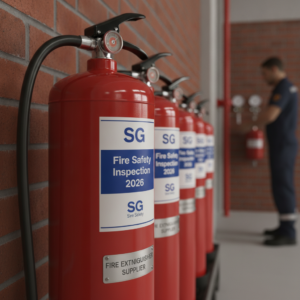
- Monthly: Documented visual inspection — pressure gauge, tamper seal, signage, mounting bracket and hose/nozzle condition.
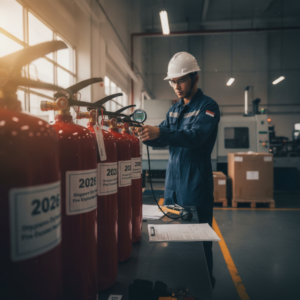
- Annually: Full servicing by a licensed technician — internal inspection, recharge if needed, replacement of worn parts, functional tests.
- After discharge: Recharge or replace immediately and log the action.
- Periodic testing: Hydrostatic testing and cylinder checks where applicable, following manufacturer guidance and industry norms.
Use a clear, documented maintenance checklist to keep records accurate and accessible.
What technicians check during service
Professional service typically includes:
- Confirming model, rating and location against records.
- Verifying pressure and condition of seals and gauges.
- Inspecting for corrosion, dents or other cylinder damage.
- Replacing defective hoses, nozzles or valves.
- Recharging or replacing extinguishing agent if the unit was used or degraded.
- Marking the service date and updating the log and tag.
For an in-depth guide to extinguisher types and recommended servicing, refer to this full fire extinguisher guide.
DIY checks vs professional maintenance — what you can and can’t do
On-site staff should perform routine visual checks — gauge status, signage, mounting, obvious damage. However, tasks like removing the head assembly, recharging, internal inspection, or pressure testing must be done by qualified personnel. Incorrect servicing can render an extinguisher unsafe or non-compliant.
When in doubt, engage a licensed service provider and maintain documentation of every service visit.
Common problems to watch for
- Low or fluctuating pressure on the gauge.
- Missing tamper seals or service tags.
- Corrosion, dents or rust on the cylinder.
- Blocked or damaged nozzles and hoses.
- Expired or illegible signage and location tags.
Addressing these early prevents failures during an incident.
Fire extinguisher disposal: when and why
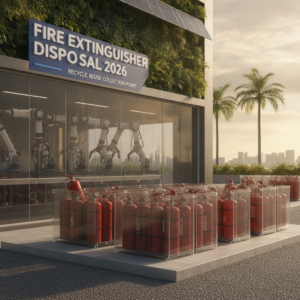
Dispose of an extinguisher when it’s irreparable, expired beyond safe service life, corroded beyond repair, or after a cylinder fails pressure testing. Proper disposal protects waste handlers, prevents accidental discharge and avoids environmental harm from chemicals.
If an extinguisher is simply empty after use, it should be recharged and returned to service rather than discarded. Only non-serviceable cylinders should be considered for disposal.
Safe disposal process (practical steps)
- Confirm the unit is fully discharged and depressurized by a qualified technician. Never attempt to cut into a pressurised cylinder.
- Separate components where required (valve assemblies may be hazardous waste while metal casings can be recycled after neutralization).
- Use an approved hazardous-waste or industrial recycling contractor for chemical agents and valves. They have the permits and equipment to handle and neutralise residues safely.
- Obtain disposal certificates and keep records for compliance and audits.
Legal and environmental considerations
Extinguishing agents—especially older types—can be considered hazardous. Disposal must follow local waste management rules and environmental guidelines. Releasing chemicals inappropriately or sending hazardous components to general recycling is illegal and unsafe. Use a licensed contractor who issues disposal documentation that you can retain.
Costs and budgeting for maintenance and disposal
Budget planning tips:
- Routine maintenance and tagging are modest annual costs — worth it to avoid compliance fines or insurance issues.
- Hydrostatic tests, recharge after use and replacement of components add to periodic expenses.
- Disposal of non-serviceable cylinders can attract higher costs due to hazardous-waste handling.
Ask for bundled maintenance contracts that include inspections, digital logs and disposal to simplify administration and often reduce per-item costs.
Trends in 2026: digital monitoring and greener options
Two trends shaping fire extinguisher management this year:
- Digital monitoring: QR codes on extinguishers, cloud-based inspection logs and IoT sensors that report pressure or location changes help teams stay ahead of issues. Digital logs also simplify compliance checks.
- Greener disposal: More contractors offer agent reclamation, recycling of metal casings and environmentally responsible neutralisation of extinguishing agents.
These innovations reduce downtime, lower long-term costs and improve sustainability reporting for organisations.
Choosing a service provider in Singapore
Select a provider who:
- Supplies trained technicians who can perform hydrostatic testing and safe disposal.
- Offers clear service records, disposal certificates and digital logs.
- Provides transparent pricing for maintenance, recharge and disposal.
A helpful place to start comparing services is this fire safety and extinguisher guide.
Recordkeeping and audit readiness
Good recordkeeping reduces risk and simplifies audits:
- Keep records of monthly checks, annual services and any recharge or repair work.
- Retain disposal certificates and test reports for the lifecycle of the asset.
- Use digital logs or a central spreadsheet and back up documentation periodically.
Practical checklist to take away
- Perform monthly visual checks and log them.
- Arrange annual professional servicing and hydrostatic testing as required.
- Recharge or replace extinguishers after any use.
- Dispose of non-serviceable units through licensed contractors and keep disposal certificates.
- Consider digital tagging and monitoring to simplify maintenance and compliance.
Use a formal maintenance checklist to standardise your approach and stay audit-ready.
Final note
Establish a straightforward schedule, document every action and partner with qualified service providers to keep your premises safe and compliant throughout 2026 and beyond.


No comment yet, add your voice below!