

Introduction
Choosing the right fire extinguisher can make the difference between a small incident and a major emergency. For many households, small businesses and workplaces in Singapore, the dry powder fire extinguisher is a versatile, cost‑effective option that tackles multiple fire classes. This guide explains what a dry powder extinguisher is, where to buy one in Singapore in 2026, and what to check for compliance, maintenance and safe disposal.
What is a dry powder fire extinguisher?
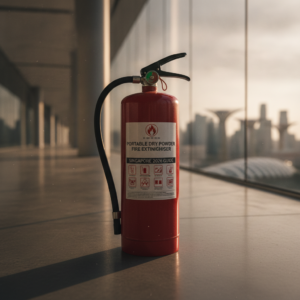
A dry powder fire extinguisher contains a fine, chemical powder designed to extinguish fires by interrupting the chemical reaction of combustion. The common type used for general-purpose protection is the ABC powder, effective on:
- Class A: ordinary combustibles (wood, paper, textiles)
- Class B: flammable liquids (oils, petrol)
- Class C: flammable gases and energized electrical equipment (note: powder is non‑conductive but has limited cooling effect)
Advantages: broad coverage, low cost, long shelf life, and good performance on mixed risks. Limitations include residue after discharge (cleanup required), reduced visibility during use, and it’s not ideal for certain enclosed spaces like server rooms because of powder contamination.
Why choose dry powder extinguishers in Singapore?
Singapore’s dense urban environment, mixed commercial/residential properties and common shop‑house layouts mean multi‑risk protection is often needed. Dry powder extinguishers are especially popular because:
- They provide multi‑class protection in a single unit, simplifying purchasing decisions.
- They work well in outdoor or semi‑outdoor environments where humidity and heat can affect other chemistries.
However, choose carefully where they’re installed — in cleanrooms, laboratories, data centres or food‑prep areas, specialist agents (CO2, water mist, or clean agents) may be preferable.
Typical sizes and types to consider
Dry powder extinguishers come in several capacities. Common portable sizes include 1 kg, 2 kg, 4 kg and 6–9 kg. Consider:
- Small (1–2 kg): good for cars, kitchenettes, and personal vehicles; easy to handle but limited discharge time.
- Medium (4–6 kg): common for offices and small retail outlets; balances capacity and portability.
- Large (9 kg and wheeled units): for industrial sites, warehouses or where longer discharge time is required.
Also compare powder type (mono‑ammonium phosphate for ABC rating is common), discharge range and mounting options.
Where to buy in Singapore (trusted channels)
1) Authorised fire safety companies — Purchase from a licensed fire safety company that offers supply plus ongoing servicing and testing. Many of these companies also provide equipment bundles and training. If you want an experienced supplier, look for a top fire safety company offering certified extinguishers and inspection services.
2) Specialist safety suppliers — These retailers stock branded extinguishers, mounting hardware and compatible spare parts. Buying from a specialist reduces the risk of untested or expired units.
3) Hardware chains and online marketplaces — Useful for basic, low‑cost models; verify certification and after‑sales servicing before you buy.
4) Direct from manufacturers or authorised distributors — Best for bulk purchases or customised wheeled units.
5) Combined alarm and protection vendors — If you’re upgrading an entire system (alarms, extinguishers, signage), working with an integrated provider simplifies compliance. Many providers list comprehensive fire alarm maintenance and protection services.
For portable needs, check product pages from certified suppliers for each size and rating before purchasing a portable fire extinguisher.
Buying checklist: what to verify before purchase
- Certification and ratings: Look for recognized markings and test standards. Verify the extinguisher is rated for the classes you need.
- Supplier credentials: Ensure the vendor provides maintenance, recharge and certification services after sale.
- Manufacture and expiry dates: Powder extinguishers have long shelf lives but require periodic servicing.
- Capacity and discharge time: Match the size to the protected area and expected response scenarios.
- Mounting, brackets and signage: Confirm the supplier provides compliant mounting kits and proper signage for visibility.
- Warranty and spare parts availability: Check availability of pressure gauges, seals, hoses and recharge kits.
Legal and maintenance considerations in Singapore
Ownership and maintenance of fire extinguishers are subject to Singapore’s safety regulations and local building requirements. Key points to remember:
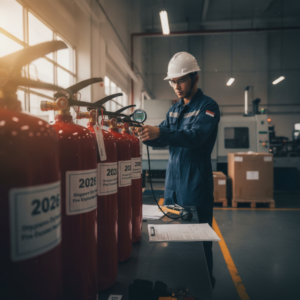
- Regular inspections and maintenance must be performed by licensed service providers. Many companies combine extinguisher supply with scheduled servicing and records that help meet regulatory obligations.
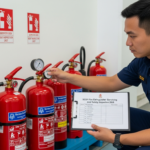
- Monthly visual checks should be carried out by occupants — check pressure gauge, hose, seal and general condition.
- Annual maintenance and periodic testing (hydrostatic testing at specified intervals) should be handled by professionals.
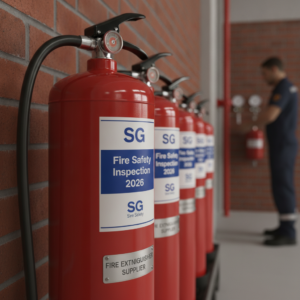
If you’re responsible for premises compliance, consider engaging a provider that also offers comprehensive fire safety inspection services to keep records and ensure statutory requirements are met.
Installation, storage and user training
Proper placement and training are as important as the extinguisher itself:
- Mount extinguishers at visible, easily accessible locations; typical mounting heights vary by weight and local code.
- Keep extinguishers away from extreme heat sources that may affect pressure vessels.
- Provide basic user training: PASS (Pull, Aim, Squeeze, Sweep) technique and when not to fight a fire.
- Ensure signage and travel distances follow safety guidance so users can reach extinguishers quickly during an incident.
Many suppliers include brief on‑site training as part of their service package.
After use and disposal
After discharge, powder extinguishers must be recharged by a licensed service company — they cannot simply be refilled by untrained staff. At end of life, cylinders and powder need safe disposal or recycling through authorised channels. For guidance on safe handling and removal, consult a professional service for fire extinguisher disposal.
Cost factors and budgeting
Prices vary by size, brand and added services (installation, training, maintenance contracts). When budgeting, include:
- Unit cost (size and type)
- Installation and mounting hardware
- Ongoing annual maintenance and inspection fees
- Recharge and hydrostatic testing over the equipment lifetime
A low purchase price can be outweighed by poor service or noncompliance costs, so prioritise certified suppliers and long‑term support.
How suppliers add value
The best suppliers don’t just sell equipment; they offer end‑to‑end safety solutions. Look for providers that bundle supply with scheduled servicing, compliant record‑keeping, on‑site training and integration with alarm systems. Vendors that also provide fire alarm maintenance can simplify compliance for whole‑site protection.
Quick decision guide
- Home or car: small 1–2 kg ABC dry powder unit.
- Small office or shop: 4–6 kg portable dry powder for multi‑risk coverage.
- Warehouse, factory, or large premises: larger portable units or wheeled powder extinguishers plus specialised suppression where needed.
- Sensitive environments (IT, food): consider alternatives to powder; consult a specialist.
For procurement and professional support, consider engaging a top fire safety company that can supply, install and maintain equipment under local regulations.
Final notes
A dry powder fire extinguisher is a practical, versatile choice for many Singapore settings, but selection, placement, and maintenance matter just as much as the product itself. Purchase from reputable suppliers, ensure certified servicing, and follow local guidance on inspection and disposal to keep people and property protected.
For an integrated solution that combines supply, servicing and inspections, look for providers that deliver end‑to‑end fire protection and compliance support.


No comment yet, add your voice below!