

Introduction
Fires can start quickly and escalate even faster in dense urban environments like Singapore. A well-located, properly maintained portable fire extinguisher is often the first line of defense — protecting lives, limiting property damage and helping premises stay compliant with local regulations. This article explains practical steps for choosing, using and maintaining portable fire extinguishers in Singapore, and how to work with a reputable Singapore fire safety company to stay compliant and prepared.
Why portable fire extinguishers matter in Singapore
Portable fire extinguishers are compact, mobile and easy to operate by trained users. In Singapore’s mixed-use urban landscape — from HDB blocks and shophouses to commercial kitchens and high-rise offices — an accessible extinguisher can contain a small fire before it spreads to neighbouring units or mechanical systems.
Key benefits:
- Immediate response: An extinguisher gives occupants a chance to tackle a small fire before emergency services arrive.
- Cost-effective risk control: Compared with structural upgrades, portable extinguishers provide a relatively low-cost safety measure when properly sited and maintained.
For professional assessment and installation, consider engaging a recognised provider such as a top fire safety company for extinguishers Singapore 2026 to ensure correct selection and compliance.
Types of portable fire extinguishers and appropriate uses
Not all extinguishers are the same. Selecting the right extinguishing agent is critical to safe and effective firefighting.
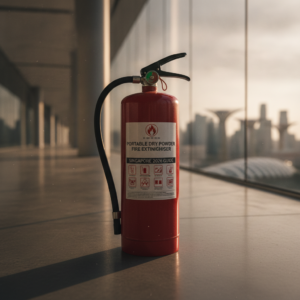
- Dry powder (ABC): Multipurpose and common in commercial settings. Effective on Class A (ordinary combustibles), Class B (flammable liquids) and Class C (energised electrical) fires. Great for general coverage but can cause dust contamination.
- CO2 (Carbon Dioxide): Ideal for electrical fires and server rooms as it leaves no residue. Short discharge time and less effective on deep-seated Class A fires.
- Water (pressurised water or water mist): Best for Class A fires such as paper, wood and cloth. Water should never be used on electrical or flammable-liquid fires.
- Foam: Effective on Class A and B fires (flammable liquids). Forms a blanket to suppress vapour.
- Wet chemical: Designed for kitchen fires involving cooking oils and fats (Class F). Critical for commercial kitchens and some domestic cooking areas.
- Clean agents (e.g., FM-200, Novec 1230): Used in sensitive areas like data centres where residue-free suppression matters.
In Singapore, kitchens in food businesses typically require wet chemical extinguishers, while server rooms and electronics areas favour CO2 or clean agents. A qualified supplier can advise on the correct mix and placement — see resources for singapore fire extinguisher supplier and replacement 2026.
How to choose the right portable fire extinguisher
Choosing an extinguisher is about matching the hazard, the environment and human factors.
Considerations:
- Fire class: Identify likely fuel sources (paper, flammable liquids, electrical equipment, cooking oil) and choose extinguishers rated for those classes.
- Size and rating: Extinguishers come in different capacities (e.g., 1kg, 3kg, 6kg, 9kg). Larger units cover larger areas but are heavier to operate — balance effectiveness with operator ability.
- Placement: Mounting height, visibility and accessibility are crucial. Extinguishers should be located near escape routes and potential ignition sources, but not so close that they become unreachable during a fire.
- Environmental considerations: Corrosive or humid locations may require stainless steel or coated cylinders. Sensitive environments might need clean agents.
An experienced Singapore fire safety company can perform a site survey and recommend the optimal types and quantities for compliance and safety.
Legal requirements and compliance in Singapore
While specific regulations vary by occupancy and building type, there are common compliance points:
- Approved equipment: Extinguishers must meet performance standards and be appropriate for the identified hazards.
- Location and quantity: Regulations specify the minimum number, rating and placement criteria for extinguishers.
- Maintenance and records: Regular inspections and documented servicing are required to ensure readiness.
- Trained personnel: Workplaces should appoint and train staff in basic fire-fighting and extinguisher use.
Maintenance, inspection and service intervals
Proper maintenance preserves functionality and compliance. A typical maintenance regime includes:
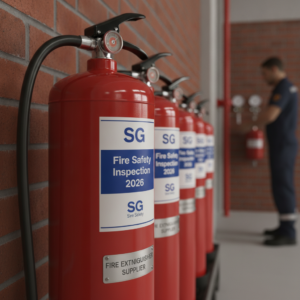
- Monthly visual checks by the premises owner: Ensure pressure gauge in range, no obvious damage, seals intact, and extinguisher is accessible.
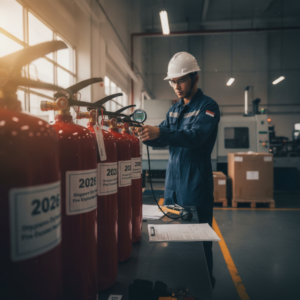
- Annual servicing by a certified company: Full inspection, internal checks, refilling or replacement as necessary, and functional testing.
- Hydrostatic testing intervals: Pressure vessels require periodic hydrostatic testing to verify structural integrity — frequency depends on the extinguisher type and local standards.
- Record keeping: Maintain service tags and a log of inspections, repairs and replacements for audits.
Partnering with a company experienced in fire alarm maintenance and fire safety inspection ensures extinguishers are integrated into broader life-safety systems and inspection schedules.
New trends in extinguisher and fire safety management
Technology and sustainability are shaping modern fire safety practice in Singapore:
- IoT-enabled monitoring: Smart tags, sensors and connectivity allow remote monitoring of extinguisher status (pressure, service due dates) and automate compliance alerts.
- Digital records and inspection apps: QR codes and mobile apps speed up inspections, reduce paperwork and create auditable logs.
- Eco-friendly agents and low-GWP alternatives: Manufacturers are innovating cleaner suppression agents with lower environmental impact for sensitive and green buildings.
- Predictive maintenance: Data-driven analytics flag likely failures before they happen, improving readiness and reducing downtime.
These trends are being adopted by forward-looking providers and building managers; check providers that offer digitalised solutions such as those described in the 2026 Singapore fire safety inspection and protection system overview.
How to work with a Singapore fire safety company
Choosing the right partner ensures your extinguishers are correctly specified, installed and maintained.
What to look for:
- Comprehensive services: Look for site surveys, supply, installation, scheduled maintenance, emergency repairs, and training.
- Transparent documentation: Service reports, compliance certificates and accessible digital records make audits easier.
- Training and fire drills: Practical staff training in extinguisher use and evacuation reduces risk and improves response confidence.
For reliable suppliers and replacement programmes, suppliers listed on singapore fire extinguisher supplier and replacement 2026 provide useful options to compare.
Practical checklist for businesses and households
This quick checklist helps prioritise immediate actions:
- Identify risks: List likely ignition sources and match extinguisher types to each hazard.
- Audit current equipment: Check expiry, pressure, visible damage and accessibility.
- Schedule service: Book annual professional servicing and hydrostatic tests as required.
- Train staff: Provide hands-on extinguisher training and run periodic evacuation drills.
- Keep records: Maintain inspection tags and digital logs for audits and insurance.
Case example: a simple upgrade for an office block
A medium-sized office replaced ageing 6kg ABC powder units with a mixed programme that added CO2 units for server rooms and a clean-agent system for a critical records vault. They engaged a qualified supplier to perform a hazard survey, install correct brackets and provide staff training. After adopting QR-based inspection logs and monthly reminders, their audit readiness improved and downtime for inspections dropped significantly.
Final recommendations
Portable fire extinguishers are a cornerstone of fire safety in Singapore, but their effectiveness depends on correct selection, placement and maintenance. Work with a reputable Singapore fire safety company to conduct hazard assessments, install the right mix of extinguishers and set up a robust inspection and servicing plan. For integrated safety solutions and professional servicing, consult specialised providers and the resources linked in this guide, including recommendations for fire alarm maintenance and fire safety inspection.
A proactive approach — combining the right equipment, regular maintenance and trained personnel — reduces risk and keeps occupants safe, while helping your premises remain compliant with local fire safety standards.
For practical supplier and replacement options, see provider listings at singapore fire extinguisher supplier and replacement 2026. For service providers with end-to-end inspection and protection capabilities, review the 2026 Singapore fire safety inspection and protection system.


No comment yet, add your voice below!