

Understanding dry powder fire extinguishers and why replacement matters
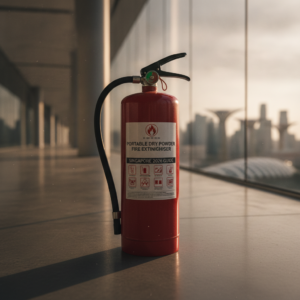
Dry powder fire extinguishers are among the most common portable units used across homes, offices, industrial spaces and vehicles in Singapore. They are versatile (effective on Class A, B and C fires), robust in hot and humid climates, and typically labelled ABC or DCP. However, like all safety equipment, they do not last forever.
If you need specifics about TUV SUD PSB approved models and certification, consult official guidance for the dry powder fire extinguisher.
What ‘replacement’ means: repair, recharge, hydrostatic test or full swap
Replacement can mean several things:
- Recharge or refill after any discharge (even partial). A discharged unit must be serviced before reuse.
- Repair or parts replacement (valves, seals, pressure gauge) carried out by an authorised technician.
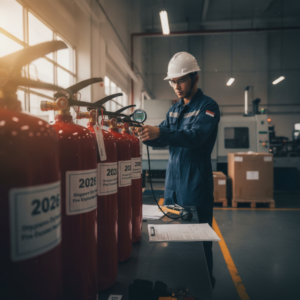
- Hydrostatic testing to check cylinder integrity — some failures require cylinder replacement.
- Full replacement of the extinguisher when it’s expired, structurally compromised, or no longer meets performance standards.
Understanding the right option prevents unnecessary purchases and ensures the extinguisher functions correctly when needed.
Signs that a dry powder fire extinguisher needs replacement
Look for these red flags during routine checks:
- Visible corrosion, dents or severe paint loss on the cylinder.
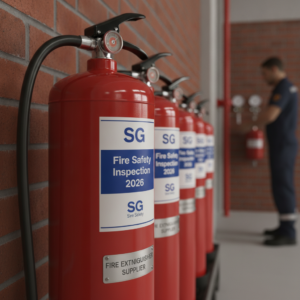
- A missing, illegible or expired inspection/service tag.
- Gauge showing low or zero pressure.
- Damaged hose, nozzle, discharge lever or safety pin.
- Evidence of leakage or powder compaction/blockage.
- Failed hydrostatic testing or manufacturer-specified end-of-life.
Any of the above usually triggers either a mandatory service or full replacement to meet safety obligations.
Legal and regulatory context — what Singapore businesses must know
Annual formal servicing by accredited personnel is industry best practice, while visual checks should be conducted more frequently by in-house staff.
For details on regulatory standards and recommended intervals, refer to the fire extinguisher standards.
Non-compliance can lead to penalties, higher insurance premiums, and, crucially, increased risk to lives and property.
Typical lifespan and periodic testing
Lifespan varies by manufacturer and unit condition, but general guidance for dry powder extinguishers:
- Regular servicing: annually.
- Visual inspections: monthly or quarterly depending on site risk profile.
- Hydrostatic testing: periodic interval specified by manufacturer and standards (commonly several years) — failed tests usually mean cylinder replacement.
Always follow the extinguisher’s label and the technician’s recommendations. Keep digital or physical records of all tests and services for audit and insurance purposes.
The replacement process — step-by-step for Singapore sites
- Identify the issue during a visual check or scheduled service.
- Tag the unit as ‘out of service’ if it may not operate reliably.
- Contact an accredited service provider to perform diagnostics, recharge or hydrostatic testing.
- If the unit fails tests or is beyond end-of-life, remove it and replace it with a TUV SUD PSB approved model.
- Update site plans, maintenance logs, and signage. Ensure the replacement is the correct capacity and class for the protected hazard.
For practical servicing steps and maintenance workflows, see guidance on fire extinguisher replacement.
Choosing the right replacement: size, portability and suitability
When replacing a dry powder extinguisher, consider:
- Fire class suitability: ABE/ABC (general purpose) vs specialised powders for metal fires.
- Size and discharge time: balance portability with fire-fighting capacity—larger units deliver longer discharge but are heavier.
- Mounting and accessibility: ensure wall brackets or trolley units match site needs and human factors.
- Environment: corrosive or dusty environments may require coated cylinders or enclosed cabinets.
An assessment of risk areas (kitchen, server rooms, chemical stores) should guide the number and type of units. An accredited assessor can match extinguisher ratings and quantities to your premises.
Disposal and recycling of old extinguishers
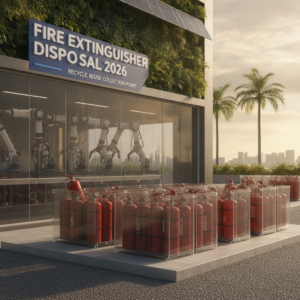
Disposing of fire extinguishers must be done responsibly. Empty units with no pressure may be recycled as scrap metal, but pressurised or partially charged cylinders require safe depressurisation and handling by licensed contractors. Never try to open or puncture a pressurised extinguisher yourself.
Ask your service partner about their recycling or disposal procedures and ensure documentation is provided for hazardous waste records.
Cost considerations and budgeting for 2026
Replacement costs depend on size, certification, and whether additional services (brackets, signage, installation) are required. Budget for:
- Unit purchase and delivery.
- Installation and mounting.
- Annual servicing and ad-hoc recharges.
- Hydrostatic tests and potential cylinder replacement over lifecycle.
Many businesses move to scheduled replacement plans to smooth costs and ensure continuity of protection.
Modern trends: digital maintenance and smarter compliance
Singapore’s fire-safety ecosystem is adopting technology-driven trends that affect replacement decisions:
- QR-code tagging and digital logs: mobile-accessible service histories improve audit readiness.
- IoT sensors and pressure monitors: real-time alerts for pressure loss or tampering reduce response time.
- Predictive maintenance: analytics identify units approaching end-of-life so replacements can be scheduled cost-effectively.
- Eco-conscious powders and reuse programs: manufacturers are refining formulations and recycling pathways.
Suppliers increasingly include digital records as standard; check whether a replacement comes with ongoing digital maintenance support.
For supplier selection and a practical checklist you can use during procurement, review the fire extinguisher supplier checklist.
Selecting an accredited service provider
A good provider will also help you maintain compliance documentation and site plans.
Practical maintenance checklist for facilities managers
- Perform monthly visual checks: pressure gauge, pin, tamper seal, external condition.
- Schedule annual servicing with an accredited technician.
- Keep records of every recharge, repair and hydrostatic test.
- Replace units that fail tests, show structural damage, or have exceeded manufacturer life recommendations.
- Ensure proper placement, signage and unobstructed access to all units.
A proactive program reduces the chance of unexpected failures and ensures legal compliance.
Summary: prioritising replacement to protect people and assets in 2026
Dry powder fire extinguisher replacement is an essential part of a comprehensive fire safety plan in Singapore. Integrating inspections, accredited servicing, and modern maintenance tools — and selecting the correct extinguisher type for each hazard — will keep your premises resilient and compliant.
Replace or recharge proactively, document thoroughly, and ensure disposal is handled by licensed professionals to maintain a safe environment through 2026 and beyond.


No comment yet, add your voice below!