

Why dry powder fire extinguishers matter in Singapore
Dry powder fire extinguishers are a common sight across Singapore’s residential, commercial and industrial sites because they are versatile and effective on many fire classes. For building managers, facility teams and property owners the key question is not only which extinguisher to install, but how to maintain it so it performs reliably during an emergency.
Understanding the dry powder extinguisher
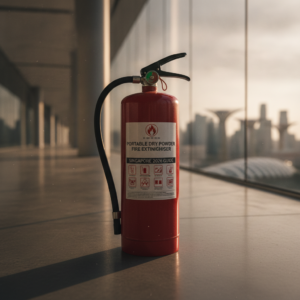
Dry powder extinguishers use a finely powdered extinguishing agent (commonly monoammonium phosphate for ABC types, or bicarbonate-based agents for BC types) that interrupts chemical reactions in a fire. They are effective on Class A (combustible materials), Class B (flammable liquids) and Class C (flammable gases/electrical) fires depending on the powder type and rating.
Advantages:
– Broad application (especially ABC powders)
– Good for mixed-risk environments
– Relatively low cost and long shelf life when stored correctly
Limitations:
– Powder residue can damage electronics and sensitive equipment
– Poor visibility and inhalation hazard in confined spaces
– Not ideal for commercial kitchens where wet chemical extinguishers are preferred
Choose the correct extinguisher for the risk and plan placement accordingly.
Legal and compliance fundamentals in Singapore
While obligations vary by building type and use, common requirements include installation to a set coverage, regular inspections, and maintenance by qualified personnel. For the latest regulatory details and standards, consult the official guidance: fire safety and extinguisher standards.
Record-keeping and valid service certificates are essential for audits and insurance. Maintain a service log, inspection tags and certificates from TUV SUD PSB approved technicians.
Practical monthly and weekly checks (owner/occupier responsibilities)
Routine visual checks are the first line of defence. These can be done by facility staff or a designated building officer without technical tools:
- Confirm the extinguisher is in its designated location, unobstructed and mounted correctly.
- Check the pressure gauge is within the green zone (if fitted) or confirm weight is within tolerance for non-gauged models.
- Ensure the safety pin and tamper seal are intact.
- Inspect the cylinder body for dents, corrosion, leaks or other damage.
- Check the hose/nozzle for blockages, cracks or foreign material.
- Verify the label is legible and the operating instructions are clear.
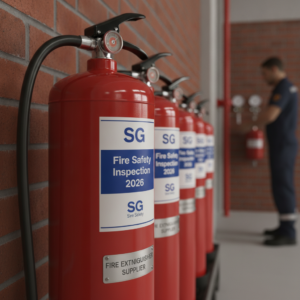
- Confirm the last service date on the inspection tag and that annual servicing is due.
Log these checks in a simple digital or paper register. For an easy compliance checklist you can use in inspections, see the fire safety checklist for extinguisher suppliers.
Annual servicing and professional maintenance
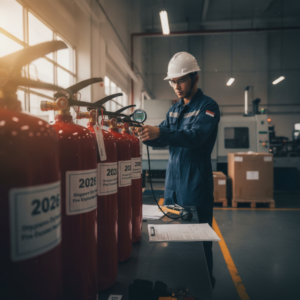
At least once a year a qualified, TUV SUD PSB approved fire extinguisher technician should perform a full service. Typical annual maintenance includes:
- Full operational inspection and function checks
- Weight check and pressure verification; recharge if necessary
- Examination and cleaning of powder to detect caking or bridging
- Disassembly and internal inspection where required
- Replacement of defective parts (hoses, nozzles, seals)
- Re-labelling and replacement of inspection tags
- Issuance of a service report and certificate
Hydrostatic testing, recharge and lifecycle considerations
Dry powder extinguishers are serviceable and refillable, but they do have lifecycle limits. Important lifecycle steps include:
- Recharge after every use, no matter how small the discharge
- Recharging during service if pressure or weight is low
- Replacement when the extinguisher fails inspection or hydrostatic tests, or when it reaches the manufacturer’s recommended service life
If in doubt, your TUV SUD PSB approved service partner can provide the correct schedule and certificates.
Dry powder specific maintenance tips
Powder-based extinguishers have maintenance nuances:
- Protect from moisture: Powder will cake if the cylinder is exposed to humidity or water ingress. Store extinguishers in dry locations and ensure seals are intact.
- Prevent bridging: If powder settles into bridges inside the cylinder, it can prevent discharge. Service technicians will check and agitate or replace powder as part of maintenance.
- Avoid cross-contamination: Never mix different powder chemistries during refill. Use the exact powder grade specified by the manufacturer.
- Clean residue promptly after discharge: Powder residue is corrosive to electronics and can be abrasive. Engage professional cleanup and follow manufacturer guidance for affected equipment.
Choosing the right extinguisher and placement strategy
Proper placement reduces response time and prevents inappropriate use that could damage assets. Consider these placement tips:
- Place extinguishers near ingress/egress points and high-risk areas (chemical stores, plant rooms)
- Avoid placing dry powder units inside clean-room environments or sensitive electronics areas unless absolutely necessary
- In commercial kitchens, favour wet chemical extinguishers for deep-fat fryer fires; powder extinguishers may be used only in specific zones
Records, tags and proof of maintenance
Good documentation protects you during inspections and after incidents. Maintain:
- A central logbook (digital or paper) with monthly check records and service reports
- Attached inspection tags showing last service date and next due date
- Service certificates from licensed technicians for each annual service and hydrostatic test
Keeping a digital archive of certificates and photos of service tags speeds up audits and insurance claims.
New trends in extinguisher maintenance (2026)
Singapore facilities are increasingly adopting technology to raise maintenance reliability:
- QR code inspection tags that link to service history and PDF certificates
- Mobile inspection apps for instant sign-off and defect alerts
- IoT-enabled sensors for pressure and tilt monitoring that send alerts if an extinguisher is moved or loses pressure
- Predictive maintenance using service data to forecast when an extinguisher will need refill or testing
These trends improve accountability, reduce missed inspections and can be integrated into building management systems.
Selecting a credible service partner
When choosing a technician or supplier, prioritise:
- Transparent service schedules, clear pricing for recharges and tests
- Availability for emergency recharge and rapid replacement
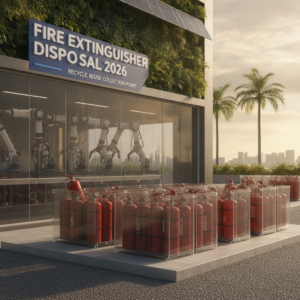
- Proper waste disposal and cleanup services after discharge
Common mistakes and how to avoid them
A simple preventive strategy — monthly checks plus documented annual service — prevents most problems.
Quick maintenance checklist (at-a-glance)
- Monthly: Visual check, pressure gauge, tamper seal, location clear
- Annually: Full service by licensed technician, recharge if needed, inspection tag updated
- After any discharge: Recharge and professional cleanup
For downloadable checklists and supplier contact templates, see the official checklist resource: fire safety checklist for fire extinguisher suppliers.
Final notes: reliability through proactive maintenance
Dry powder fire extinguishers are reliable workhorses when selected and maintained correctly.
Stay ahead by integrating digital inspection tools, using certified service partners, and scheduling regular servicing. Proper fire extinguisher maintenance in 2026 is about reliability, compliance, and reducing risk across Singapore’s diverse built environment.


No comment yet, add your voice below!