

Understanding Singapore’s 2026 fire safety landscape
Singapore’s regulatory focus on fire safety continues to sharpen in 2026. For businesses and property managers, keeping up with the latest standards means more than ticking boxes; it ensures life safety, asset protection, and regulatory compliance. Whether you’re sourcing a trusted fire extinguisher supplier or preparing for a scheduled fire safety inspection, this guide breaks down what matters most in practical, actionable terms.
Why regular fire safety inspection matters in Singapore
Inspections reduce the risk of failure when an extinguisher is needed and limit liability during audits or insurance claims.
Regular inspections are particularly important as equipment ages or after building renovations. Inspectors check for pressure, seals, corrosion, accessibility, correct signage, and valid service tags — all elements that directly affect an extinguisher’s performance.
Choosing a reliable fire extinguisher supplier in Singapore
Selecting a reputable fire extinguisher supplier is the first line of defense. Here are the attributes to prioritize:
- TUV SUD PSB approval and product certification — Equipment that meets local standards reduces rejection risk during audits.
- Comprehensive services — Look for suppliers who provide sales, installation, regular maintenance, and emergency replacements.
- Clear documentation and service tags — Records should be legible, time-stamped, and stored for easy retrieval.
- Experience with local building types — Residential blocks, commercial offices, F&B outlets, and industrial sites have different fire risks and extinguisher needs.
- Transparent pricing and service plans — Annual maintenance contracts that include inspection, recharge, and parts can be more cost-effective than ad-hoc service.
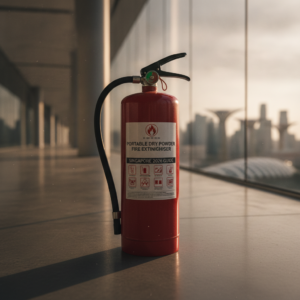
When selecting an extinguisher type, confirm TUV SUD PSB approved models; for example, if you need dry powder extinguishers that meet local approvals, review the guidance on TUV SUD PSB approved dry powder fire extinguishers.
What to expect during a professional fire safety inspection
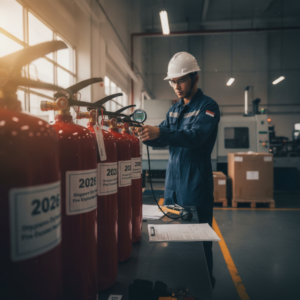
A thorough fire safety inspection should be methodical and well documented. Typical steps include:
- Visual audit: Inspectors confirm location, signage, and accessibility (no obstructions or improper storage).
- Condition check: Look for corrosion, dents, cracked hoses, or broken handles.
- Pressure check: Gauges must be within operating range or marked appropriately for cartridge-operated units.
- Tamper seal and pin check: Ensure safety pins and tamper seals are intact.
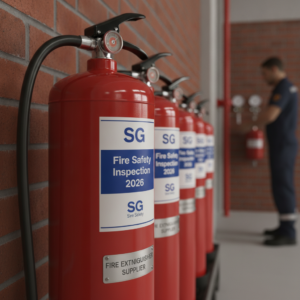
- Service tag verification: Confirm the last maintenance date and next due date.
- Functionality tests: Depending on the extinguisher type and regulations, partial functional checks may be performed (not a full discharge unless required).
- Documentation: A report should list deficiencies, corrective actions, and a recommended timeline for repairs or replacements.
Maintenance cycles: what must be done and when
Maintenance frequency varies by extinguisher type, usage, and environmental conditions, but typical cycles include:
- Monthly visual checks by on-site staff — a quick look at seals, pressure, and accessibility.
- Annual professional service — full inspection, recharge if needed, and tagging.
- Hydrostatic testing — required at manufacturer-specified intervals (often every 5–12 years) for some cylinder types.
- Replacement — when functionality is compromised, corrosion is severe, or the extinguisher fails hydrostatic testing.
For dry powder units specifically, follow the recommended protocols and maintenance procedures tailored to these models: dry powder fire extinguisher maintenance.
Replacement decisions: when to replace vs repair
Deciding whether to repair, recharge, or replace an extinguisher depends on several factors:
- Age and service history — older units close to or past hydrostatic test intervals are often replaced.
- Extent of damage — dents, severe corrosion, or compromised valves usually warrant replacement.
- Availability of compliant parts — obsolete models may lack replacement parts, requiring full replacement.
Types of extinguishers and choosing the right one for your site
Knowing extinguisher classes helps match equipment to potential fire risks:
- Class A (water, foam): Combustibles like wood and paper.
- Class B (foam, dry chemical): Flammable liquids and oils — common in kitchens and workshops.
- Class C (CO2): Electrical fires — good for server rooms and electrical cabinets.
- Class D (special powders): Metal fires — relevant for certain industrial processes.
- Multi-purpose dry powder: Versatile for mixed-risk areas but can cause collateral mess and dust.
Cost, compliance and record-keeping
Budgeting for fire safety in 2026 should include:
- Annual maintenance and inspection fees.
- Periodic hydrostatic testing and potential replacement costs.
- Training for staff on basic extinguisher use and evacuation procedures.
Good record-keeping reduces compliance risk. Maintain a central log with service reports, inspection tags, purchase receipts, and any incident reports to simplify audits or insurance claims.
Practical checklist: Preparing for your next fire safety inspection
- Verify that all extinguishers are easily accessible and free from obstructions.
- Confirm that each extinguisher has a visible, legible service tag and correct signage.
- Ensure pressure gauges are in the green or otherwise within operational limits.
- Check tamper seals and pins for integrity.
- Confirm that staff have basic training and that training records are up to date.
- Review your maintenance log for the last 12 months and schedule overdue services immediately.
Final thoughts: staying compliant and reducing risk in 2026
In Singapore’s demanding regulatory environment, partnering with a reliable fire extinguisher supplier and maintaining a consistent fire safety inspection schedule is non-negotiable. The right supplier not only sells equipment but supports you with compliance documentation, scheduled maintenance, emergency replacement and staff training. Prioritise TUV SUD PSB approved equipment, maintain clear records, and perform regular inspections to protect people and property while avoiding costly compliance issues.
- TUV SUD PSB approved dry powder fire extinguisher
- dry powder fire extinguisher maintenance
- dry powder fire extinguisher replacement
Staying informed, choosing the right supplier, and treating fire safety inspection as an ongoing program (not just an annual chore) will keep your premises safer and compliant throughout 2026 and beyond.


No comment yet, add your voice below!