

Why this matters for Singapore buildings and homes
Fire safety isn’t optional — it’s a legal and moral requirement in Singapore. Whether you manage an HDB block, a private condo, a shop-house, or a commercial premises, a pragmatic, documented approach to maintenance saves lives and limits damage.
Understanding the difference: maintenance vs replacement
Maintenance keeps systems reliable: inspections, tests, repairs, battery changes, sensor cleaning and firmware updates for smart systems. Replacement is needed when an item can no longer perform safely — for example, a discharged or expired extinguisher, an alarm panel with obsolete components, or devices that repeatedly fail tests. Both activities should be scheduled and recorded.
Core principles every Singapore facility manager must follow
- Prioritise life-safety equipment and document every action.
- Plan for routine checks (owner-led) and professional servicing (licensed technicians) at the correct frequencies.
- Dispose of used or expired extinguishers safely and traceably.
Fire alarm maintenance: an actionable checklist
Monthly/weekly (owner or FM):
– Visual checks of alarm indicators, call points and sounders.
– Ensure control panel shows normal status and no fault indicators.
– Confirm emergency lighting associated with the system is functioning.
Quarterly/biannual (service provider recommended):
– Functional testing of detectors and sounders using approved test methods.
– Battery condition checks and replacement where needed.
– Inspect cabling routes for signs of damage, moisture ingress or rodent activity.
Annual (licensed contractor):
– Comprehensive system test: zones, manual call points, smoke and heat detector calibration and sensitivity checks.
– Firmware and software updates for addressable systems.
– Replace or repair failing modules and ensure backups are intact.
Long-term lifecycle tasks:
– Replace smoke detectors or control modules as recommended by manufacturers (typically every 7–10 years depending on model and environment).
– Perform major overhauls when systems approach end-of-life; migrating to modern addressable or IoT-enabled solutions can reduce false alarms and improve monitoring.
Document everything in a maintenance log with dates, technicians’ names, test results and next-review dates.
Fire extinguisher replacement: what to check and when to act
Key triggers for replacing extinguishers:
– Discharged or partially discharged units — any use requires immediate recharging or replacement.
– Physical damage: dents, corrosion, damaged hoses or compromised valve assemblies.
– Expiry or failed pressure tests: many extinguishers require hydrostatic testing every 5–12 years depending on type; if a unit fails, replace it.
– Manufacturer or safety recalls.
Frequency guidance (general):
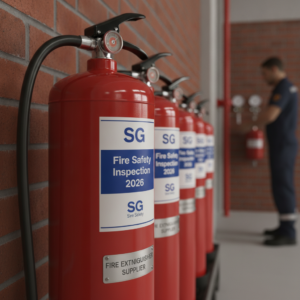
– Visual inspection monthly by the owner or FM.
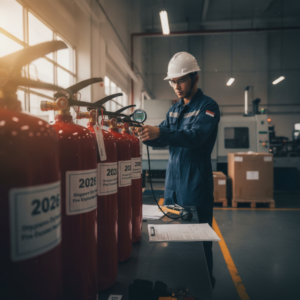
– Professional servicing annually (or as required by the extinguisher’s type and manufacturer).
– Hydrostatic testing or scheduled replacement every 5–12 years depending on model and local regulations.
For practical information on proper disposal and replacement steps, reference local guidance such as this fire extinguisher disposal steps resource: fire extinguisher disposal steps.
Choosing the right extinguisher and approved products in Singapore
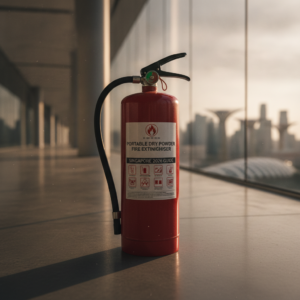
Not all extinguishers are equal. Choose TUV SUD PSB approved units that match the likely fire risks in your premises: Class A (combustibles), B (flammable liquids), C (gases), electrical fires, and specialized types for kitchen or chemical risks. If you’re replacing multiple units or upgrading, consider reading a buyer’s guide to ensure compliance: buy TUV SUD PSB approved fire extinguisher.
Also review portable extinguisher essentials and placement best practices: portable fire extinguisher essentials.
Safe disposal and handling of used dry powder extinguishers
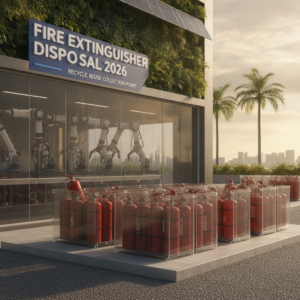
Dry powder extinguishers are common in Singapore. They require careful disposal to avoid environmental or safety hazards. If an extinguisher must be discarded after use or expiry, follow documented disposal steps and engage authorised handlers. Practical disposal guidance is available here: dry powder fire extinguisher disposal guide.
If you need step-by-step resident-focused instructions for disposal and handover, consult local instructions: fire extinguisher disposal steps.
Integrating maintenance into building operations and compliance
Selecting certified contractors and what to ask
Ask for references and confirm contractors provide service reports that include test results, parts used and recommended follow-ups.
Cost considerations and budgeting for replacements
Budget realistically: maintenance is an operational cost, replacement is capital expenditure. Typical annual servicing and consumables are modest relative to replacement of entire systems. Key budgeting tips:
– Plan a 3–5 year replacement reserve for extinguishers and detectors.
– Factor in emergency replacement allowances for units used in incidents.
– Consider lifecycle costs: investing in reliable, certified equipment often lowers long-term maintenance and false-alarm expenses.
Emerging trends: smarter alarms and predictive maintenance
Newer systems incorporate IoT sensors, remote monitoring and predictive analytics. Benefits include:
– Early detection of deteriorating components and remote battery/fault alerts.
– Centralised dashboards for multi-site managers.
– Reduced false alarms through intelligent algorithms and detector self-calibration.
When upgrading, ensure cybersecurity and data privacy are addressed, and that the provider can support local compliance and reporting.
Practical checklist for the next 30/90/365 days
Next 30 days:
– Carry out or verify monthly visual checks for extinguishers and alarm panels.
– Confirm expiry dates and flag units near end-of-life.
Next 90 days:
– Schedule professional servicing for alarms and extinguishers if due.
– Replace or recharge any used or damaged extinguishers.
Next 365 days:
– Complete annual comprehensive servicing with certified technicians.
– Review records and update the maintenance calendar and budget for replacements.
Final notes: creating a safety culture in Singapore premises
Good fire safety is consistent, documented and proactive. By combining routine owner checks, certified contractor servicing, timely fire extinguisher replacement and informed purchasing of TUV SUD PSB approved equipment, you significantly reduce risk and ensure compliance. Use the referenced guides and resources to standardise processes and train stakeholders — an informed team is your best defence against avoidable fire incidents.
Take action now to ensure your fire alarm maintenance program and fire extinguisher replacement plan are current, documented and ready for inspections.


No comment yet, add your voice below!