

Why integrated fire protection matters in Singapore
Singapore’s dense urban environment and mixed-use buildings make proactive fire safety essential. Two pillars of everyday fire protection are a well-maintained fire alarm system and correctly specified portable fire extinguishers. Together they minimise risk to life and property by detecting fires early and enabling immediate first-response actions.
Understanding fire alarm maintenance: scope and priorities
Fire alarm maintenance covers more than resetting false alarms. It includes routine testing, component servicing, battery and power checks, sensor cleaning and software updates for addressable systems. Priorities for maintenance in Singapore should be:
- Ensuring alarm panels and detectors are responsive and free from dust or corrosion.
- Verifying power supplies, batteries and backup sources work under load.
- Testing all notification devices (horns, strobes) so occupants can be alerted audibly and visually.
- Reviewing event logs to spot recurring faults or nuisance alarms that may mask real incidents.
A documented maintenance schedule reduces false alarms — which are disruptive and can attract fines — and ensures systems operate when needed.
Portable fire extinguisher basics: types, placement and selection
A portable fire extinguisher is the first line of defence for small, containable fires. Choosing the right extinguisher depends on the likely fuel type and the environment:
- Water/foam for general combustibles (Class A) in dry, non-electrical areas.
- Carbon dioxide (CO2) for electrical and small liquid fires (Class B/C) where no residue is wanted.
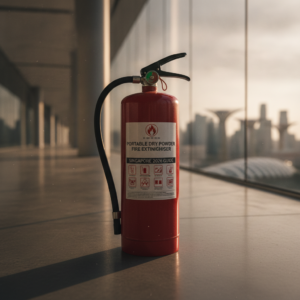
- Dry powder for mixed hazards — common in workshops, kitchens and storage areas.
Modern procurement and inspection practices in Singapore emphasise TUV SUD PSB approved products. For reliable supply and inspection services, work with established suppliers who can also support signage, mounting brackets and annual servicing. Suppliers often provide guidance on extinguisher sizing and access routes.
For options on suppliers and inspection services, refer to this portable fire extinguisher resource: portable fire extinguisher.
Routine inspection and maintenance: what to do and when
Maintenance of extinguishers and alarms requires both user-level checks and professional servicing:
-
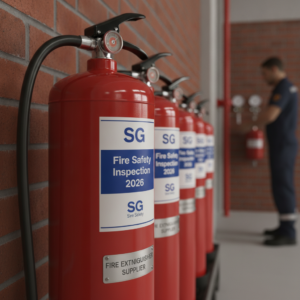
Daily/weekly (user checks): Ensure extinguishers are visible, unobstructed, pressure gauges are in range, safety pins and seals are intact, and no obvious physical damage exists. For alarms, ensure control panels show normal status.
-
Monthly (responsible person): Record a simple checklist: location, gauge status, mounting, tamper seals, and signage. Log any issues and arrange repairs.
-
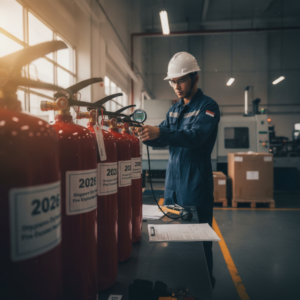
Annual (qualified technician): Full functional checks, internal examination, weight verification, replacement of worn parts, refilling or recharging as required, and updating service tags.
Regular maintenance prevents equipment failure. For detailed guidance on dry powder extinguisher servicing and replacement, see this resource: dry powder fire extinguisher replacement and dry powder fire extinguisher maintenance.
Combining schedules: synchronise alarms with extinguisher checks
Many organisations save time and money by synchronising fire alarm maintenance with portable extinguisher servicing. Benefits include:
- Fewer contractor visits and reduced disruption to occupants.
- Consolidated compliance records and single-point invoicing.
- Coordinated replacement planning and lifecycle budgeting.
Create a master fire-safety calendar that shows monthly, quarterly and annual tasks. Ensure records include date, technician name, observations, parts changed and next due date. These records are useful for audits and demonstrate due diligence in case of incidents.
Common problems and simple fixes
- False alarms: Often caused by dust, insects or steam. Regular cleaning, correct detector placement and environmental controls reduce nuisance activations.
- Low battery or dead backup: Replace batteries per manufacturer recommendations and test under load to confirm backup performance.
- Corroded or damaged extinguishers: Replace or repair immediately — corroded cylinders can fail when pressurised.
- Obstructed extinguishers: Relocate or improve signage so extinguishers are always accessible.
Adopt a triage approach: immediately remove faulty equipment from service, replace it temporarily, and arrange repair with a licensed contractor.
Choosing a licensed service provider in Singapore
Key evaluation criteria:
- Clear breakdown of services: monthly checks, annual servicing, refills, hydrostatic testing and replacement.
- Transparent recordkeeping and digital service reports.
- Local references and experience with similar properties.
Training occupants and first-response teams
Equipment is only effective when people know how to use it. Regular training should include:
- How to read gauges and choose the right extinguisher.
- PASS technique (Pull, Aim, Squeeze, Sweep) adapted to local fire classes.
- Evacuation routes and alarm response protocols.
- When not to fight a fire — prioritise life safety and evacuation.
Many suppliers and fire-safety companies offer on-site demonstration sessions and scenario-based drills tailored to your building type.
New trends in 2026: smart maintenance and data-driven safety
Technology is reshaping fire alarm maintenance and extinguisher management:
- IoT-enabled detectors and alarm panels stream live health data to cloud dashboards, enabling predictive maintenance and faster fault diagnosis.
- QR-code tagging on extinguishers links to service histories and next-test dates, simplifying inspections and audits.
- Mobile apps allow on-site technicians to update records in real time, reducing paperwork and improving transparency.
- Remote testing capabilities let technicians run diagnostics without entering secure areas, cutting downtime.
Integrating these technologies into a maintenance programme improves uptime and provides evidence of proactive asset care during compliance checks.
Budgeting and lifecycle planning
Effective budgeting treats fire safety as an investment in continuity. Consider:
- Initial capital for compliant fire extinguishers and alarm upgrades.
- Recurring costs: monthly checks, annual servicing, refill or recharge costs, and component replacement.
- Reserve for major overhauls or hydrostatic testing as recommended by manufacturers.
- Training and signage costs to keep occupants informed.
A five-year plan that aligns procurement cycles, maintenance contracts and asset replacement can reduce surprises and stabilise cash flow.
Practical checklist: a quick owner/operator routine
- Monthly: Visual check of all portable fire extinguishers; verify alarm panel normal status.
- Quarterly: Test notification appliances; inspect alarm zones for environmental issues.
- Annually: Full servicing by a licensed company; recharge or replace extinguishers as needed; update service tags and records.
- After any incident: Replace or recharge extinguishers used; perform a full alarm system diagnostic.
Keep records for at least the recommended period and make them accessible for inspectors.
Final thoughts: a cohesive safety strategy
A robust fire safety programme in Singapore combines regular fire alarm maintenance with correctly selected and maintained portable fire extinguishers. When systems are integrated, records are complete and occupants are trained, organisations significantly reduce fire risk and demonstrate strong compliance.
Well-maintained alarms and extinguishers not only protect assets — they protect people. Implement a documented schedule, use licensed technicians, and take advantage of smart maintenance tools to keep systems ready every day.


No comment yet, add your voice below!