

Introduction
Fire safety is a top priority for businesses and households across Singapore. Choosing the right fire extinguisher supplier and understanding safe, compliant fire extinguisher disposal are essential parts of a complete fire safety strategy. This guide explains how to select a reputable supplier, what to expect from maintenance and inspections, and the correct steps for end-of-life management so you remain compliant with local requirements and keep people and property safe.
Why Choosing the Right Fire Extinguisher Supplier Matters
A certified fire extinguisher supplier does more than sell equipment. They ensure the equipment meets local standards, provide professional installation, carry out scheduled inspections and maintenance, and manage safe disposal or replacement when an extinguisher reaches end of life. Working with a reputable provider reduces risk, ensures compliance and gives you documented proof of service—vital for audits, insurance and regulatory inspections.
For businesses seeking full-service options that include inspection and certificate issuance, consider a dedicated fire extinguisher supplier with a strong track record in Singapore.
Types of Portable Fire Extinguishers and Their Uses
Knowing the common extinguisher types helps you choose the right equipment and supplier services:
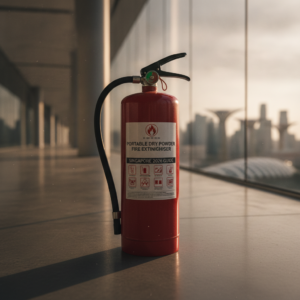
- Dry powder (ABC): Versatile for most fire classes — solids, liquids and gases. Common in commercial and industrial settings.
- Carbon dioxide (CO2): Suitable for electrical fires and flammable liquids; leaves no residue but is less effective on class A fires.
- Water (and water mist): Best for class A fires (paper, wood, textiles). Not for electrical or flammable liquid fires.
- Foam: Effective on class A and B fires (flammable liquids).
Different extinguisher agents require different maintenance, hydrostatic testing intervals and disposal processes. For example, if you need information on dry powder replacement, a specialist supplier can advise on timing and replacement options.
Singapore Regulations and Best Practices
Best practices include:
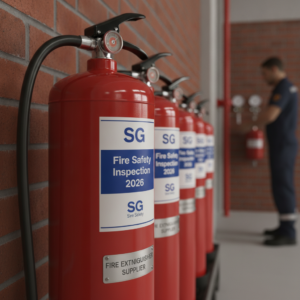
- Regular visual checks by the owner/business (monthly) to confirm pressure gauge, tamper seal and general condition.
- Proper record-keeping and service certificates provided by your supplier for compliance and audits.
Inspection, Maintenance and Documentation
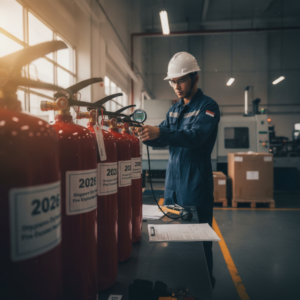
A professional supplier should provide:
- Visual and functional inspections
- Recharging and refilling services after use
- Replacement of parts (hoses, safety pins, gauges)
- Hydrostatic testing and pressure testing where applicable
- Service records and compliance certificates
Some extinguisher types, such as CO2 and certain cylinders, need periodic hydrostatic testing. Others may require replacement of the extinguishing agent. Reputable suppliers also offer preventive maintenance plans to avoid unexpected failures and to keep your premises compliant.
If your business uses dry powder extinguishers, look for suppliers offering both maintenance and replacement services — for example, specialized dry powder maintenance and replacement support.
Recognizing End-of-Life: When Disposal Is Necessary
Fire extinguishers reach end-of-life for several reasons:
- Expired or failed hydrostatic tests
- Corrosion, dents or structural damage to the cylinder
- Discharge, contamination or an irreparable fault in valve assembly
- Obsolete models that no longer meet regulatory or performance standards
When an extinguisher is beyond repair or testing indicates it cannot be safely returned to service, it must be taken out of circulation and disposed of safely.
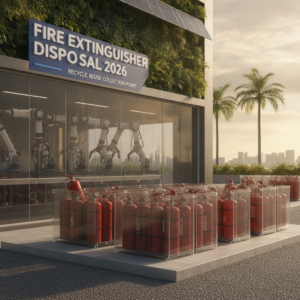
Safe Fire Extinguisher Disposal: Steps and Considerations
Disposal is not as simple as throwing an extinguisher into general waste. Extinguishers contain pressurised gas and chemical agents that require controlled handling. Proper disposal steps include:
- Decommissioning and depressurisation by qualified personnel.
- Safe recovery or neutralisation of the extinguishing agent when required.
- Segregation and classification of any hazardous residues.
- Recycling of metal cylinders and components where possible.
- Disposal of non-recyclable hazardous materials through licensed hazardous waste channels.
In Singapore, disposal should be handled by suppliers or contractors who understand local environmental and hazardous-waste regulations and can provide disposal certificates or proof of chain-of-custody.
How Professional Suppliers Manage Disposal
A trusted supplier will offer collection, safe decommissioning and disposal as part of a lifecycle service. Typical offerings include:
- On-site decommissioning and depressurisation
- Transportation to licensed facilities
- Recycling of steel or aluminium cylinders
- Safe disposal or treatment of chemical agents
- Issuance of disposal certificates documenting the process
For turnkey services that combine inspection, maintenance and responsible disposal, look for providers that advertise integrated fire safety solutions — for instance, a supplier that links fire alarm upkeep with extinguisher services such as portable fire extinguisher and fire alarm maintenance.
Costs, Logistics and Practical Tips for Singapore Businesses
Budgeting for extinguisher lifecycle management should include purchase, installation, regular servicing, and end-of-life disposal. Practical tips:
- Schedule inspections and maintenance during low-activity periods to reduce disruption.
- Keep a register of extinguisher locations, types, installation dates and service history.
- Request fixed-rate maintenance contracts to manage costs and ensure predictable service.
- Require disposal certification to maintain compliance records.
If your facility uses a high number of dry powder extinguishers or operates in a dusty environment, consider discussing dry powder replacement cycles with your supplier to optimise uptime and costs.
Choosing a Supplier: Checklist for Singapore Buyers
When evaluating suppliers, consider the following:
- Full lifecycle services: inspection, recharging, hydrostatic testing, and disposal.
- Transparent pricing and documented service agreements.
- Local presence and fast response times for emergency recharges or replacements.
- Customer references and clear evidence of regulatory compliance.
A supplier that offers both maintenance and tailored solutions for extinguisher types (including specialist support for dry powder systems) will simplify compliance and reduce administrative load. Search for providers that explicitly list maintenance and replacement services, for example those offering dry powder fire extinguisher maintenance.
Recordkeeping and Certification
Keep all inspection, servicing and disposal documentation for each extinguisher on site and in a digital archive. This should include service dates, technician details, test results, and disposal certificates. Well-maintained records demonstrate due diligence to regulators and insurers and simplify lifecycle planning.
Conclusion
Managing fire extinguishers responsibly in Singapore means partnering with a qualified fire extinguisher supplier that provides inspection, maintenance and safe disposal services. Proper selection, scheduled servicing and documented disposal reduce legal risk, protect occupants and ensure your equipment performs when needed. Prioritise suppliers that offer full lifecycle solutions, transparent documentation and compliance with local standards, and you’ll have a resilient, auditable fire safety program that protects people and property.
For businesses seeking integrated services that cover inspection, maintenance and responsible disposal, consider suppliers who combine technical expertise with local regulatory knowledge and provide clear disposal certification as part of their service offering.


No comment yet, add your voice below!