

Why portable fire extinguishers matter in Singapore
Portable fire extinguishers are a first line of defense in homes, offices, hawker centres and industrial sites across Singapore. In a compact city-state where mixed-use developments and dense neighbourhoods are common, quick initial suppression can contain small fires before they escalate into major incidents. Beyond saving property, properly selected and maintained portable fire extinguishers protect lives and support the broader Singapore fire protection system by reducing demand on emergency responders.
How portable extinguishers fit the Singapore fire protection system
The Singapore fire protection system is an ecosystem: building design, fire alarms, sprinkler and hydrant systems, emergency plans, and human preparedness all work together. Portable fire extinguishers complement fixed systems by giving occupants a tool to tackle incipient fires.
For practical guidance on integrating portable extinguishers with system upgrades and compliance, review the local perspective on fire extinguisher replacement and system upgrades.
Common types of portable fire extinguishers and when to use them
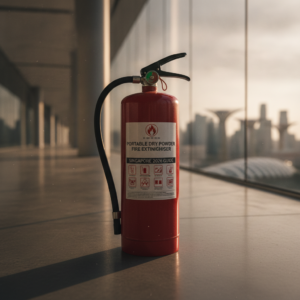
- Dry powder (ABC): Versatile and widely used in mixed-risk environments. Effective on Class A (combustibles), B (flammable liquids) and C (flammable gases) fires. Often recommended for warehouses and vehicle bays.
- Dry chemical (BC or AB): Good for liquid and electrical fires. Some formulations are better for specific risks.
- CO2 (carbon dioxide): Ideal for electrical fires and server rooms as it leaves no residue.
- Water and foam: Best for Class A and some Class B fires; not suitable for electrical hazards unless specifically designed.
- Wet chemical (Class F): Designed for cooking oil and fat fires common in kitchens and food businesses.
Choosing the right portable fire extinguisher depends on the hazards present. In commercial kitchens, a wet chemical extinguisher is vital; in an office with server racks, CO2 or a clean agent may be preferable. For general-purpose coverage in many Singapore settings, an ABC dry powder extinguisher remains a popular choice—find local options for where to buy dry powder portable fire extinguishers.
Regulations, guidance and compliance obligations
Basic expectations include correct extinguisher selection, proper placement and mounting, visible signage, and routine checks. While occupants can perform simple visual inspections, servicing, refills and certain tests must be performed by certified technicians.
Maintenance, inspection and testing — practical schedule
A reliable maintenance routine reduces failure risk and keeps extinguishers ready:
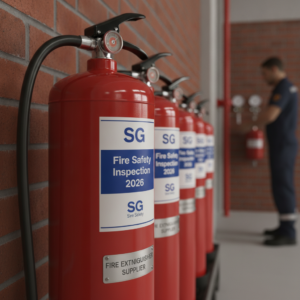
- Monthly visual checks: Inspect pressure gauges, seals, tamper indicators, general condition and accessibility.
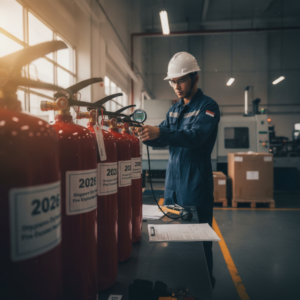
- Annual professional servicing: Full service by a licensed company to verify internal condition, pressures and functionality.
- Hydrostatic testing and major overhauls: Per manufacturer guidance and local standards—timing varies by type and brand.
- Immediate post-use servicing: Any extinguisher used, even partially, must be refilled or replaced.
Record-keeping is essential: log monthly checks and professional service dates. Many businesses now combine digital logs or IoT-enabled monitoring tools to streamline compliance and reminders.
Trends: smart monitoring and eco-conscious disposal
Two trends shaping fire safety in Singapore are smart monitoring and sustainability. Smart sensors and IoT status tags can report pressure drops, movement or missing units to a central dashboard—useful in large facilities and high-traffic public spaces. These systems reduce the administrative burden of manual checks and provide early warnings if an extinguisher is compromised.
On the disposal side, many local providers participate in recycling or trade-in schemes to manage spent or obsolete cylinders responsibly. If you plan an upgrade or replacement, explore local trade-in and recycling programs for extinguisher replacement that support eco-friendly disposal and minimise hazardous waste.
Cost considerations and choosing a trusted provider
Costs vary by extinguisher type, capacity, brand and service package. A few pointers when budgeting:
- Initial purchase: Expect higher prices for specialised agents (e.g., clean agents) and larger-capacity cylinders.
- Maintenance contracts: Annual servicing contracts can be more economical than ad-hoc servicing when factoring in response times and record-keeping.
- Replacement vs. refurbishment: Some extinguishers can be refurbished at lower cost; others should be replaced for safety and regulatory reasons.
For a cost-focused look at replacement and upgrade options in Singapore, consult resources on fire extinguisher replacement and system upgrades.
Disposal, recycling and the 2025 action plans
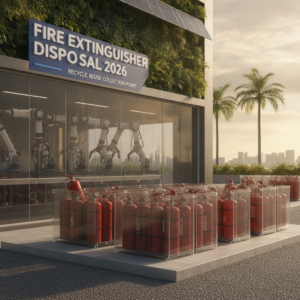
As Singapore ramps up sustainability initiatives, proper disposal of fire extinguishers is receiving more attention. Decommissioned cylinders and spent agents must be handled through authorised channels to avoid environmental harm. National programmes and provider-led initiatives often offer on-site swap-outs, recycling and safe disposal services.
For an overview of national actions and eco-friendly servicing models, review the 2025 action plan for fire extinguisher disposal and alarm maintenance. That plan outlines how providers and building owners can participate in sustainable disposal while meeting regulatory obligations.
Placement, signage and user training — practical tips
- Visibility and access: Mount extinguishers where they are clearly visible and reachable within recommended travel distances. Avoid obstructing access.
- Appropriate mounting height: Ensure proper bracket height so the extinguisher can be removed easily in an emergency.
- Signage: Use highly visible signs above or next to extinguishers to guide occupants and visitors.
- Staff training: Conduct practical hands-on training sessions so staff can operate extinguishers safely. Training should include PASS technique (Pull, Aim, Squeeze, Sweep) and safe retreat procedures.
- Risk-specific distribution: Place Class F extinguishers near cooking areas and keep electrical-safe agents near high-voltage equipment.
A simple checklist for building managers and homeowners
- Inventory: Identify extinguisher types and locations across the site.
- Monthly checks: Confirm gauges, seals, and accessibility.
- Annual service: Book licensed technicians for full servicing and records.
- Post-use action: Refill or replace after any use.
- Disposal plan: Arrange responsible recycling or trade-in when cylinders reach end-of-life.
- Training: Schedule hands-on refresher training for occupants or staff.
- Integration: Ensure extinguishers complement alarms, sprinklers and evacuation plans within the Singapore fire protection system.
For help sourcing or replacing extinguishers, including pricing and refill tips, see where to buy dry powder portable fire extinguishers.
Final thoughts
Portable fire extinguishers are small but indispensable elements in Singapore’s layered approach to fire safety. When correctly chosen, sited and maintained, they offer immediate response capability that protects people and property and supports the wider Singapore fire protection system.


No comment yet, add your voice below!