

Introduction
Keeping your premises safe in Singapore in 2025 means staying ahead of two interconnected priorities: timely fire extinguisher replacement and broader upgrades to your Singapore fire protection system.
This article breaks down realistic cost ranges, regulatory milestones, maintenance schedules and practical steps to replace extinguishers and modernize fire protection systems — with links to local resources and services available in Singapore.
Why timely fire extinguisher replacement matters in 2025
Fire extinguishers are a first-line defense; an older, improperly serviced or expired unit may fail when it matters most. In 2025, Singapore continues to emphasise both equipment reliability and environmentally responsible disposal. Key reasons to prioritise replacement:
- Performance: Agents degrade, valves corrode and pressure can drop over time; replacements ensure rated discharge performance.
- Liability: Using uncertified or expired equipment can increase legal and insurance risk after an incident.
- Sustainability: New trade-in and recycling programs make replacement less wasteful and often easier on budgets.
For an updated checklist on inspection, servicing and compliance, see this practical resource: updated 2025 servicing and inspection checklist.
Typical costs: replacement, refills, servicing and disposal (Singapore, 2025)
Cost ranges vary by extinguisher type, capacity and whether you opt for on-site swap-outs or full replacement. Below are market-typical figures for 2025 in Singapore.
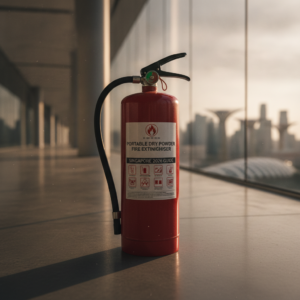
- Portable dry powder (1kg–9kg): replacement S$80–S$350. Refills S$30–S$120 depending on size.
- CO2 (2kg–5kg): replacement S$150–S$450. Refill/service S$50–S$160.
- Water/Foam (9L/6L): replacement S$120–S$400. Refill S$40–S$150.
- Clean agents (FM-200 / Novec systems): component or cylinder replacement often S$500+; system-level work can run into thousands.
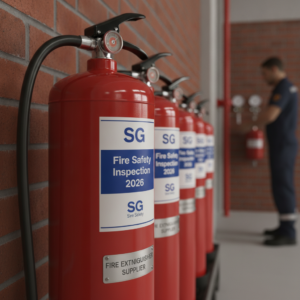
- Servicing and annual inspections: S$15–S$80 per portable unit depending on vendor and scope. Many corporates buy service contracts.
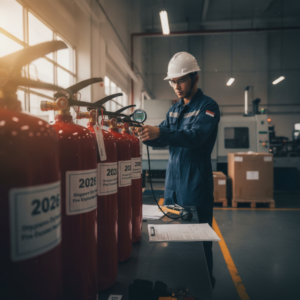
- Hydrostatic testing (required for certain cylinders every few years): S$80–S$200 per cylinder depending on type.
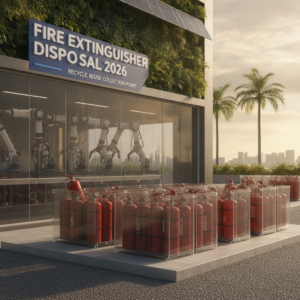
- Disposal / recycling fees: S$5–S$50 per unit if not included in trade-in. Trade-in programs or recycling drives can reduce or eliminate this cost.
If you want to compare where to buy and what replacement models are available, consult local purchasing guides such as where to buy dry powder portable fire extinguishers in Singapore 2025.
Regulatory compliance and expectations
Practical compliance items include:
- Annual inspections by certified technicians and documented service reports.
- Pressure gauge checks, tamper seal and hose/valve condition checks during routine service.
- Hydrostatic testing schedules for pressure vessels as mandated by standards.
- Proper disposal and documentation for expired extinguishers; avoid illegal dumping.
Fire protection system upgrades to consider in 2025
Upgrading a Singapore fire protection system goes beyond swapping extinguishers. Typical upgrade areas with measurable impact:
- Fire alarm and detection: move to networked addressable systems for faster, more informative alerts and easier fault diagnosis.
- Sprinkler systems: retrofit with more resilient piping, corrosion-resistant materials and improved sprinkler coverage where gaps exist.
- Fire pumps and controllers: replace aging pump sets for reliability, add remote monitoring and predictive maintenance sensors.
- Clean agent suppression and kitchen suppression: upgrade to environmentally compliant agents and more reliable release mechanisms.
- Emergency lighting and exit signage: LED retrofits with central monitoring reduce maintenance and improve redundancy.
- Integration & IoT: many organisations now add digital monitoring (pressure sensors, tamper alerts and predictive maintenance notifications) that reduce downtime and noncompliance risks.
These upgrades vary widely in cost: expect simple alarm upgrades to cost from S$2,000–S$15,000 depending on building size, while full sprinkler or pump replacements often range from S$10,000 to S$150,000+ for complex commercial sites.
Cost-saving trends for 2025: trade-ins, swap-outs and recycling
Singapore’s market now supports several cost-saving pathways:
- Trade-in programs: get credit toward new extinguishers when you surrender compliant old units, reducing net replacement costs. Details are available at: replacement and disposal trade-in programs.
- On-site swap-outs: technicians perform swap-outs during routine servicing to minimise downtime and labour costs.
- Recycling and disposal drives: community and vendor-led drop-offs help meet disposal obligations at lower cost; learn legal steps and options here: disposal and drop-offs 2025 guide.
These options are particularly valuable for businesses replacing multiple units at once.
Choosing trusted local providers and what to check
When selecting a vendor or contractor in Singapore, evaluate these factors:
- Track record: local references, portfolios for similar buildings and public client experience.
- Service agreement clarity: response times, warranty terms, replacement vs repair policies and documentation standards.
- Transparency in pricing: clear breakdown of equipment, labour, disposal and any travel or permit fees.
- Value-added services: training for staff, monthly/annual reporting, IoT monitoring options and trade-in offers.
A vendor with a comprehensive service package can reduce compliance risk and administrative burden. For an accessible starting point on buying dry powder extinguishers from trusted sources, review: where to buy dry powder extinguishers.
Prioritising upgrades: a practical roadmap for building owners
- Audit and inventory: perform a full equipment audit noting age, condition and last service date.
- Immediate replaces: swap any expired, corroded or non-compliant portable extinguishers first.
- Plan medium-term upgrades: schedule alarm, sprinkler or pump upgrades in phases by risk and area criticality.
- Service contract: lock in a 1–3 year service contract with clear SLAs and reporting for ongoing compliance.
- Dispose responsibly: leverage trade-in or recycling programs to minimise costs and meet legal obligations; see the trade-in resource.
For help with trade-ins and onsite swap-outs that simplify step 2 above, look into local programs detailed here: trade-in and onsite swap-out options.
Training, documentation and record-keeping
Key practices:
- Keep digital service logs and certificates for each extinguisher and system element.
- Train staff on correct extinguisher selection and basic operation; certified hands-on training is increasingly standard.
- Conduct quarterly visual checks and log results; schedule annual professional inspections.
- For larger systems, maintain commissioning and testing records for pumps, sprinklers and suppression systems.
Final checklist before replacing or upgrading
- Confirm regulatory status and last service dates for all extinguishers.
- Budget for replacement, refill and disposal fees plus potential upgrade costs to the broader system.
- Choose certified vendors and secure written service agreements with clear response times.
- Use trade-in and recycling programs where available to reduce costs and environmental impact.
- Keep comprehensive digital records and schedule recurring inspections.
For disposal steps, legal guidance and drop-off points, consult the local disposal guide here: fire extinguisher disposal in Singapore 2025.
Conclusion
2025 brings clearer pathways to replace fire extinguishers responsibly and upgrade Singapore fire protection systems with an eye toward performance, compliance and sustainability.
Start with a full audit, prioritise expired or unsafe extinguishers, and plan system upgrades in phases — with transparent contracts and documented servicing to meet Singapore’s regulatory expectations. For purchasing and practical local options, consult specialist resources and vetted providers to implement compliant, cost-effective solutions.


No comment yet, add your voice below!