

Overview: Why 2025 is a pivot year for fire safety in Singapore
Singapore’s built environment is entering a new phase of fire safety management. Accelerated by regulatory updates, sustainability targets and rapid adoption of smart building technologies, building owners, facility managers and safety officers must update practices for fire extinguisher disposal and fire alarm maintenance. This article explains the regulatory landscape, practical steps for safe disposal and eco-friendly recycling, and how to modernise alarm servicing with smart, compliance-focused workflows.
Regulatory landscape and updates for 2025
Updated guidance stresses certified servicing, accurate record-keeping and responsible disposal of decommissioned extinguishers — especially those containing halons or other regulated agents. Building owners who delay updates risk non-compliance fines and increased liability.
Fire extinguisher disposal: safe, compliant steps
Proper fire extinguisher disposal is a multistep process that protects people and the environment. Follow this checklist:
- Identify extinguisher type and status: dry powder, CO2, water, foam, wet chemical, or halon-based. Different agents have different disposal rules.
- Engage licensed technicians: only certified contractors may perform safe depressurisation, discharge and hazardous-waste handling.
- Neutralise and recycle components: metal shells and mechanical parts are recyclable after safe depressurising; chemical residues require specialist treatment.
To learn about onsite swap-outs, trade-in schemes and formal recycling options that reduce landfill impact and cut replacement costs, review the replacement and disposal trade-in programs page.
Eco-friendly recycling and circular options
Sustainability is now a key driver for procurement and disposal decisions. Strategies to reduce environmental impact include:
- Trade-in credits: Some vendors offer credit for returned extinguishers toward new, more efficient units.
- Shell recycling: Steel cylinders are valuable scrap if depressurised and certified free of hazardous residues.
- Agent reclamation: Certain extinguishing agents can be reclaimed or treated rather than dumped.
- Bulk collection events: Clustered disposal events reduce transport emissions and improve compliance rates.
National and local providers are rolling out these programs; leveraging them reduces overall lifecycle costs while meeting corporate ESG goals. For practical programmes and onsite swap-out options, see replacement and disposal trade-in programs.
Selecting certified contractors and refill providers
Certified teams provide documented checks, ensure correct agent type and charging pressures, and issue service tags and reports required for audits. Look for:
- Transparent pricing and itemised service reports
- Warranties on refills and replacements
- Proven recycling or disposal channels
If you need guidance on replacement costs, upgrades and trusted local providers, consult the overview of fire extinguisher replacement and system upgrades.
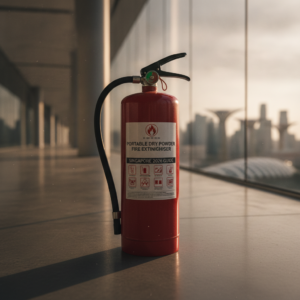
For building operators needing new units or refill guidance, including dry powder models common in commercial properties, check where to buy dry powder portable fire extinguishers.
Fire alarm maintenance in a smart building era
Fire alarm maintenance is moving beyond periodic manual checks toward continuous, data-driven servicing. Key trends for 2025 include:
- IoT-enabled detectors: Smart smoke and heat detectors provide remote health diagnostics, reducing false alarms and targeting maintenance where it’s needed.
- Remote testing and verification: Cloud-connected systems permit automated self-tests and secure logs for audit trails.
- Integration with building management systems (BMS): Alarm events and device health feed into a single dashboard for facilities teams.
- Predictive maintenance: Analytics flag devices trending toward failure (battery decline, sensor drift) so replacements happen before faults occur.
Creating an effective maintenance schedule
A structured maintenance schedule balances safety, compliance and operational efficiency:
- Daily/weekly: Visual checks of interfaces, alarm panels and control rooms.
- Monthly: Functional tests of alarm indicators, sirens and tamper switches.
- Quarterly: Zone testing with nominated testers, battery voltage checks for backup power systems.
- Annual: Full system inspection, detector cleaning or replacement, and verification of interlocks (lifts, sprinklers).
Record-keeping, tagging and digital logs
Accurate records are essential for compliance and risk management. Best practices:
- Attach tamper-proof service tags to extinguishers with date, technician ID and next service due.
- Maintain digital logs for alarms and extinguishers with photos and signatures for each intervention.
- Use cloud storage or an integrated CMMS (computerised maintenance management system) to centralise records and enable audit-ready reporting.
These measures reduce audit friction and provide defensible evidence in case of incidents.
Cost considerations and funding strategies
Upgrades, disposals and smart retrofits carry upfront costs but yield operational savings and risk reduction:
- Bulk trade-in programs and scheduled replacement cycles lower per-unit costs.
- Energy and maintenance savings from smart detectors offset initial investments over time.
- ESG-driven incentives and corporate sustainability budgets may cover recycling programmes.
- Competitive procurement and tendering help secure best-value contracts with transparent lifecycle pricing.
Reference the replacement and system upgrades guide to estimate budgets and provider options.
Implementation roadmap for building managers (practical timeline)
- Immediate (0–3 months): Audit all extinguishers and alarm devices; identify halon or obsolete agents; tag units needing disposal or urgent servicing.
- Medium term (6–12 months): Pilot smart detectors in high-risk zones; integrate alarm logs with the BMS; adopt CMMS for digital records.
- Long term (12–24 months): Roll out full replacements and upgrades, document lifecycle costs, and update emergency response procedures to reflect new tech and device locations.
Case example: A HDB-managed block transitions to compliant disposal and smart servicing
A typical block manager can reduce risk and long-term cost by combining strategies: 1) schedule a cluster removal event for end-of-life extinguishers and use trade-in credits; 2) roll out IoT smoke detectors in common corridors; 3) centralise service logs via CMMS; 4) train on-site staff on basic visual checks.
Final steps: Compliance, continuity and continuous improvement
Fire extinguisher disposal and fire alarm maintenance are complementary pillars of a modern fire safety programme.
For a practical start, use the servicing checklist, explore replacement options and approved vendors, and schedule an audit to capture priority actions and budget needs. Begin the audit process, engage certified providers and schedule upgrades ahead of regulatory deadlines to secure safety and compliance.




No comment yet, add your voice below!