

Why 2025 matters: updated expectations and industry trends
Singapore’s fire safety landscape is evolving in 2025. New regulations, stronger environmental stewardship and digital record-keeping are reshaping how businesses and households manage their fire safety equipment.
Understanding fire extinguisher requirements
Key points:
- Extinguishers must be inspected regularly and serviced by trained technicians.
- Units nearing or past their serviceable life must be replaced or undergo approved tests (e.g., hydrostatic testing where applicable).
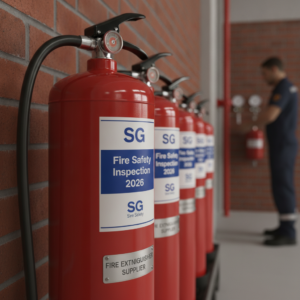
- Service tags and logbooks should reflect refill dates and maintenance details.
When to choose fire extinguisher replacement vs refill
Knowing whether to replace or refill an extinguisher depends on several factors:
- Expiry and certification: If the cylinder is corroded, damaged or cannot pass certification tests, replacement is required.
- Age: Some types of extinguishers have a recommended service life; contemporary trends push toward replacement when maintenance costs approach replacement costs.
- Type of agent: Foam and water-based units are often easier and cheaper to refill than special agents like clean agents or CO2 units with strict servicing rules.
Step-by-step: Refill and service process
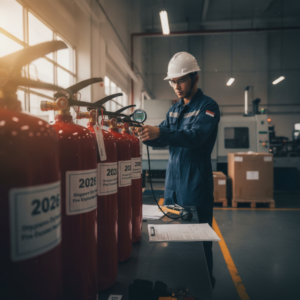
- Initial inspection: A certified technician checks the pressure gauge, seals, hoses, and overall condition.
- Discharge test (if needed): Small-scale discharge or agent-level checks can determine refill necessity.
- Refill and recharge: Technicians refill with the correct extinguishing agent and recharge to certified pressure levels.
- Pressure and leak testing: After recharging, checks ensure the unit maintains pressure and has no leaks.
- Tagging and documentation: Service tags and digital records are updated—modern providers often offer cloud-based maintenance logs.
Regular refills and servicing keep equipment ready, but always confirm that the extinguisher’s structural integrity allows safe reuse.
Disposal and recycling—eco-friendly options in 2025
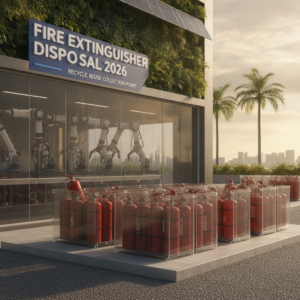
Safe disposal of spent or end-of-life extinguishers is critical. Singapore’s 2025 focus includes sustainable disposal and recycling programs:
- Trade-in and swap-out schemes: Several authorised vendors provide onsite swap-outs, taking away the old unit and replacing it with a certified new extinguisher.
- Controlled disposal: Pressurised cylinders must be depressurised and processed at licensed facilities to prevent injury and environmental damage.
- Recycling: Metal components (steel/aluminium) can be recycled; residual agents are neutralised per environmental regulations.
Learn about current disposal and trade-in programs at 2025 fire extinguisher replacement and disposal trade-in programs onsite swap-outs and recycling options.
Cost considerations and budgeting for 2025
Budgeting for replacement and servicing includes several elements:
- Unit cost: Modern units, especially eco-friendly or low-global-warming-potential agents, may cost more upfront but provide longer-term value.
- Service and refill fees: Routine servicing is typically charged annually or based on service schedules.
- Disposal or trade-in offsets: Some providers offer discounts when trading old units, reducing replacement costs.
For a clear estimate tailored to your property, consider professional assessments like those offered by specialised suppliers: 2025 fire extinguisher replacement and Singapore fire protection system upgrades costs, compliance and trusted local providers.
Types of extinguishers and refill specifics
Different extinguisher types require different refill and replacement approaches:
- ABC Dry Powder: Common and versatile; refills are straightforward, but powder can compact over time—replacement may be preferable in older units.
- CO2: High-pressure cylinders need specialist handling and testing; refills must be done by trained technicians.
- Foam and Water: Easier refills; check anti-freeze or additives depending on the model.
- Clean Agents (Halon replacements): Environmentally friendlier agents used for sensitive equipment require certified handling and sometimes higher refill costs.
Choosing the right agent for the application improves safety and reduces the need for premature replacement.
Maintenance schedules and documentation best practices
- Monthly visual checks by onsite staff for gauge pressure and physical damage.
- Annual professional servicing by licensed technicians.
- Hydrostatic testing intervals (where applicable) every few years depending on cylinder type.
- Maintain physical tags and digital logs to ensure audits and inspections are passed smoothly.
Digital record-keeping is trending in 2025: cloud databases and QR-code-linked tags let technicians update service history instantly.
Training and certification: beyond replacement and refill
Correct use often prevents small fires from becoming emergencies.
- Hands-on extinguisher use and safety drills.
- Scenario-based training for different fire classes.
- Clear responsibilities for checks and reporting.
Providers that bundle extinguisher servicing with certified training give better value and ensure staff competence.
Choosing a reputable service provider in Singapore
Selecting a trusted company reduces downtime and ensures lawful disposal and accurate certification. Look for these attributes:
- Transparent pricing for refills, replacements and disposal.
- Onsite swap-out and trade-in programs to simplify upgrades.
- Digital maintenance logs and rapid response for emergencies.
Compare local providers and their warranties, and read case studies demonstrating compliance and environmental responsibility. A useful resource for portable unit options is portable fire extinguisher Singapore fire protection system.
Common pitfalls to avoid
- Delaying service because a unit “looks fine”: internal problems can exist despite outward appearance.
- Using uncertified technicians: this risks failed inspections and voided warranties.
- Improper disposal: illegally dumping pressurised cylinders is hazardous and subject to penalties.
- Forgetting documentation: inadequate records can lead to failed audits and fines.
Quick compliance checklist for property managers (2025-ready)
- Verify each extinguisher’s service tag and next service due date.
- Replace corroded or damaged cylinders rather than attempting risky repairs.
- Record all refills and replacements in a digital log for easy audits.
- Enroll staff in basic extinguisher use training and conduct annual drills.
For an actionable compliance plan and supplier comparisons tailored to Singapore premises, see Singapore 2025 action plan for fire extinguisher disposal and fire alarm maintenance, eco-friendly recycling, smart alarm servicing and regulatory compliance.
Final notes: proactive replacement and smarter refills
In 2025 the safest strategy is proactive management: replace ageing or obsolete units with modern, certified models and keep refills, tests and documentation up to date. For turnkey solutions including onsite swap-outs and recycling, consult providers offering trade-in programs and certified servicing to streamline compliance and sustainability efforts: Singapore 2025 fire extinguisher replacement and disposal trade-in programs onsite swap-outs and recycling options.
Proactive fire extinguisher management protects people, property and the environment—an investment that delivers peace of mind and regulatory confidence in Singapore’s evolving 2025 landscape.


No comment yet, add your voice below!